





 English
 中文
中文 Italian
 Türkçe
 Español
 Deutsch
 العربية
 Tiếng Việt
 Français
 Русский


Sra. Lizzy
Olá, aqui é a Lizzy da DINOSAW (Não sou um robô). Qual máquina (modelo) você deseja? Por favor, entre em contato pelo WhatsApp agora


Horário:8:30am-20:30pm

WhatsApp: +86 198-5901-3937


hard stones thin/medium‑thin slabs
 |
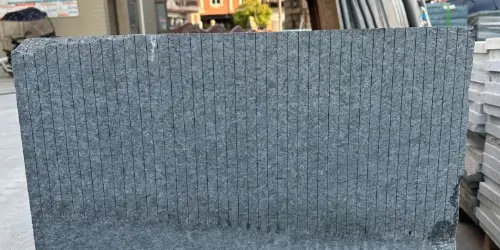 |
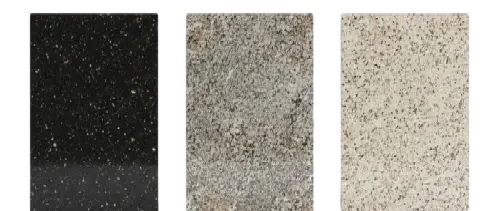
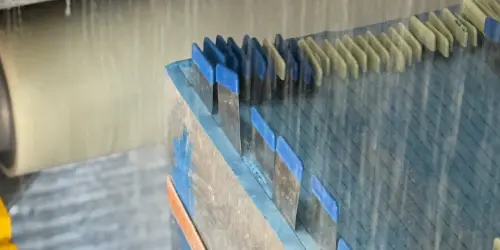
Introduction: Granite façade thin slabs demand precision and efficiency. Processing Technology: DINOSAW down‑feed thin multi‑wire provides stable clamping for large granite blocks; optimized wire speed and constant tension deliver smooth, chip‑free slicing for façade panels (typical granite wire speed 25–35 m/s). Technical Advantages: Small kerf (≈0.5–0.8mm), robust gantry, and ±0.5 N constant tension ensure uniform thickness and premium flatness across the slab. Application Results: Compared to gangsaw/multi‑blade cutters, finish quality improves and polishing workload drops; yield is higher due to minimal kerf loss in large‑format façade projects. Value Summary: Ideal for premium granite thin slabs in architectural façades; the down‑feed thin multi‑wire setup maximizes material utilization and line stability. |
 |
 |
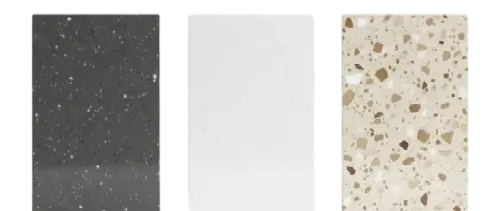
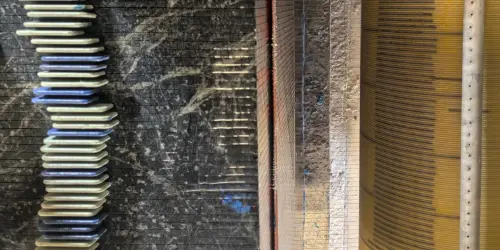
Introduction: Engineered quartz countertop slabs require high-throughput processing with consistent color and flawless surfaces, a key market for stone fabricators. Processing Technology: The DINOSAW down-feed thin multi-wire saw utilizes its robust gantry and stable down-feed pressure to efficiently slice large quartz blocks. Optimized wire speed and tension control manage the material's hardness, ensuring a smooth, chip-free cutting process for countertop slab production. Technical Advantages: The machine's constant tension system (±0.5 N precision) prevents wire marks and ensures uniform thickness across the entire slab, a critical factor for high-value quartz countertops. Application Results: Fabricators achieve higher yield due to the minimal kerf loss (≈0.5–0.8mm) and a premium finish that significantly reduces subsequent polishing time and costs, boosting overall productivity for commercial projects. Value Summary: This down-feed multi-wire cutting solution transforms engineered quartz processing by delivering superior finish quality and higher material utilization, making it the ideal choice for competitive countertop slab manufacturing. |
 |
 |
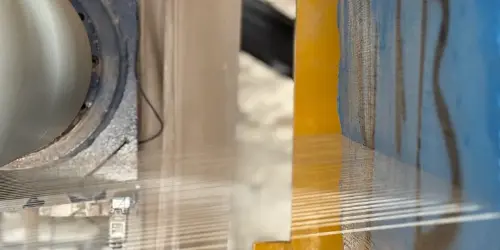
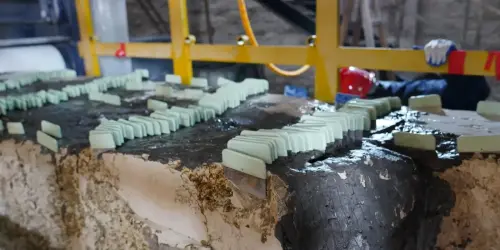
Introduction: Large-format sintered stone panels are in high demand for modern architecture, requiring cutting solutions that can handle large dimensions while maintaining material integrity and aesthetic consistency. Processing Technology: The DINOSAW down-feed multi-wire saw is engineered for large block slabbing. Its stable down-feed mechanism provides secure clamping for large sintered stone blocks, while the high-speed diamond wire slicing process ensures efficient and precise cutting into large-format panels. Technical Advantages: The machine's capability to handle blocks up to 3600x2100x2300 mm, combined with its small kerf (≈0.5–0.8mm), maximizes the number of high-value panels from a single block and ensures exceptional flatness. Application Results: Producers of sintered stone panels benefit from reduced material waste, faster production cycles, and a superior surface finish that meets the exacting standards of high-end architectural and interior design projects. Value Summary: By enabling high-yield, high-quality production of large-format panels, this multi-wire cutting machine provides a critical competitive edge for sintered stone manufacturers aiming to dominate the premium building materials market. |
 |
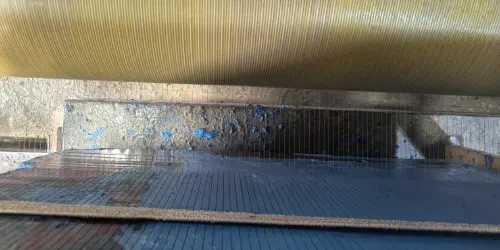 |
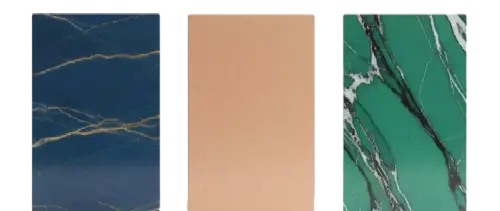
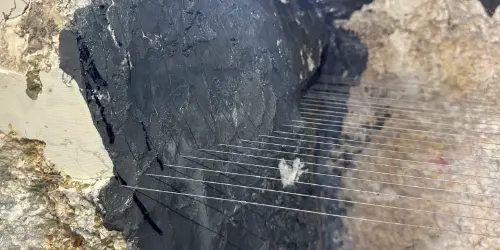
Introduction:Luxury stones like quartzite are prized for their unique beauty and durability, commanding high prices. Maximizing yield from every block is paramount, making thin slab cutting a high-stakes, high-reward application. Processing Technology:The down-feed thin multi-wire saw’s design provides the extreme stability required for cutting hard, high-value quartzite. Its patented constant tension control and optimized wire speed deliver a flawless cut, preserving the integrity and aesthetic of the luxury stone. Technical Advantages:The ability to use thin diamond wires (0.35-0.8mm) results in an ultra-small kerf, drastically increasing the number of premium thin slabs harvested from each expensive block. Application Results:Stone suppliers see a direct increase in revenue per block. The superior surface quality minimizes polishing needs, reducing labor costs and the risk of damaging the high-value slabs, ensuring maximum profitability. Value Summary:For luxury stone processing, this thin multi-wire saw is not just a machine but a profit multiplier. It unlocks the full value of premium materials through unmatched yield and exceptional finish quality. |
Especificações personalizáveis sob demanda.
| Item | Unit | DS-3623A |
|---|---|---|
| Feed type | / | Down-feed |
| Cutting feed rate | mm/h | 100-280 |
| Diamond wire diameter | mm | 0.35-0.8 |
| Slab thickness | mm | 2-30 |
| Cutting tension | N | 0-300 |
| Table lift travel | mm | 2400 |
| Wire storage | m | 30000 |
| Roller diameter | mm | 320-450 |
| Main motor power | kW | 64x4 |
| Max workpiece size (LxWxH) | mm | 3600x2100x2300 |
| Machine weight | T | 34-42 |
| Overall dimensions | mm | 9200x7500x5300 |
Option | Function | Recommendation |
|---|---|---|
Rotating table | Rotate block without re-hoisting; adjust cutting angle | Recommended for irregular blocks / non-standard angles |
Transfer cart (aux table) | Parallel loading/unloading beside main table | Must‑have for peak throughput |
Extended rails | Longer cart travel space for multi‑cart / long pieces | Pair with transfer cart or when layout needs longer travel |
Spindle box set (drive/idler) | Spare assembly for quick swap to cut downtime | Buy as spare if production loss is costly |
Roller | Key wire‑net part; different materials/coatings affect wear/inertia | CF+PU for high speed/energy saving; iron/aluminum for budget |
Wire welder | Repair broken wire; fast wire recovery | Essential for most users |
Roller lathe | Pre‑recoat turning & alignment; reduce run‑out/vibration | Own in high‑utilization plants; outsource if low |
Tension wheel | Keep wire tension stable; core force element | Stock as consumable; set preventive replacement & calibration |
Guide wheel rubber ring | Protect wire & guide; improve friction & stability | Track wear & replace early for stable cutting quality |
Wire winder | Fast uniform winding; control pitch & initial tension | Standard for multi‑wire; best with wire welder |
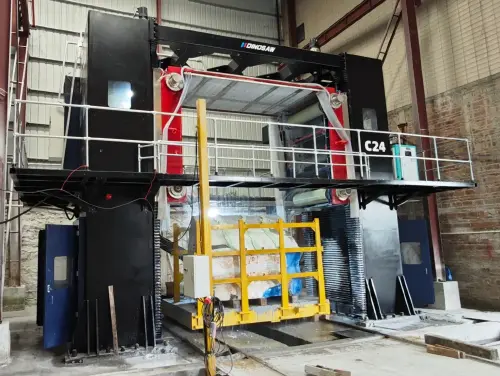
Robust gantry + constant tension enable stable thin‑slab production.

Supports large blocks and parallel loading.

Lower OPEX with cleaner, quieter operation.

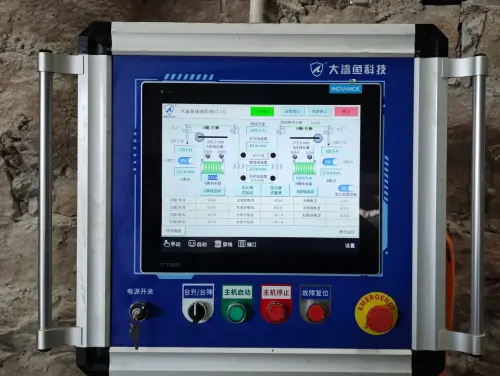
Intelligent monitoring supports proactive maintenance and higher uptime.
Common Questions About Thin Multi-Wire Stone Cutting
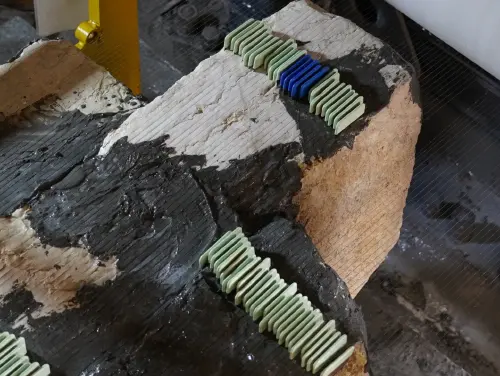
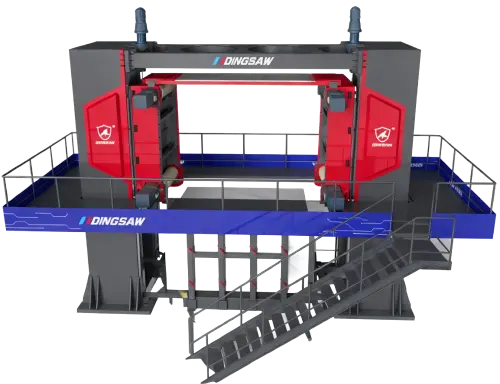
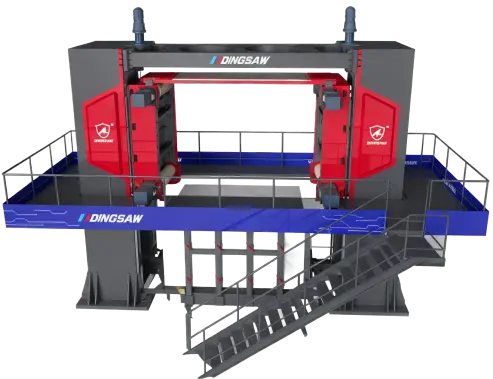
A down-feed thin multi-wire saw is an industrial machine designed for high-precision slicing of hard materials like granite and quartz into thin slabs. It works by pressing a high-speed array of diamond wires downward through a stationary block, using gravity and mechanical pressure to ensure a stable, powerful cut. This method is ideal for achieving uniform thickness and a superior finish on high-value stone slabs.
The process starts with securely clamping the stone block onto the worktable. The wire-web, consisting of multiple diamond wires, then descends at a controlled feed rate (e.g., 100-280 mm/h) while moving at high speeds (up to 40 m/s). This downward force, combined with the block's own weight, minimizes vibration and enhances cutting stability, which is crucial when processing dense materials. A continuous flow of coolant lubricates the cutting zone, dissipates heat, and flushes away debris to prevent wire marks.
This down-feed technique is particularly effective for hard stone slab production, as the consistent pressure results in excellent flatness and reduces the risk of wire bowing. Fabricators benefit from higher material yield due to the small kerf (≈0.5–0.8mm) and reduced post-processing work, making it a highly efficient solution for producing granite countertops, engineered quartz panels, and other premium architectural materials.
Selecting the correct wire diameter and tension is a critical process window adjustment that depends on the material's hardness, the desired slab thickness, and your production goals (speed vs. finish). A general rule is that harder materials require higher tension and line speeds for efficient cutting. Here are some starting guidelines: Our machines feature advanced control systems with pre-saved recipes for various materials, simplifying the setup process. Our technicians also provide on-site training to help your team master the process window for your specific stone blocks, ensuring you achieve the optimal balance of productivity and quality.
A proactive maintenance schedule is key to ensuring long-term stable performance, consistent finish quality, and high uptime from your thin multi-wire saw. Maintenance focuses on monitoring wear parts in the wire path and ensuring the precision of the tensioning system. A typical preventive maintenance plan includes: In addition, our machines are equipped with intelligent diagnostic systems that provide predictive maintenance alerts, warning of potential issues before they cause downtime. This allows you to schedule maintenance proactively and maximize productivity.
This large-format down-feed thin multi-wire saw is primarily designed for medium- to large-scale industrial fabricators who process multiple blocks per day and require high throughput. Its size, capacity, and investment level are best suited for production-focused operations. For smaller workshops, research labs, or companies focused on pilot production or custom one-off jobs, a smaller machine would be a more appropriate fit. A smaller model offers several advantages for such environments: If your business focuses on high-volume slab production from large blocks (e.g., up to 3600 x 2100 x 2300 mm), this machine is the right choice. If your needs are smaller-scale, we recommend exploring our compact models designed for R&D and small-batch processing.
Certificações & Normas
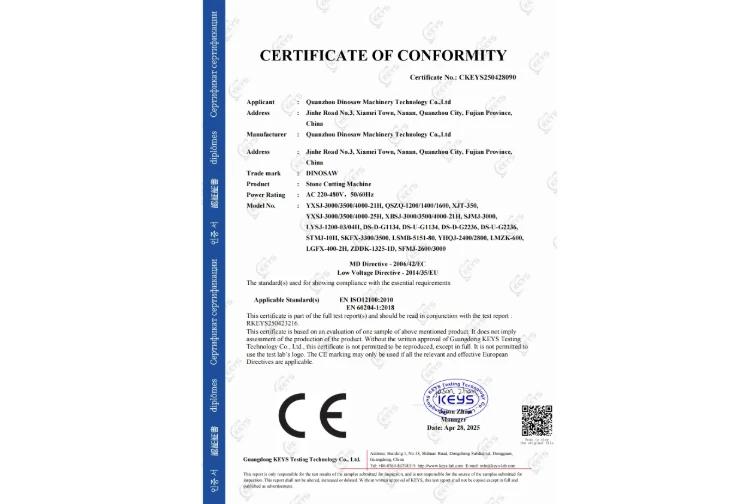
Certificação CE
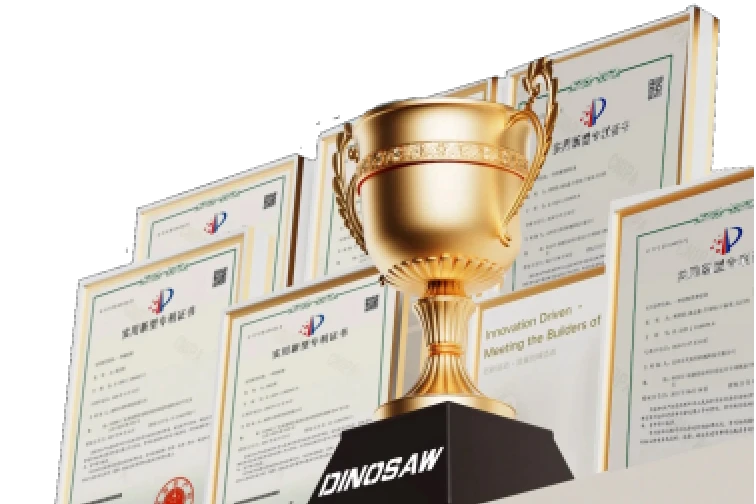
100+ Patentes Tecnológicas
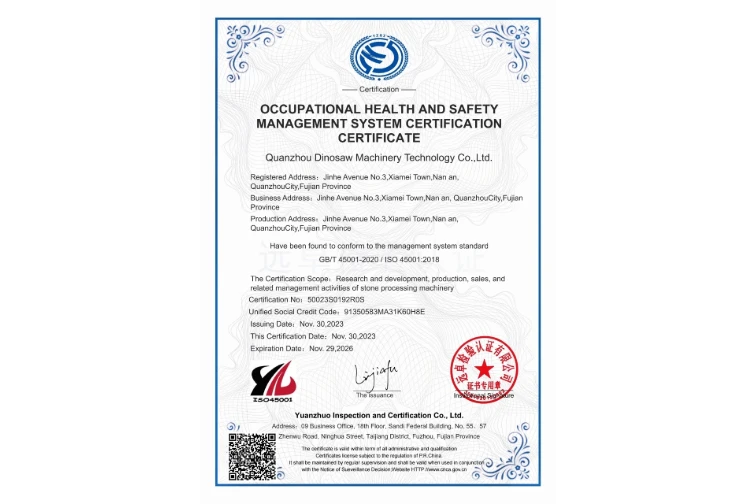
ISO 9001:2015
As linhas de produtos DINOSAW cumprem totalmente os padrões internacionais de engenharia, passando por rigorosas certificações de qualidade de terceiros para garantir desempenho excepcional e durabilidade para todos os equipamentos industriais que operam em ambientes de alta carga.

75+
Países Atendidos no Mundo

20+
Especialização em máquinas industriais
Escolha combinações de equipamentos para suas necessidades de produto, estabeleça linhas de produção automatizadas eficientes e maximize a lucratividade.
Adopt DINOSAW down‑feed thin multi‑wire to boost yield and finish quality across granite, engineered quartz, and sintered stone.
Conecte-se com especialistas da DINOSAW para encontrar a solução de processamento ideal para seu material e necessidades de produção específicas.

Descubra como a DINOSAW pode acelerar seus projetos. Nossa linha de produtos personalizada, P&D de ponta, fabricação robusta, serviço completo, suporte global e certificações industriais estão à sua disposição.
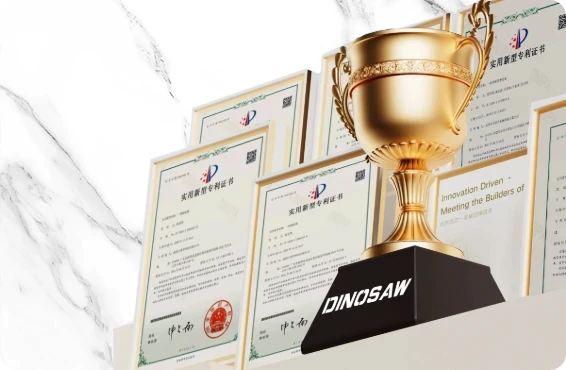
Você está procurando mais máquinas ou ferramentas com novas informações?
 Português
Obtenha uma Solução Fácil
Converse Online
Olá, aqui é a Lizzy da DINOSAW (Não sou um robô). Qual máquina (modelo) você deseja? Por favor, entre em contato pelo WhatsApp agora

Olá 👋 Como podemos ajudar?