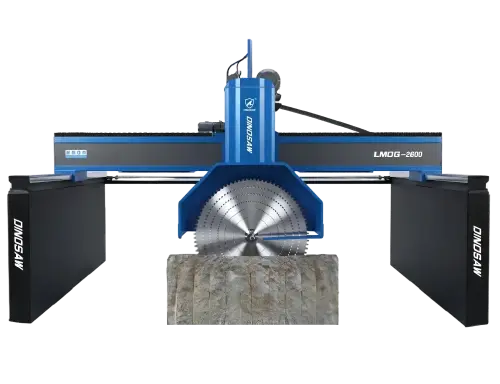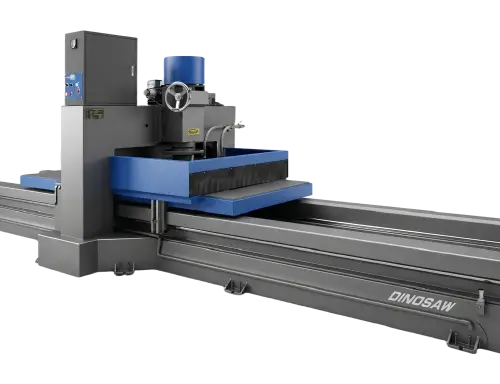
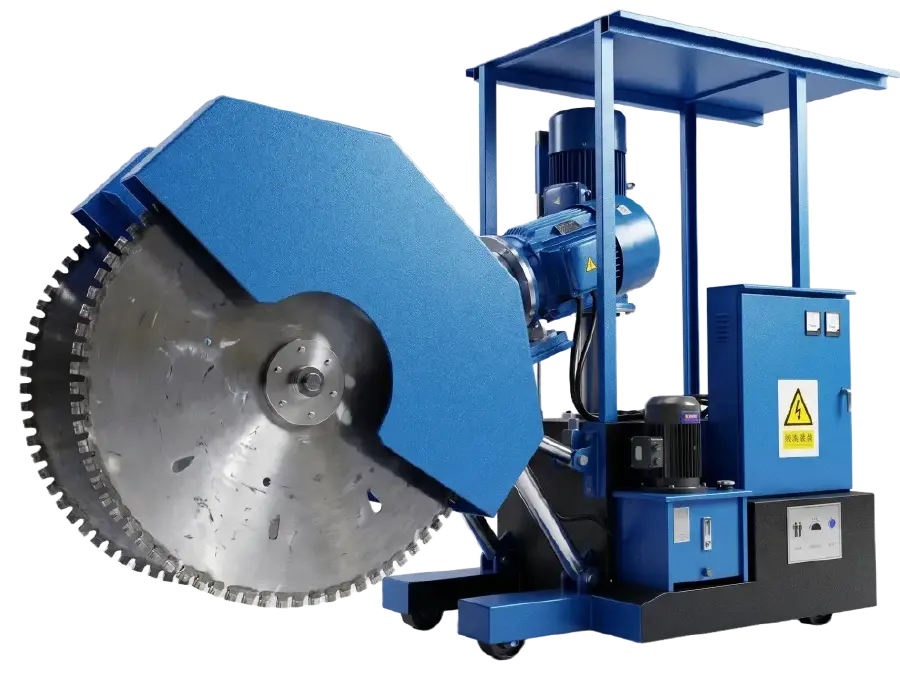
Sandstone Cutting Machine for Quarrying & Block Cutting

SSQJ-1400
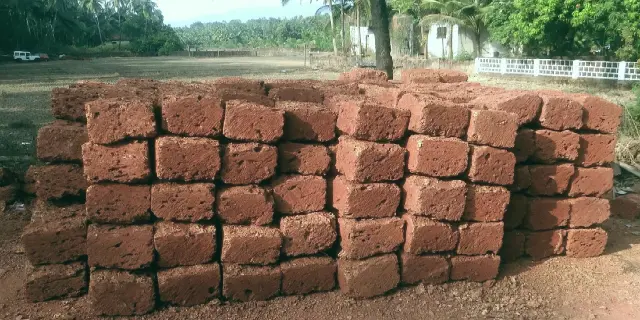
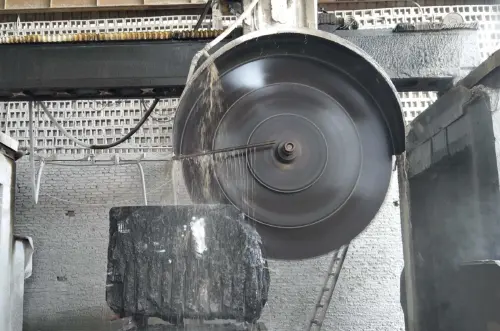
The DINOSAW sandstone cutting machine integrates horizontal and vertical saws for dualdirection cutting with speeds of 10-45 meters/minute. Ideal for construction material production, it delivers superior material yield with 35% less waste compared to traditional extraction methods. This machine excels at quarrying sandstone, limestone and laterite into blocks. The automated operation reduces labor requirements by 60% while maintaining consistent quality.
75 + 45 kWVertical face cutting and horizontal undercutting in one quarry machine
520 mmFull-depth vertical pass for thick stratified stone benches
Face + BaseMechanical block release without blasting the cutting faces

Applicable Materials

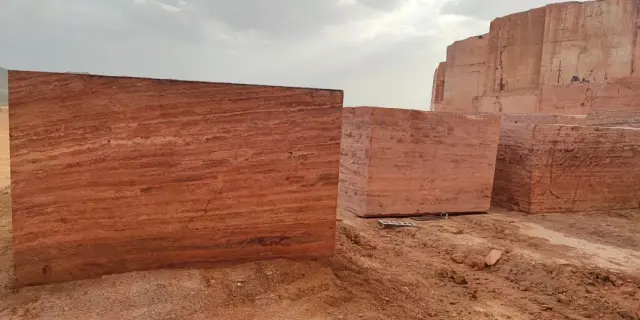
Sandstone, limestone, laterite and travertine

Certifications & Credentials

CE Certified · ISO 9001:2015 · Industry Standard Drafting Participant · 120+ Countries & Regions Served

Compatible Materials & Products

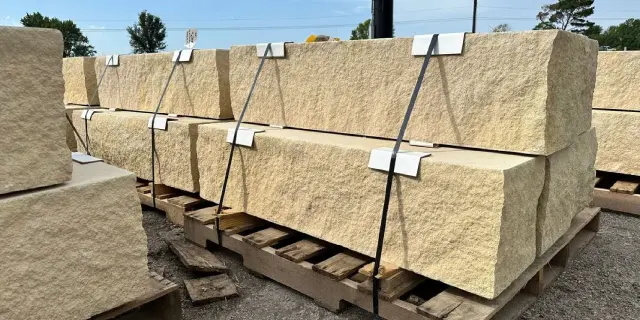
Mechanical extraction of dimensional blocks from sandstone, limestone, laterite and travertine benches.

Real Cutting Performance & Key Metrics

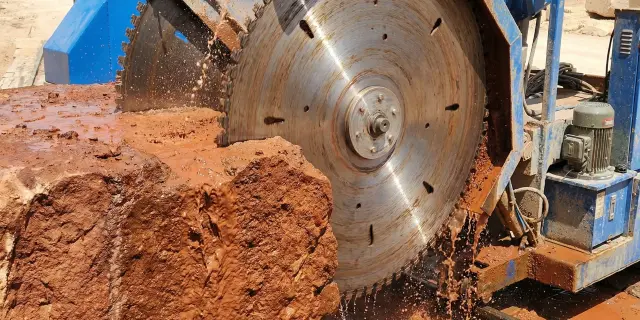
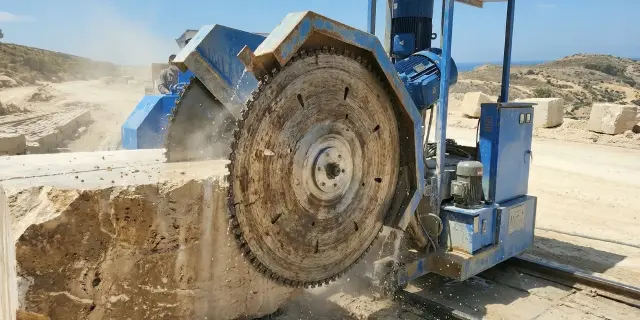
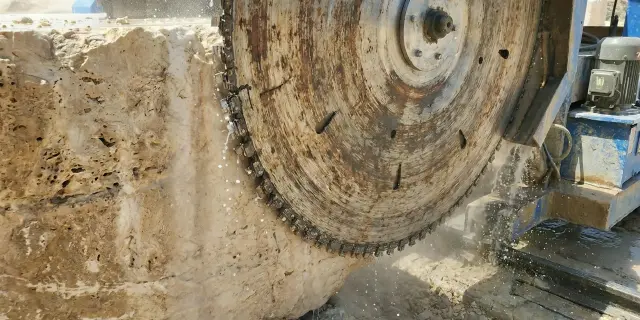
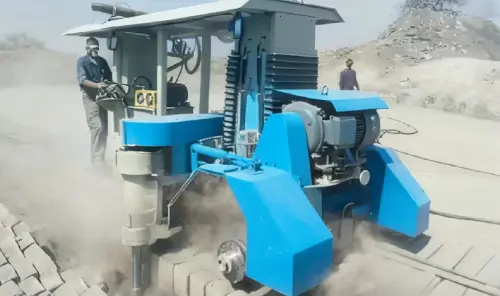
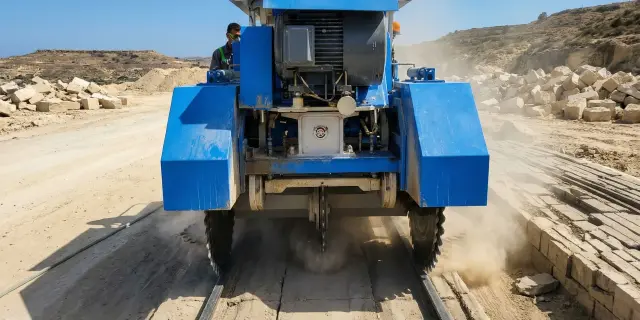
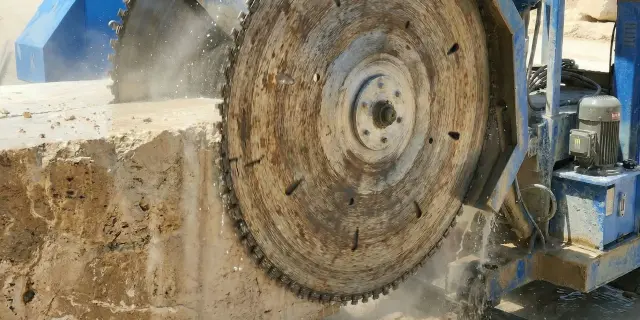
The SSQJ-1400 works directly on the quarry face: a 75 kW vertical blade opens the face and sides, a 45 kW horizontal blade undercuts the base, and the rail-mounted frame travels the bench — mechanical block extraction from stratified sandstone, limestone, laterite and travertine without blast damage.

75 kW

Vertical Cutting Power

The 75 kW vertical motor drives the 1330 mm blade through full 520 mm depth passes in sandstone and limestone benches.

45 kW

Horizontal Undercutting

The 45 kW horizontal blade with 600 mm diameter undercuts the bench, freeing blocks at the base without wedge-and-feather work.

520 mm

Depth per Vertical Pass

A 520 mm cutting depth lets the blade follow usable bedding thickness in stratified stone instead of building the same cut from repeated shallow passes.

10–45 m/min

Rail Travel

The rail-mounted frame travels the working face at 10–45 m/min, so one setup serves a long bench section and advances with the quarry.

Applicable materials: Sandstone, limestone, laterite and travertine — stratified soft to medium-hard deposits.

Typical applications: Dimensional block extraction from stratified quarries, landscape block production, wall stone and architectural block cutting at the deposit face.

Actual cutting speed varies with stone hardness, blade condition and quarry geology. Hard granite and basalt extraction belongs to diamond wire saw and DTH drilling systems.

Specs and options

The SSQJ-1400 combines a 75 kW vertical cutting unit (1330 mm blade, 520 mm depth, 700 mm cylinder lift) with a 45 kW horizontal unit (600 mm blade) on a rail-mounted frame traveling at 10–45 m/min, plus a 5.5 kW rail drive. The machine works the quarry face directly on its own rail system.

ModelUnitSSQJ-1400
Verticalkw75
Horizontalkw45
Railkw5.5
Moving speed (forward &backward)m/min10 - 45
Max distance of cylinder liftingmm700
Max cutting depthmm520
Diameter of the verticalm1330
Diameter of the horizontalmm600
Thicknessmm11.5

Core Technology & Machine Structure

Four engineering decisions behind the quarry cutting platform. The numbered points on the machine diagram correspond to the systems below.

Dinosaw machine Sandstone Cutting Machine for Quarrying & Block Cutting

Quarry Extraction Workflow

An extraction cycle follows four steps: position the machine on its rail along the bench, cut the vertical faces to full depth along the block outline, undercut the base with the horizontal blade, then split and load the released block — the next block starts from the same rail position.

01

Two-Direction Quarry Cutting

The 1330 mm vertical blade opens the face and side cuts while the 600 mm horizontal blade undercuts the block base: the same rail-mounted machine completes the critical faces that define the extracted block, replacing hand plugging and wedge work at the quarry bottom.

02

520 mm Full-Depth Pass

A 520 mm cutting depth lets the blade follow usable bedding thickness in sandstone and limestone: thick blocks extract along the stone's natural layers instead of through them, protecting corners and usable thickness.

03

Rail-Mounted Quarry Travel

The machine moves along the working face on its own rail system at 10–45 m/min: one position covers a long bench section, and relocation follows the quarry's advance without civil works.

04

Mechanical Extraction Without Blast Damage

Mechanical cutting avoids blast vibration around the extraction face, helping preserve the integrity of saleable architectural blocks around the cut zone — no shock fractures through the reserve, no flyrock, no blast windows.

05

Stratified Deposit Processing

The machine is designed around bedded stone geology — sandstone, limestone, laterite and travertine — where cutting direction can follow natural layers to protect block corners and keep waste thin.

06

Soft-to-Medium-Hard Specialization

This blade-based platform is optimized for stratified soft-to-medium-hard deposits. Granite and basalt extraction should move to diamond wire saw and DTH drilling systems — the geology boundary is part of honest machine selection, and it protects the investment on both sides.

Sandstone Quarry Blade Cutter vs. Diamond Wire Saw

A geology-driven comparison for quarry extraction buyers.

Sandstone Quarry Blade Cutter vs. Diamond Wire Saw
Diamond Wire SawVSSSQJ Blade Cutter
Hard / abrasive stoneBest geology✓ Stratified soft-to-medium stone
Granite, basalt, hard stoneTypical material✓ Sandstone, limestone, travertine
Flexible diamond wireCutting method✓ Vertical + horizontal blades
Pulley / wire arrangementBench setup✓ Rail-mounted face travel
FlexibleStraight block faces✓ Very efficient
More flexibleComplex quarry geometry✓ More limited

Note: configurations vary by brand and model; actual performance depends on the specific machine, material and working conditions.

The Manufacturer Behind the SSQJ Series

DINOSAW is a manufacturer of CNC stone processing machinery, specializing in diamond wire saw machines and CNC stone cutting equipment. With more than 20 years of R&D and manufacturing experience, DINOSAW contributes to industry standards including T/CMES 41001-2025 for CNC wire saw machines, holds 100+ technical patents, and supplies equipment and technical support to customers in 120+ countries and regions. Its manufacturing and management systems are certified to ISO 9001, ISO 14001 and ISO 45001, with CE-compliant machinery for international markets.

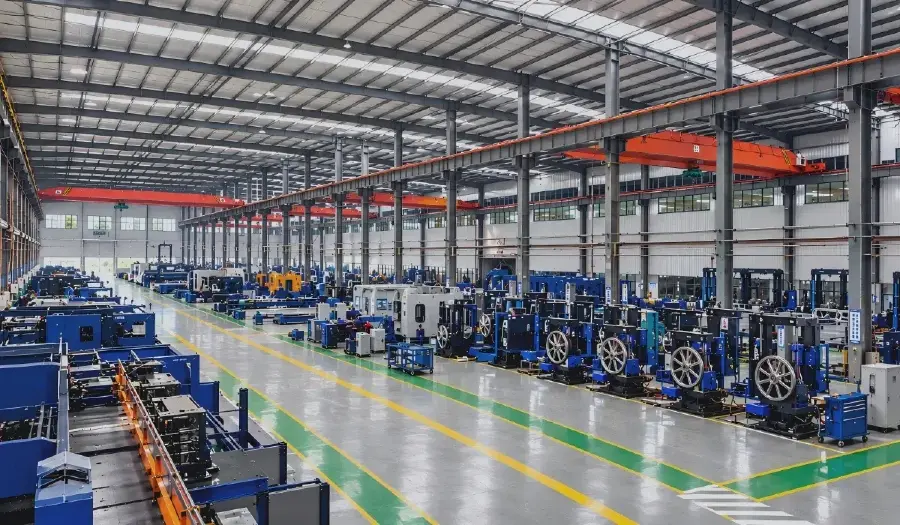
DINOSAW CNC stone machinery manufacturing workshop
DINOSAW R&D & ManufacturingMechanical Design · CNC Control Development · Assembly · Testing · Commissioning · Global Delivery
Industry Standard Drafting

DINOSAW contributes to industry standards for stone machinery, including T/CMES 41001-2025 for CNC wire saw machines, as well as standards covering multi-wire saws, combined wire saw machines and five-axis bridge cutting equipment. This work reflects the company’s long-term involvement in machine design, manufacturing, testing and quality control.

20+Years of Stone Machinery R&D & Manufacturing Experience
100+Technical Patents — Covering machine structures, CNC control, cutting systems and stone processing technologies
120+Countries & Regions Served — Equipment, installation and technical support worldwide

CE Compliance & ISO Management Systems

CE: Stone cutting machinery assessed against Machinery Directive 2006/42/EC and relevant EN standards.
ISO: Management systems certified to ISO 9001, ISO 14001 and ISO 45001.

Installation Requirements & After-Sales Support

DINOSAW provides installation guidance, operator training, remote diagnosis and spare-parts coordination for every machine.

FootprintRail-mounted on quarry bench

Rail layout follows the quarry face; anchoring per site geology.

Power Supply75 + 45 + 5.5 kW

Heavy feeder and transformer sizing confirmed per quarry site.

Water SupplyFace cutting water, recycling recommended

Dust suppression and blade cooling at the quarry face.

01 · Pre-Shipment & DeliveryMachine configuration, packaging and transport requirements confirmed before dispatch, with factory inspection and documents verified.
02 · Installation & CommissioningOn-site utilities and foundation check, machine positioning, commissioning and acceptance.
03 · Operator TrainingHands-on training covering routine CNC operation and daily checks of blades, spindles, cooling and lubrication.
04 · After-Sales SupportRemote technical assistance, maintenance support and spare parts coordination throughout the machine's service life.

Sandstone Quarry Cutting Machine Selection & Operation FAQ

Common Questions About DINOSAW Stone Cutting Machines

The DINOSAW sandstone cutting machine is primarily designed for sandstone but effectively cuts multiple low-density stones. It's optimized for sandstone, limestone, and laterite with their granular structures and moderate hardness.

The machine features adjustable cutting speeds (10-45 meters/minute) and pressure settings that automatically adapt to different stone densities. This versatility makes it ideal for quarry operations where multiple stone types are processed, maximizing equipment investment while maintaining optimal cutting performance across materials.

The DINOSAW sandstone cutting machine handles blocks up to 0.52 meters in height. Its dual-saw system (horizontal and vertical) enables cutting speeds of 10-45 meters per minute in dry conditions, significantly outperforming traditional drilling and splitting methods.
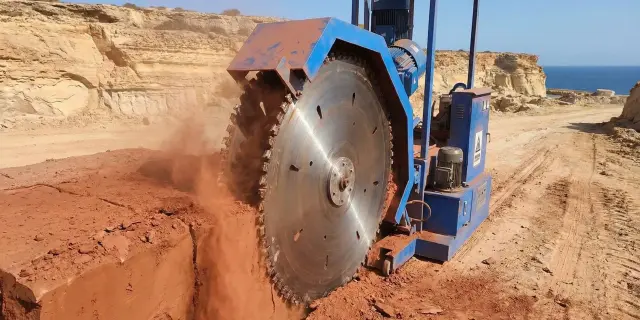
The simultaneous dual-direction cutting reduces processing time by up to 60% compared to single-direction systems, making it ideal for high-volume production environments where efficiency directly impacts profitability.

Maintaining a DINOSAW sandstone cutting machine is straightforward due to its simple mechanical design. Daily maintenance includes clearing dust from critical components, checking diamond blades for wear, and inspecting drive systems. Weekly tasks involve lubricating moving parts and cleaning any sediment buildup.

Major maintenance is only required every 500-600 operating hours and includes blade replacement, belt tension adjustment, and alignment verification. The machine's simple structure allows most maintenance to be performed by operators with basic training, reducing specialized service costs. Following this maintenance schedule typically extends machine life by 40% and prevents costly production interruptions.

The DINOSAW sandstone cutting machine is designed with environmental sustainability in mind. It generates significantly less dust than conventional drilling methods and operates with lower noise levels. Its efficient cutting mechanism reduces waste material by up to 35%, maximizing resource utilization.

For operator safety, the machine features emergency stop systems, blade guards, and stable operational platforms. Since it's designed for dry cutting conditions, there's no water contamination or slurry disposal concerns.

Operators should still wear appropriate PPE including eye protection, dust masks, and hearing protection during operation, though requirements are reduced compared to traditional stone cutting methods.

That is not its main application, and forcing it there costs blades and time. The SSQJ is a blade-based platform optimized for stratified soft-to-medium-hard deposits: sandstone, limestone, laterite and travertine, where full-depth passes follow natural bedding and extraction is mechanical. Granite and basalt quarries need the rock-mechanics answer instead — diamond wire saws for cutting flexibility and DTH drilling for blast and pre-split holes. Within its geology the SSQJ's advantages over wire saws are pass depth and face speed on stratified benches; outside it, the wrong tool turns dimension stone into expensive rubble. Match the extraction machine to the deposit's hardness class first, then to production targets — and for hard-stone deposits, DINOSAW routes you to wire saw and drilling systems directly.

When the product is dimension stone rather than aggregate. Blasting is unbeatable for bulk tonnage where fracture planes do not matter; it is the wrong tool where the fracture plane is the product. Mechanical cutting wins on four grounds. Block value: blast vibration sends fractures beyond the designed line and downgrades nearby blocks to rubble — mechanical cutting confines the fracture to the kerf, so the reserve behind the cut stays at full value. Geometry: cut faces come out square and true, matching architectural specifications without secondary dressing. Site operations: no explosives handling, no flyrock, no evacuation windows — the quarry runs continuous shifts. Environment: water-suppressed cutting dust replaces blast fumes and dust clouds, and slurry concentrates at the face for managed handling. For quarries near settlements or producing high-value architectural sandstone and travertine, these factors usually decide the extraction method before production rate enters the comparison.

Contact Dinosaw

Discuss Quarry Cutting for Your Deposit

Are you looking for the perfect cutting machines or processing solutions for hard and brittle materials?

Facing challenges in stone quarrying, countertop cutting, concrete and underwater pipeline cutting, stainless steel rust removal and grinding, luxury thin slab cutting, agate and gemstone cutting, graphite cutting, or even building demolition?

Leave your inquiry, and you can expect a reply within 12 hours with tailored solutions!

Prefer email?

You can also reach us at

gma@dinosawmachine.com
Sandstone Cutting Machine for Quarrying & Block Cutting

What materials will you be working with? *

Your Name / Company Name? *

Phone Number / Email Address? *

+86

What specific requirements do you have?

Quarry Cutting Guides & Related Machines

Selection guides and related equipment for quarry extraction, block cutting and mining.

Get A Easy Solution

Chat Online
Ms.Lizzy

Hi, this is Lizzy from Dinosaw ( Not a Robot ).  Which Machine ( model ) do you want? Please WhatsApp us now

WhatsApp Chat Now
Contact Us

Hello 👋 How can we help?