



Specs & Systems
Choose your preferred CNC systems, motor power, and automation levels for maximum efficiency.


Open Hours:8:30am-20:30pm

WhatsApp: +86 198-5901-3937
@2x.webp)
@2x.webp)
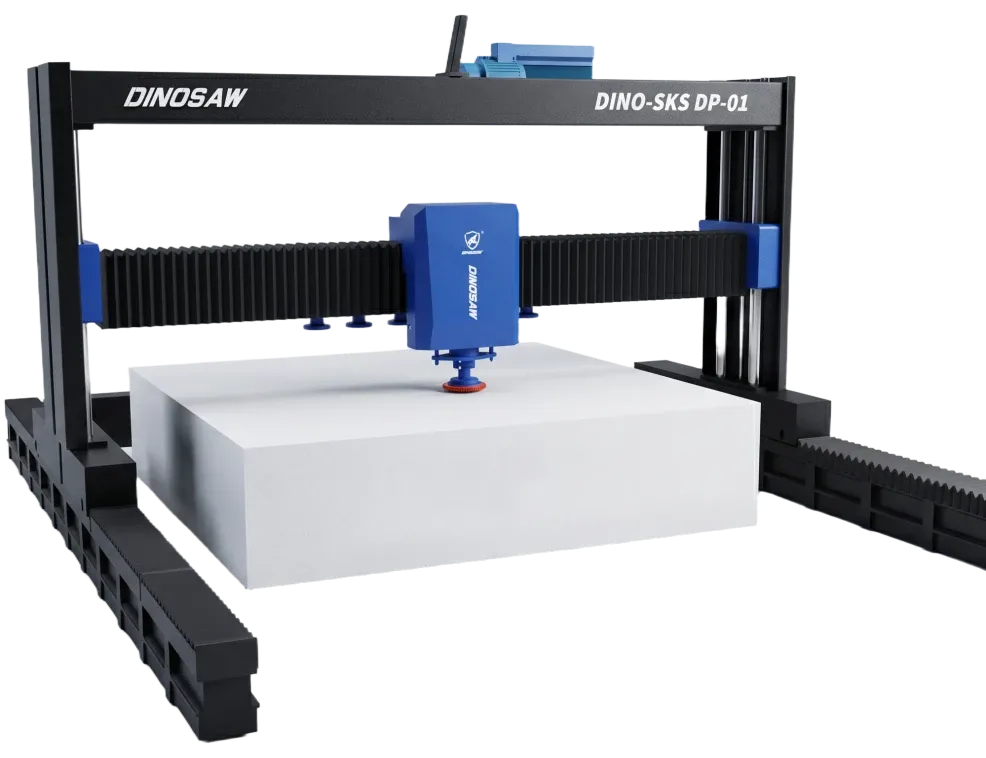
DINO-SKS DP-01
Specifications below reflect the maximum configuration of each model. If your target slab width, material hardness, or daily throughput falls between two options, consult Dinosaw's engineering team — most parameters are adjustable within a configuration range.
| Machine / Model | Max Working Size | Polishing Heads | Control System | Compatible Materials (Key) | Recommended For | Best Scenario |
|---|---|---|---|---|---|---|
| AI-Driven CNC Polisher with ATC/DINO-SKS DP-01 | 500–2,000 mm | Multi head + ATC (automatic tool changer, coarse to mirror in one program) | CNC + Hikvision AI vision (auto defect detection, path optimisation) | Granite, marble, engineered stone, quartzite, sandstone, limestone, onyx, ceramic slabs, metal composites | Tombstone & monument production; custom countertops; replacing 3-machine calibrate–grind–polish workflows | Each piece is different, or requires defect-free mirror finish with zero manual rework |
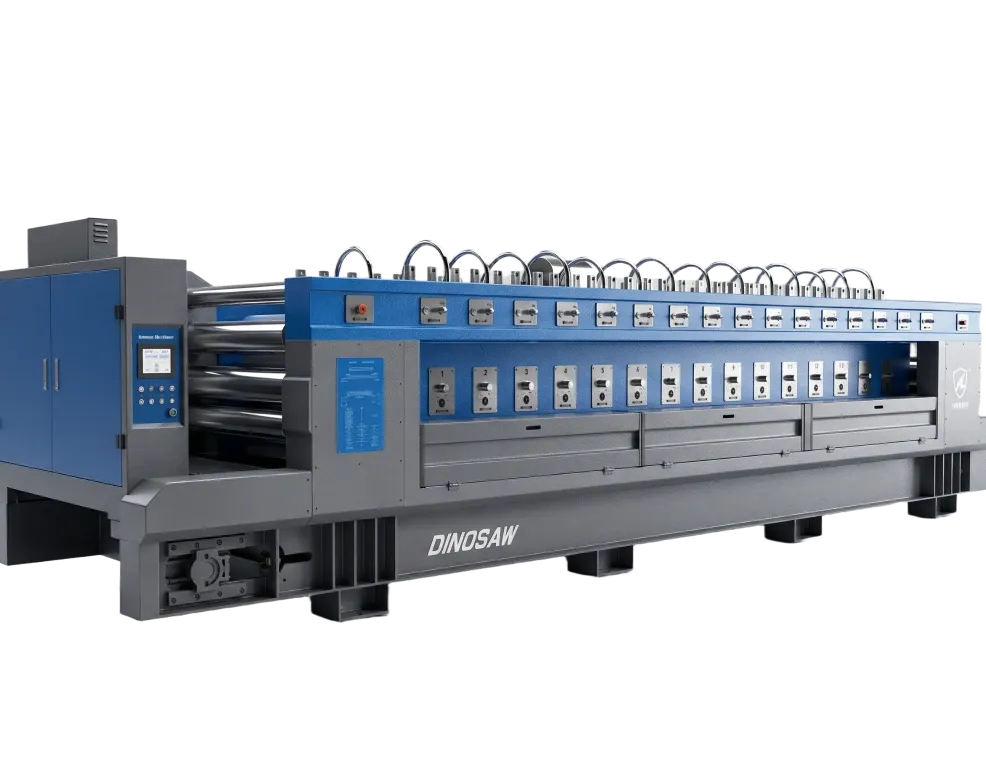
| Multi-Head Continuous Polishing Line/DBMJ | Max width: 1300mm | 12–20 heads (fully continuous) | Full PLC + laser slab profile scanning | Marble, quartz, engineered stone, terrazzo, travertine, porcelain tiles, sintered stone, slate | High-volume slab production lines; large architectural panels; 24/7 industrial environments | 240 m²/h and above; consistent slab size; maximum throughput is the priority |
| Multi-Head Continuous Polishing Line/TBMJ | Max width: 1300mm | 12–24 heads (fully continuous) | Full PLC + laser slab profile scanning | Granite, quartz, engineered stone, terrazzo, travertine, porcelain tiles, sintered stone | Mid-volume fabrication shops; standard countertop and tile sizes | 290 m²/h; standard slab dimensions; balance of throughput and capital cost |
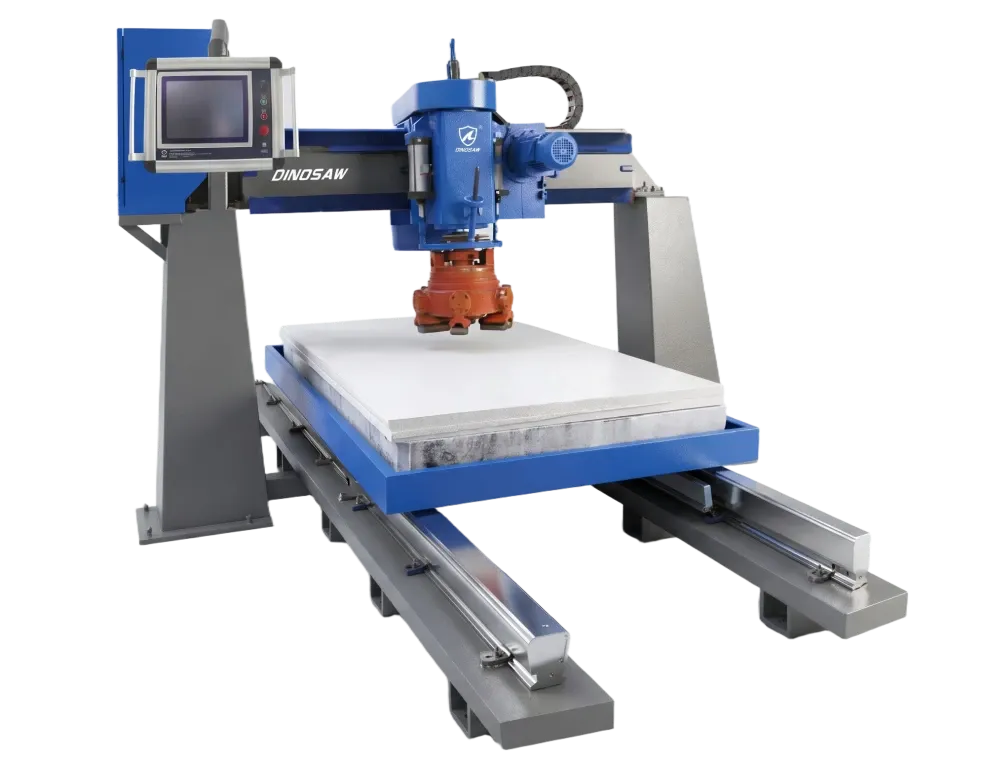
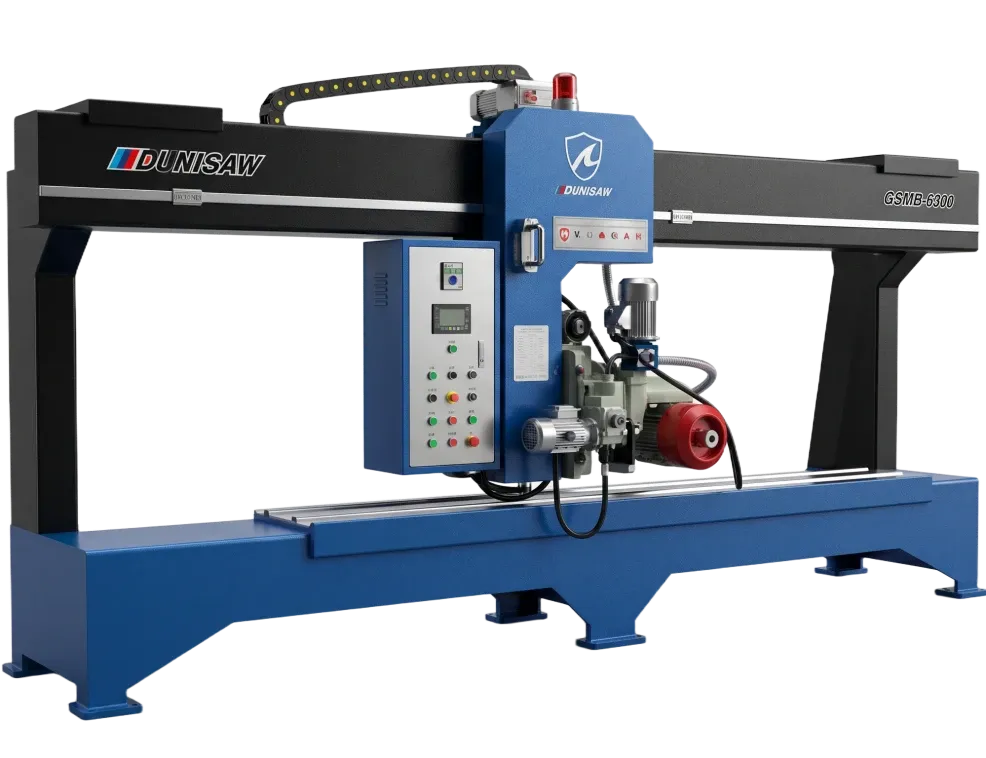
| Bridge Single-Head Automatic Polisher/QDMJ | 3000*2000*120mm | 1 head (bridge-traversing) | Semi-automatic PLC | Marble, granite, limestone, travertine, engineered stone | Small-to-medium workshops; varied slab sizes; custom runs | Under 50 m²/day; frequent size changes; flexibility more important than throughput |
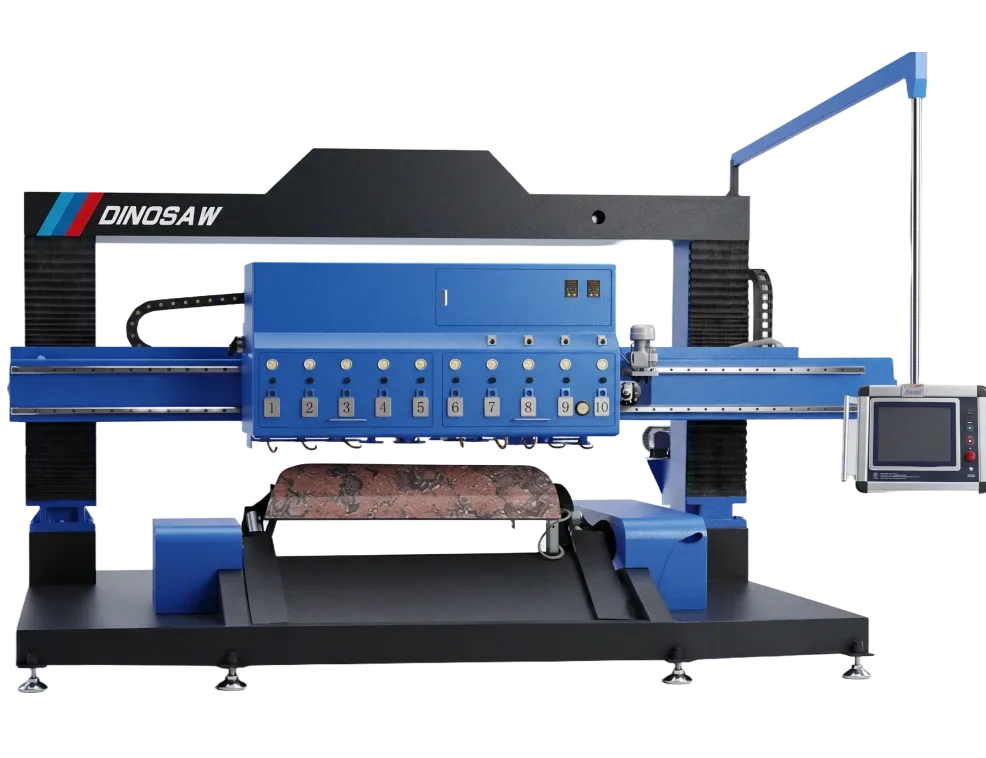
| Stone Arc-Slab Polishing Machine/YHMP | 1300*2000mm | Multi-head (arc-compensating configuration) | PLC, vacuum clamping system | Marble, granite, quartz, sintered stone, any arc or circular stone element | Column cladding, curved backsplashes, arc countertop edges, circular decorative panels | Any curved or circular stone surface — standard flat polishers cannot maintain even contact pressure on curved profiles |
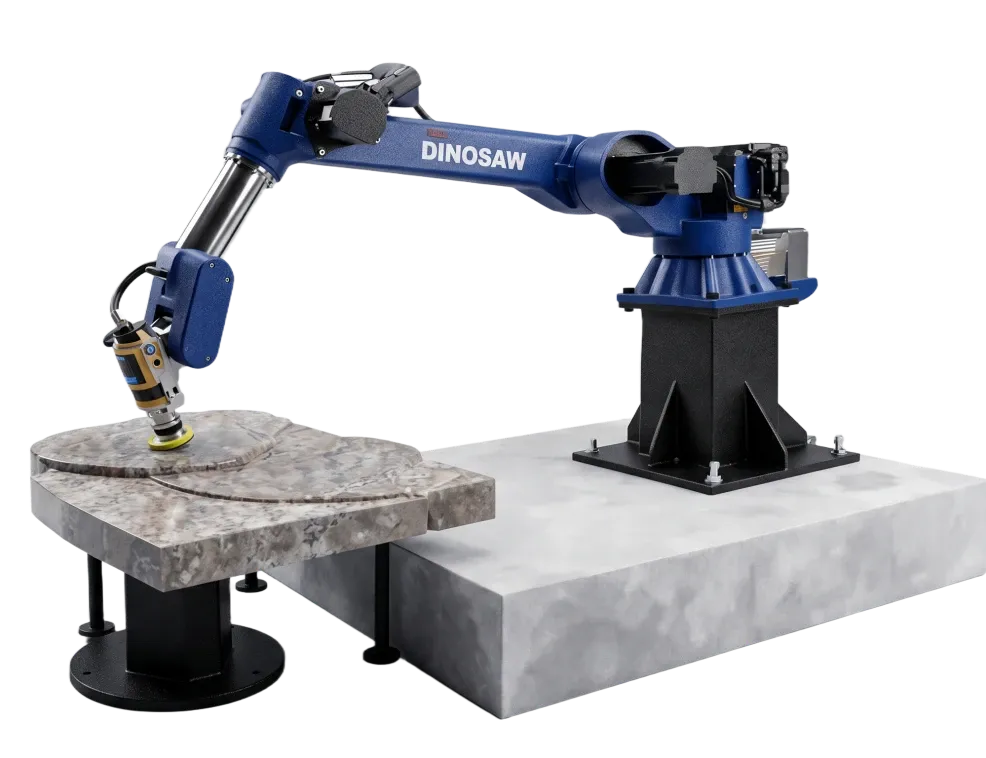
| 6-Axis Robot Arm for Stone Polishing/JXS | No fixed limit — 3D path-programmed | Robot-mounted polishing spindle | 6-axis CNC, programmable path storage | All stone types, glass, jade, metal, composites | Sculptures, complex 3D monuments, irregular shapes, curved countertop edges beyond straight-line machine capability | High-value custom pieces where geometry cannot be handled by any fixed-axis machine |
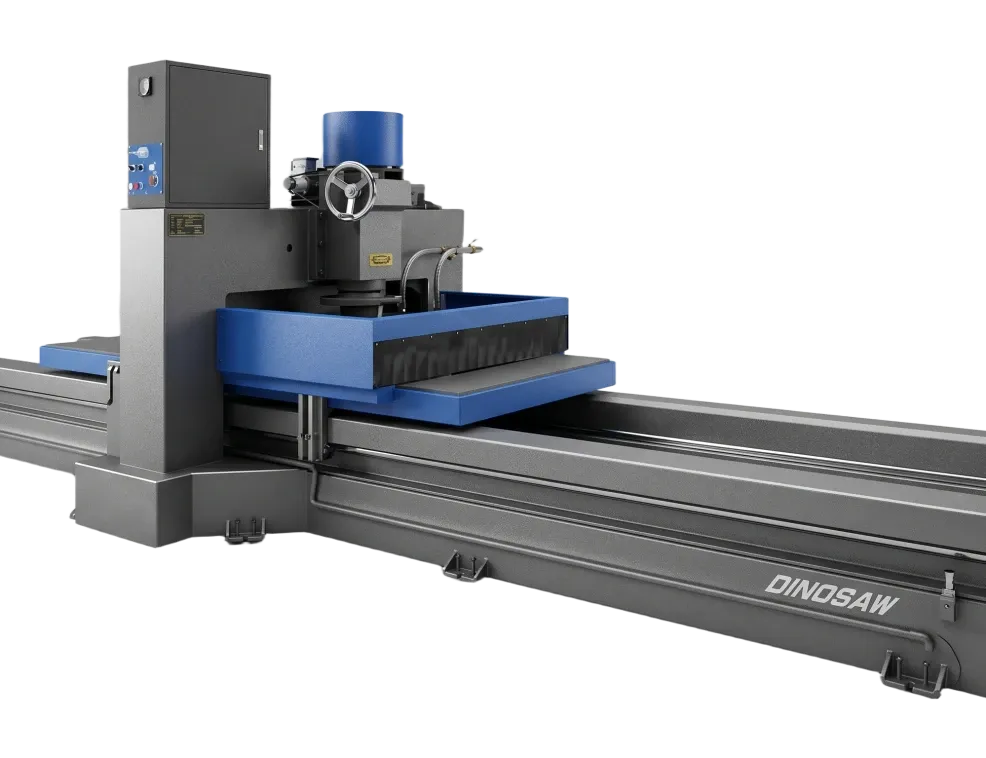
| Continuous Calibrating Machine/ZDDH | 3000*1250mm | Grinding rollers (calibration, not polishing) | Fully continuous feed, PLC | All stone types requiring surface levelling before polishing | Pre-polishing surface calibration in integrated production lines | When incoming slabs have thickness variation that causes uneven polishing results downstream |
Buying the wrong machine costs more than the price difference between models — it costs throughput, quality rework, and operator time for the machine's working life. Work through these four questions in order before comparing specifications.
Calculate your current peak daily output in m² or number of slabs, then add 25% for realistic growth headroom. Undersizing is the most common purchasing mistake in this category.
Machine working width and motor power are non-negotiable — you cannot process a 1,800 mm slab on a 1,200 mm machine, and a machine configured for marble will underperform on granite without adjustment.
These sit at opposite ends of a spectrum. Higher automation delivers better consistency and lower labour cost per m², but reduces the machine's ability to handle work outside its programmed parameters.
If incoming slabs have significant surface variation in thickness or flatness — common with rough-cut stone direct from quarry or low-tolerance gang saws — a calibrating pass before polishing is essential to achieve uniform gloss. The Continuous Calibrating Machine is designed specifically as a front-end addition to any automatic polishing line to solve this problem. Skipping calibration forces the polishing line to compensate for surface irregularities, which reduces gloss consistency and accelerates abrasive pad wear.
| Parameter | Manual Stone Polishing Machine | Automatic Slab Polishing Machine | When Manual Wins |
|---|---|---|---|
| Motor power | 4.5-5.5 kW (variable) | 7.5–200+ kW total (multi-head) | Custom work, low volume |
| Speed control | max 3000 RPM, operator-adjusted | Fixed programme (PLC/CNC) | Mixed materials, varied hardness in one session |
| Water feed | Integrated (gravity or pump-assisted) | Industrial recirculating system | On-site work, mobile use |
| Compatible materials | Marble, granite, limestone, travertine, onyx, sandstone, slate, quartzite | Same + engineered stone, sintered, terrazzo, porcelain | Natural stone detail and restoration work |
| Typical applications | Countertop detail, stair treads, window sills, vanity edges, fireplace surrounds, repair & restoration, sink cutout finishing | Full slab surface polishing, high-volume countertop lines, tile production | Custom profiles, small batches |
| Output per hour | 0.5–2 m² (operator skill–dependent) | High continuous throughput (volume-dependent) | Quality over quantity; detail work |
| Capital cost | Low | Significant | Small workshop, startup, complement to existing CNC |
| Labour requirement | 1 skilled operator | 2 operator supervises line | When skilled labour is available and volume is low |
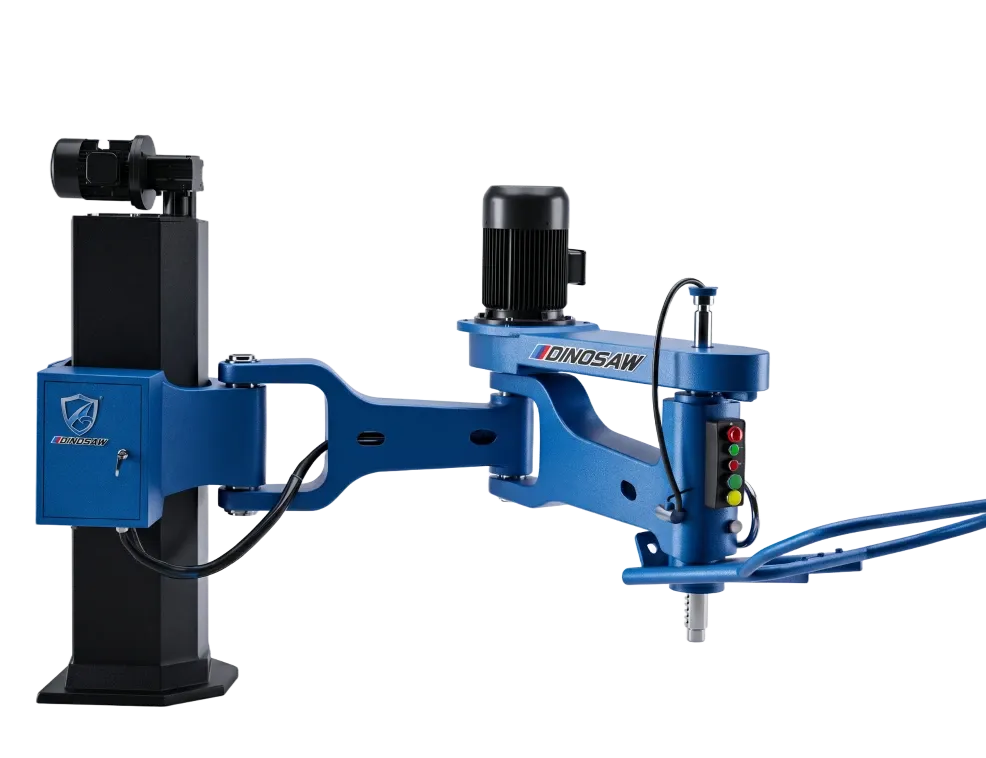
Automated lines handle volume. Manual polishing machines handle everything else — the custom one-off piece, the repair job, the awkward area no machine can reach, the small workshop that cannot justify a production line investment. For stone fabricators, restorers, and on-site finishing contractors, a reliable manual polisher is not an entry-level alternative to automation; it is a permanent part of a complete processing capability.
Dinosaw's manual stone polishing machine for granite and marble covers surface grinding and edge polishing at variable speeds up to 3000 RPM with an integrated water-feed system. It handles natural stones from soft limestone and marble through to dense granite and quartzite, and complements any CNC production line by covering the custom finishing and detail work that automated equipment cannot economically address.
Edge polishing requirements diverge sharply depending on profile complexity, material type, and whether the operation handles glass alongside stone. Match your primary workflow to the machine configuration before evaluating specifications.
| Machine | Edge Profiles Supported | Compatible Materials | Max Slab Thickness | Processing Mode | Best For |
|---|---|---|---|---|---|
| Automatic Edge Profile Polishing Machine for Countertops | Flat / eased, bevel, radius (top & bottom), bullnose, pencil edge, chamfer | Marble, granite, quartz, sintered stone, engineered stone, travertine | Up to laminated / mitred (60–80 mm) | Conveyor feed, straight-line, fully automatic, multi-spindle single pass | Countertop production lines; architectural panel edge finishing; operations running high volumes of consistent straight edges |
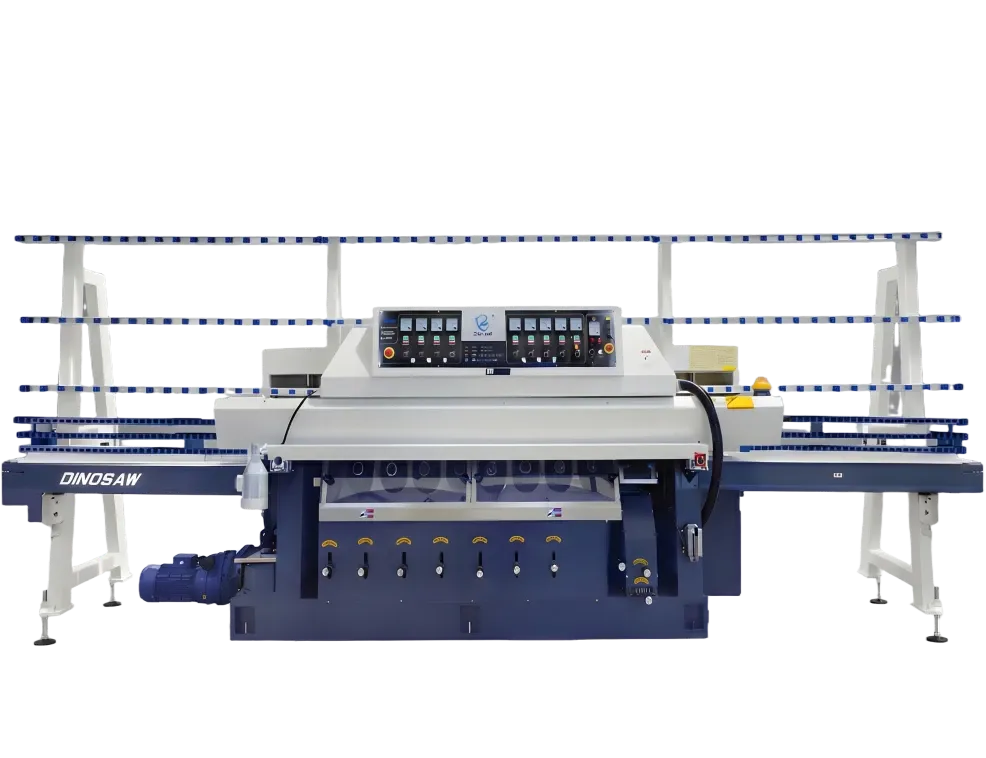
| Multi-Purpose Glass Edging Machine for Glass & Stone | Flat, bevel, chamfer, polish (straight edge) | Glass, marble, granite, artificial stone | Standard glass and stone (up to ~25 mm) | Precision guide system, straight-line, automatic | Workshops handling both glass and stone; glass panel fabricators adding stone capability; frameless glass and mirrored stone installations |
| 6-Axis Robot Arm (edge polishing application) | Any profile including curved, 3D, radius corners, sculpted edge paths | All stone, glass, jade, metal composites | No restriction — 3D path-programmed | Programmable 6-axis CNC, path storage and recall | Curved countertop fronts; island radius corners; custom sink aprons; architectural elements that cannot be run through a straight-line machine |
The edge is the detail that separates a professional stone installation from an amateur one — and it is the part of the process where most fabrication shops either lose time to manual labour or lose quality to inconsistent results. Dinosaw's stone edge polishing machines cover straight-line production edge polishing for countertops and architectural panels, glass-and-stone combined edging for mixed-material workshops, and robot-arm edge polishing for curved or three-dimensional edge paths that straight-line machines cannot handle.
These machines process flat edges, eased edges, bevels, radius top and bottom profiles, bullnose, pencil edge, and chamfer profiles on marble, granite, quartz, sintered stone, engineered stone, and glass. Compatible slab thickness ranges from standard 20 mm countertop material to laminated and mitred thick edges used in premium kitchen and furniture applications.
Edge polishing is the bottleneck in most countertop fabrication shops. A machine that cannot reliably run your most common profile — or that requires excessive setup time between jobs — will cost more in lost production than it saves in labour. Three questions determine the right choice.
Be specific. Eighty percent of fabricators process flat, eased, or simple bevel edges the majority of the time. The remaining twenty percent — bullnose, ogee, complex radius work, curved edges — is where most over-investment in machine capability occurs.
Unlike slab machines where area (m²) is the relevant metric, edge polishing is measured in linear metres of finished edge per day. A kitchen countertop with a 3-metre front edge and two 600 mm returns equals 4.2 linear metres. Multiply by your daily piece count to get your target throughput.
Stone polishing requirements do not come in standard sizes.A machine that solves one operation's problems will create a different set of problems for another.
Dinosaw team works directly with stone fabricators to configure polishing equipment around the specific combination of variables that define each operation: material hardness and surface sensitivity, slab geometry and maximum dimensions, target finish specification, daily throughput requirement, and the physical constraints of the existing production layout. Describe your production challenge and Dinosaw will respond with a technical proposal.
Choose your preferred CNC systems, motor power, and automation levels for maximum efficiency.
Adjust table dimensions, rail lengths, and cutting thickness to fit your workshop and slab sizes.
Private label services including custom machine colors and logo placement on hardware and software UI.
 English
Get A Easy Solution
Chat Online
Hi, this is Lizzy from Dinosaw ( Not a Robot ). Which Machine ( model ) do you want? Please WhatsApp us now
Hello 👋 How can we help?
 中文
中文 Italian
 Türkçe
 Português
 Español
 Deutsch
 العربية
 Tiếng Việt
 Français
 Русский
 한국어
한국어