





 中文
中文 Italian
 Türkçe
 Português
 Español
 Deutsch
 العربية
 Tiếng Việt
 Français
 Русский
 한국어
한국어


Ms.Lizzy
Hi, this is Lizzy from Dinosaw ( Not a Robot ). Which Machine ( model ) do you want? Please WhatsApp us now


Open Hours:8:30am-20:30pm

WhatsApp: +86 198-5901-3937

 Dec 9, 20255 MIN READ
 Dec 9, 20255 MIN READ
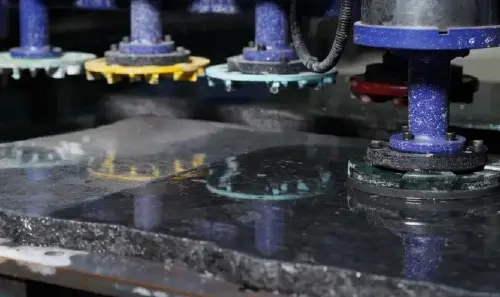
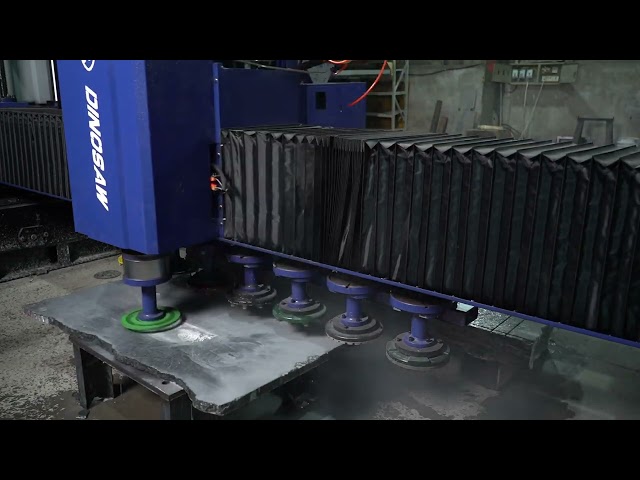
Granite slab polishing case study using automatic blade-changing CNC polishing machine, covering polished granite for memorials, monuments, and architectural stone applications.
 ▶
▶Case Snapshot
Material
Granite
Processing Method
CNC automated blade-changing stone polishing
Typical Application
Polished granite slabs for memorials, monuments, façades, flooring, and stone panels
Applicable Markets
Memorial and monument fabrication, architectural stone processing, exterior stone projects
Processing Focus
Stable polishing quality on both thick and thin granite slabs used in visible finished products
Associated Product
Dinosaw Automatic blade-changing CNC stone polishing machine
Granite is widely used in applications where long-term durability and surface stability are required.
In memorials and monuments, granite surfaces are viewed at close distance and often under direct sunlight, making polishing quality a defining factor of the finished piece.
In architectural use, granite slabs are applied to façades, floors, and exterior panels where consistency across large areas is essential.
Both thick and thin granite slabs are commonly polished in the same production environment.
Thicker slabs are often used for memorial stones, headstones, and monument bases, while thinner slabs are applied to walls, floors, and cladding systems.
Despite the difference in thickness, visual consistency remains a shared requirement.
Polishing granite presents challenges that go beyond surface appearance.
Granite’s hardness makes it sensitive to unstable tool contact.
Thick slabs require controlled material removal to maintain flatness.
Thin slabs are more affected by vibration and uneven support.
In memorial and monument production, even minor polishing marks remain visible after installation and cannot be hidden by later processes.
Managing multiple polishing stages while maintaining consistent results across different slab thicknesses is a common workshop challenge.
In memorial production, the surface is the product.
There is no secondary layer to hide polishing defects.
If the surface reflection is uneven or shows swirl marks, it stands out immediately, especially outdoors.
That’s why granite polishing for memorials is treated as a precision operation, not just a finishing step.
Granite polishing typically involves several grinding and polishing stages.
Automatic blade changing allows these stages to run in sequence without stopping the line.
This reduces human variation between stages and helps keep surface quality consistent, especially when polishing thick and thin slabs together.
Operators focus on slab stability and surface response.
Thin slabs need proper support to avoid vibration, while thick slabs need steady pressure to prevent surface waves.
They also watch how the surface develops after each stage, not just the final gloss.
Quality is judged by uniform reflection, surface flatness, and the absence of visible polishing traces.
For memorial stones, slabs are often checked from multiple angles under light.
If slabs of different thicknesses appear visually consistent side by side, the polishing result meets workshop standards.
Granite slabs were loaded and supported according to their thickness.
The CNC system controlled consistent polishing paths across all slabs.
Automatic blade changes enabled smooth progression from coarse grinding to fine polishing without interrupting the workflow.
Finished slabs were visually inspected before being sent to memorial fabrication, engraving, or architectural installation.
Polished granite slabs showed stable surface quality across different thickness categories.
Reflection and gloss remained consistent on both memorial-grade thick slabs and architectural thin slabs.
Surface defects were minimized, reducing the need for rework.
The polishing process aligned well with both monument production and architectural stone workflows.
If you are polishing granite slabs for memorials or monuments,
if your production line handles both thick and thin granite products,
if surface consistency directly affects acceptance in visible finished stone,
this case reflects a real-world granite polishing scenario common in professional stone workshops.
 English
Get A Easy Solution
Chat Online
Hi, this is Lizzy from Dinosaw ( Not a Robot ). Which Machine ( model ) do you want? Please WhatsApp us now
Hello 👋 How can we help?