



 中文
中文 Italian
 Türkçe
 Português
 Español
 Deutsch
 العربية
 Tiếng Việt
 Français
 Русский
 한국어
한국어


Ms.Lizzy
Hi, this is Lizzy from Dinosaw ( Not a Robot ). Which Machine ( model ) do you want? Please WhatsApp us now


Open Hours:8:30am-20:30pm

WhatsApp: +86 198-5901-3937

 Jan 4, 20265 MIN READ
 Jan 4, 20265 MIN READ
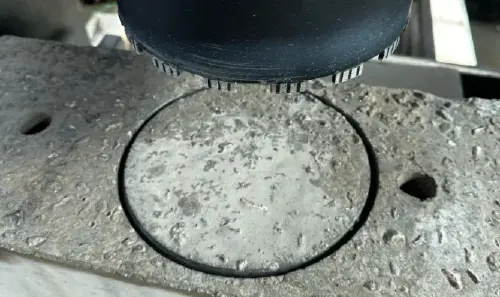
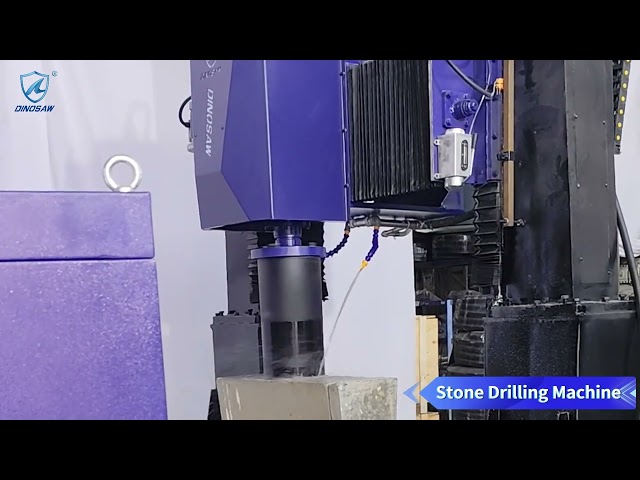
Granite coring case study using industrial core drilling machine, showing stable and precise core extraction from thick granite for testing and structural use.
 ▶
▶Case Snapshot
Material
Granite
Processing Method
Industrial core drilling
Typical Application
Core sampling and extraction from granite blocks for material testing and structural analysis
Applicable Markets
Stone fabrication, geological testing, structural stone quality assessment
Processing Focus
Accurate and stable core extraction from hard granite with minimal breakouts
Associated Product
Dinosaw Core drilling machine for stone and concrete
Core sampling from granite is a routine but critical task in stone fabrication and quality assessment workflows.
Whether for strength testing, installation planning, or embedded feature creation (such as anchor holes or lifting channels), extracting a solid, intact core from a dense stone block requires controlled drilling and stable support.
Granite’s inherent hardness and internal grain direction make core extraction distinctly different from cutting or surface profiling.
In quality evaluation or heavy structure prep, the performance of the drilling method directly affects the validity of the core sample and the usability of the remaining block.
Granite resists penetration more than many other stone types.
If drilling feed or support is unstable, the bit can wander or produce uneven breakouts around the hole edge.
Inconsistent pressure or rotation speed changes can generate micro-cracks that compromise the core’s integrity.
When cores are extracted for testing, surface damage undermines reliability.
In on-site structural applications, inaccurate holes can complicate anchoring or reinforcement tasks.
Operators often say it’s the combination of hardness and unpredictability.
Granite’s mineral mix changes density locally, so the drill can behave differently even within the same block.
If the setup isn’t stable, the drill will deflect or pull material off the edge, making the hole size unreliable.
Industrial core drilling machines are designed to apply consistent axial force and rotation with minimal vibration.
That stability helps keep the bit straight and the hole diameter accurate.
For granite, especially thick sections, that means a reliable core extraction — not just a hole that “sort of looks right.”
They focus on support and feed control.
Granite takes more force and the drill must be kept perpendicular to the surface.
Operators also monitor dust evacuation and cooling, because heat buildup can affect bit life and surface condition.
Quality is judged first by how intact the core is.
An acceptable core is free of radial cracks and has a clean edge.
Next, the hole left behind should have minimal breakout, allowing for predictable follow-up work like reinforcement placement or embedded fixtures.
Granite blocks were positioned and secured to ensure vertical stability.
The industrial core drilling machine was set up with the correct bit diameter and feed settings for granite hardness.
Drilling was performed steadily, with continuous control over feed rate and cooling to prevent heat buildup.
Extracted cores were inspected for integrity before being used for testing or structural planning.
Cores extracted from granite blocks showed minimal cracking and clean surface finishes.
Hole edges remained well defined without excessive breakout.
The drilling process maintained stability throughout penetration depths required for structural assessment.
Operators observed consistent results across multiple cores from the same block.
If you are performing core sampling from granite blocks for testing or structural planning,
if hole integrity and edge condition matter for follow-up installation tasks,
if stable drilling performance directly affects your workflow outcomes,
this case reflects a practical and repeatable granite core drilling scenario in stone fabrication settings.
 English
Get A Easy Solution
Chat Online
Hi, this is Lizzy from Dinosaw ( Not a Robot ). Which Machine ( model ) do you want? Please WhatsApp us now
Hello 👋 How can we help?