



Specs & Systems
Choose your preferred CNC systems, motor power, and automation levels for maximum efficiency.


Open Hours:8:30am-20:30pm

WhatsApp: +86 198-5901-3937
@2x.webp)
@2x.webp)
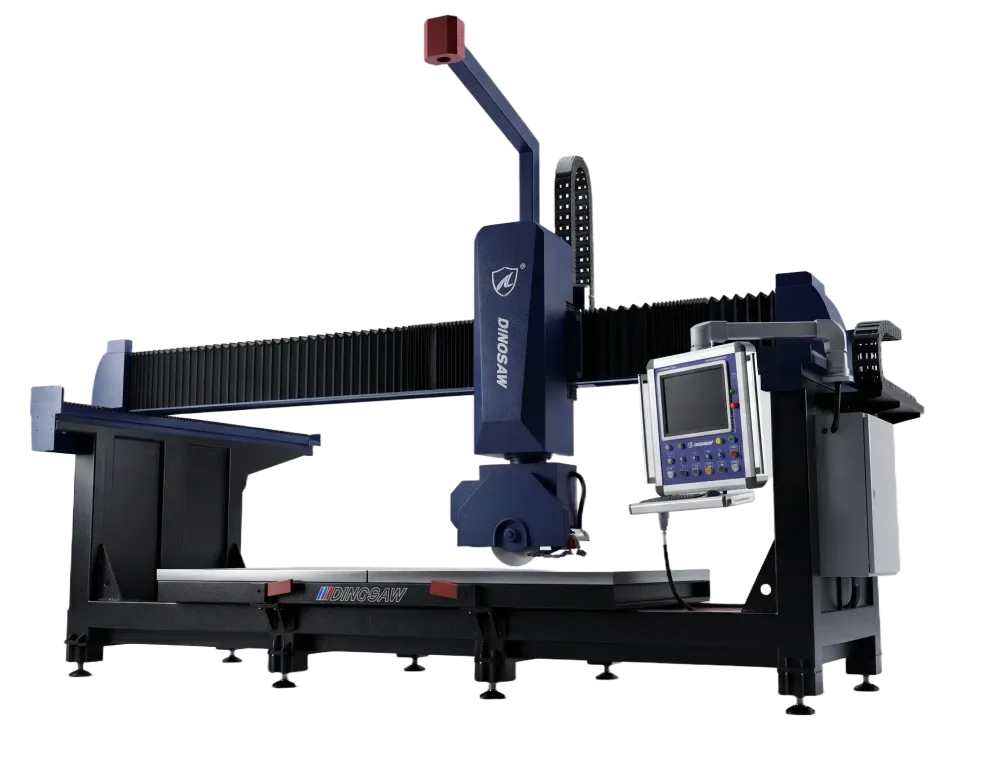
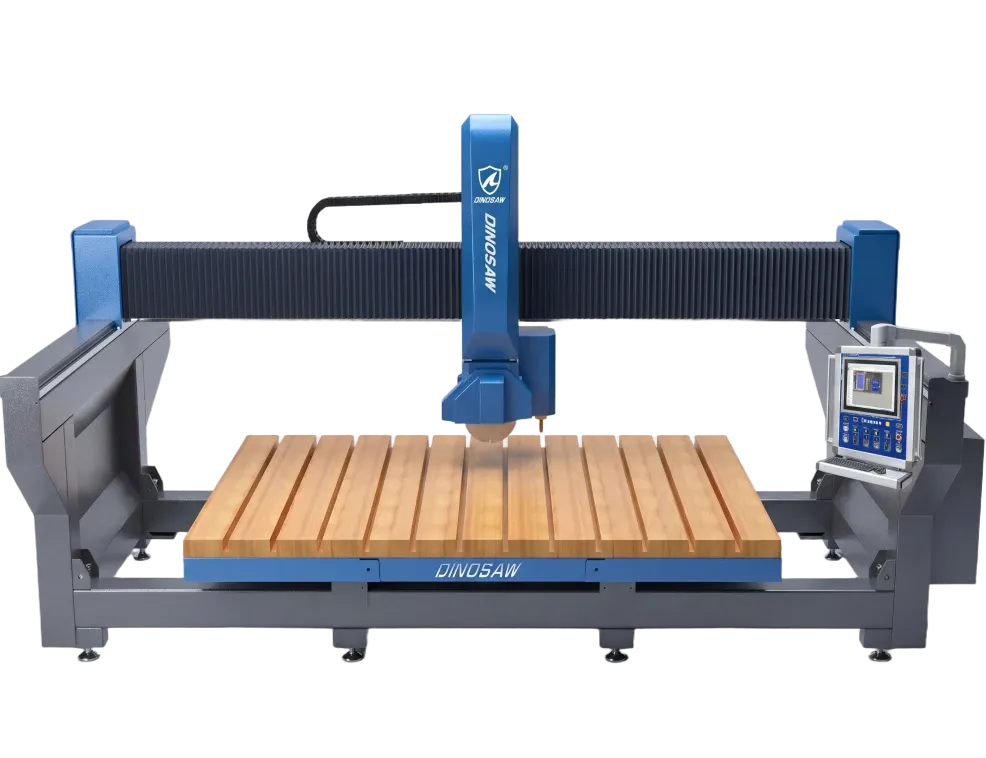
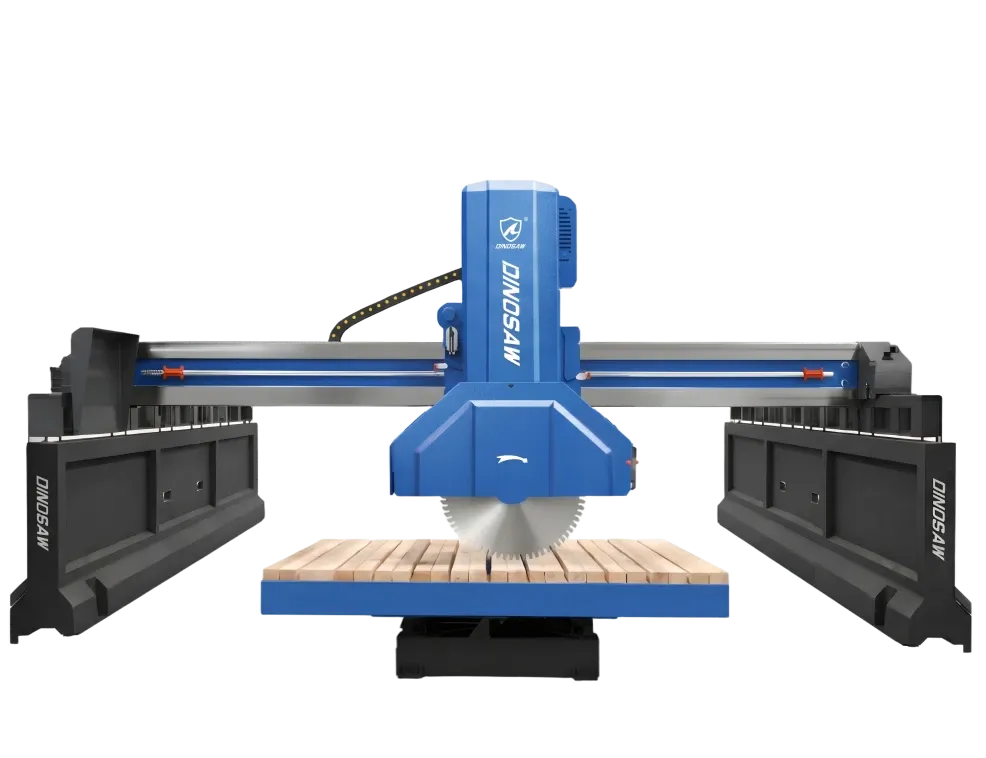
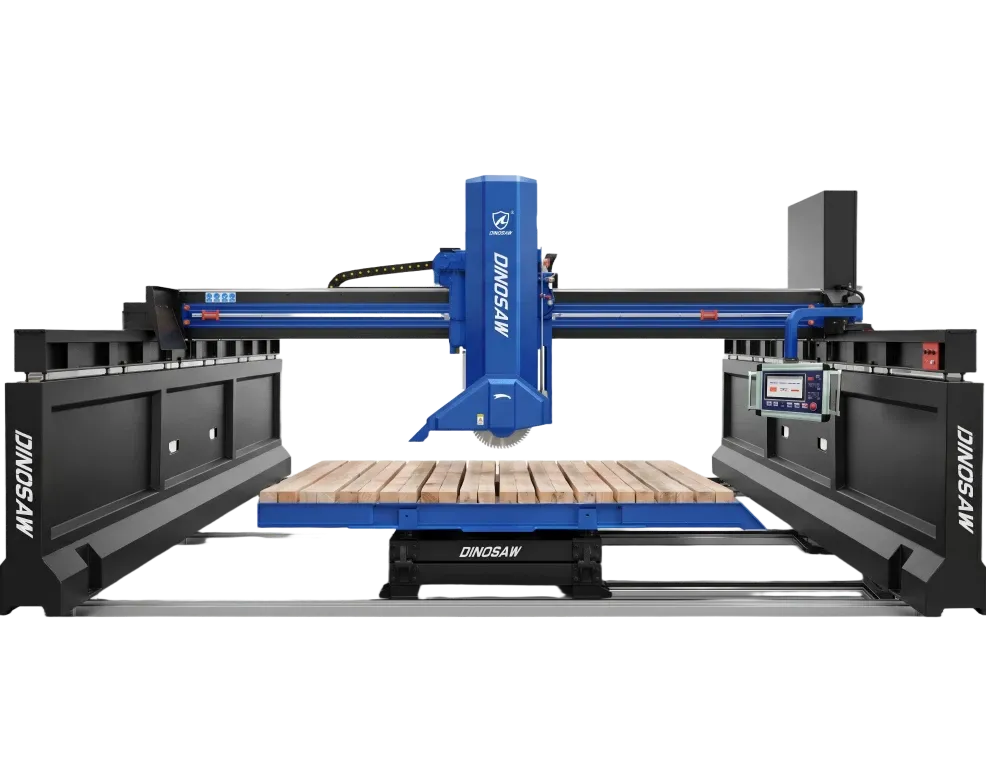
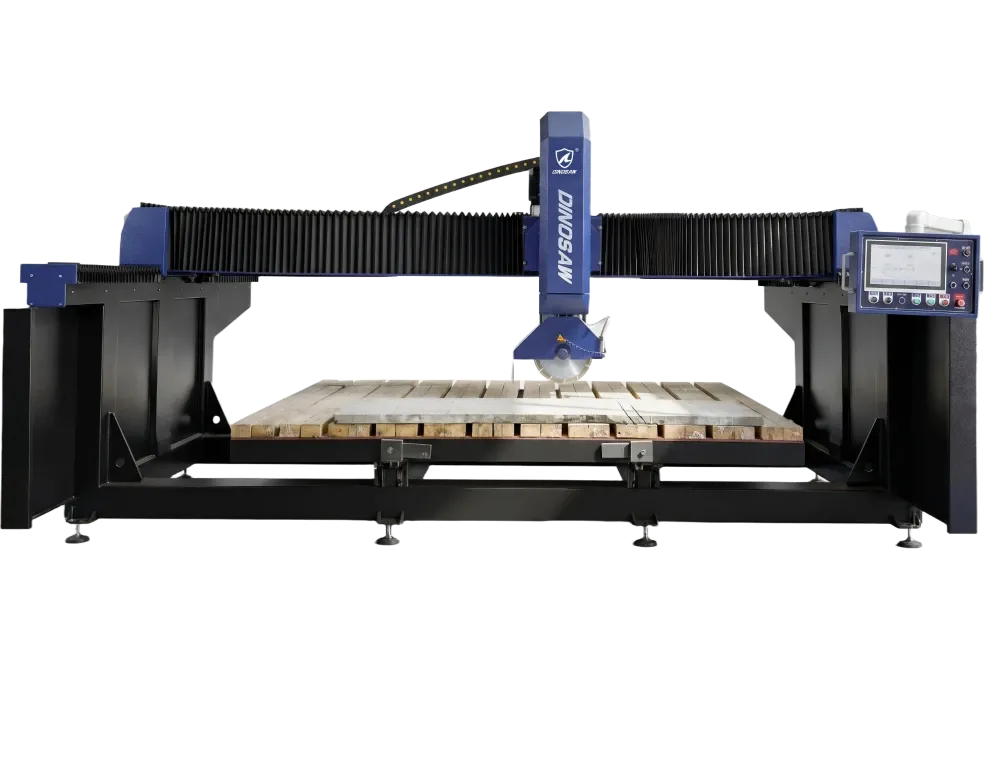
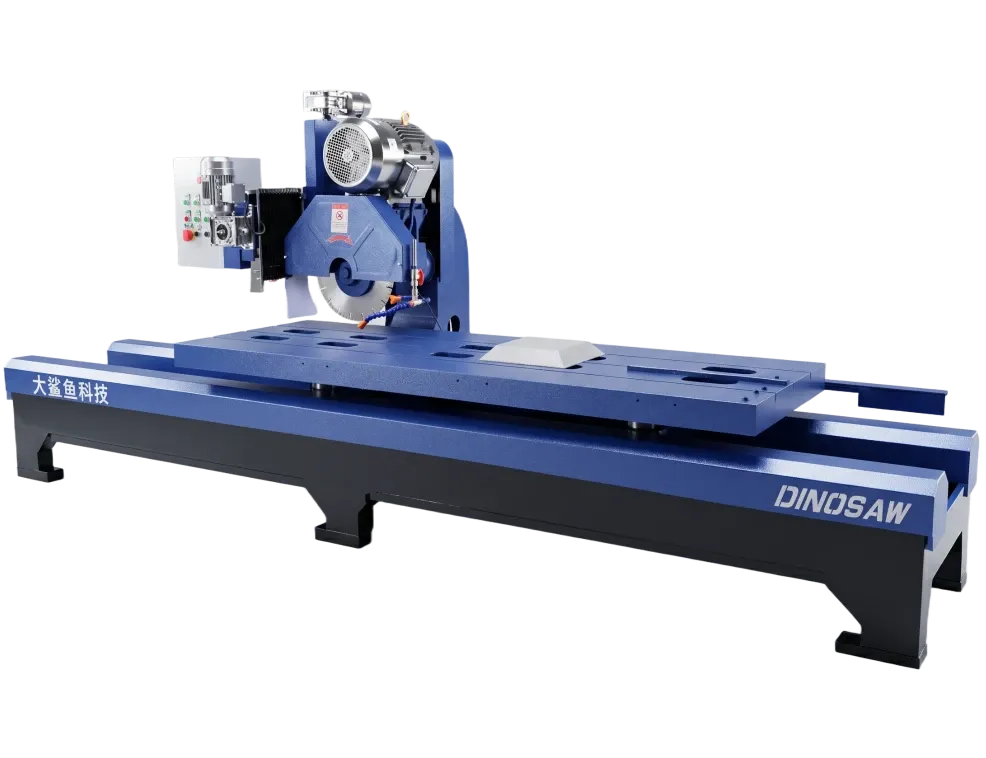
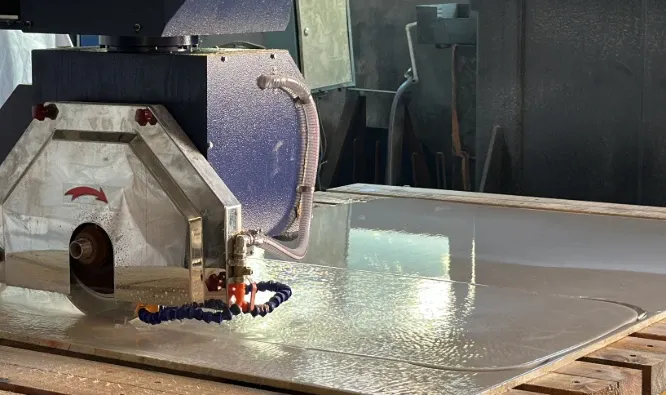
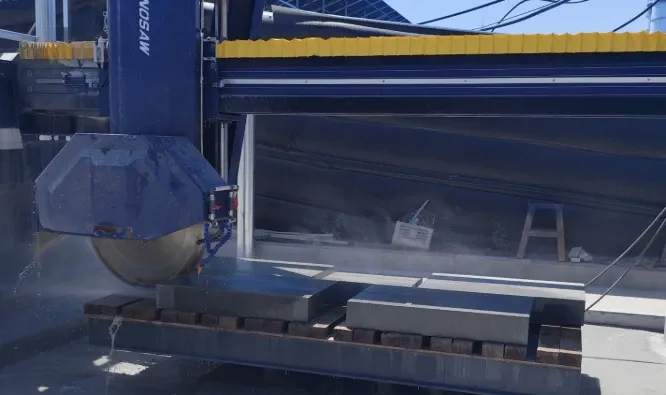
Bridge saws span the full range from manually-fed, electrically-driven machines for small workshops to 5-axis CNC systems capable of cutting complex 3D geometry in sintered stone. The table below compares the six models on the key dimensions that determine fit for a given production workflow.
Machine / Model | Axis Config. | Precision | Key Capability | Compatible Materials | Best For |
|---|---|---|---|---|---|
5-Axis CNC Bridge Saw/WZQJ | 5-axis (3 linear + 2 rotary): full 360° horizontal rotation + blade tilt | ±0.05 mm | Straight cuts, angled cuts, curved cuts, 3D cutting, drilling, edge polishing in one setup. DDX control system. Direct DXF/DWG import. Proprietary anti-chip algorithm for brittle materials at 45° mitre. | Sintered stone, luxury marble, high-end quartz, ceramic, porcelain, terrazzo, granite | Fabricators producing waterfall edges, complex 3D sinks, integrated basin cutouts, and premium countertops in brittle or hard materials where edge chipping is not acceptable |
4+1 Axis Bridge Saw/DSQJ | 4-axis + 1 rotating head (independent milling/beveling head) | ±0.1 mm | 4-axis movement plus an independent +1 rotating head for automated beveling and edge profiling without repositioning. Combines straight cutting, 45° bevel, and profile work in a single pass. | Granite, marble, engineered stone, quartz | Standard kitchen countertop and bathroom vanity production at volume; operations needing beveling and straight cutting in the same workflow without a separate profiling machine |
CNC Stone Bridge Saw/QSQJ | CNC (3-axis standard) | ±0.1 mm | HT250 cast iron beam construction absorbs 95% of vibration. High-precision CNC control for dimensionally consistent cuts across large production runs on architectural stone. | Terrazzo, limestone, architectural slabs, marble, granite | Precision-sized floor tiles, wall cladding panels, and architectural stone where dimensional consistency across large batches is the primary requirement |
Monoblock Bridge Saw Stone Cutter/YTQJ | CNC, integrated monoblock frame | ±0.1 mm | Single-piece monoblock frame eliminates alignment drift over time and simplifies installation — no on-site calibration of separate components. PLC control. Immediate production from Day 1. | Granite, quartz, ceramic tiles, engineered stone | Smaller fabrication shops prioritising fast installation and operational simplicity; batch countertop production where a predictable, zero-maintenance frame is more important than axis flexibility |
Bridge Cutting Machine/QSZQ | Semi-automatic (PLC) | ±0.1 mm | Heavy-duty construction for the harshest environments. Optimised for high-volume throughput on hard materials — granite blocks, concrete, and paving stone — where cut speed per metre matters more than precision geometry. | Heavy granite blocks, concrete, paving stones, kerbstones, basalt | Industrial stone processors and paving stone producers needing maximum daily volume on straight cuts; operations where the stone is hard and the cuts are simple |
Manual Stone Cutting Machine/SYQJ | Electrically driven; manual feed and angle adjustment | Operator-dependent | Electrically powered saw with manual control of slab feed speed, cutting angle, and positioning. Not a handheld tool — a fixed, electrically-driven machine where the operator manually guides the stone through the blade and adjusts cut parameters by hand. Lower capital cost, minimal maintenance, suitable for operations where CNC automation is not required. | Marble, granite, limestone, sandstone, natural stone | Small workshops, on-site stone fabrication, operations with low daily volume or highly varied cut requirements where CNC programming overhead is not justified; entry-level investment with full upgrade path to CNC bridge saw |
The right bridge saw configuration depends on the complexity of cuts you need to produce, the materials you primarily work with, and how much of that work is standardised versus custom. Manual machines add a further dimension: when automation is not justified, either by volume or budget.
The cut types you run most often determine the axis configuration you need. Most fabricators overestimate the axis count they require — and pay for capability they never use.
Harder and more brittle materials demand tighter machine tolerances and more rigid frame construction. Specifying a lighter machine for granite production is the most common cause of premature accuracy loss.
The Monoblock Bridge Saw is the only model where the frame arrives as a single integrated unit with no on-site calibration of separate components. For fabrication shops with limited technical staff or those commissioning a new line quickly, this is a meaningful operational advantage. All other CNC bridge saw models require standard installation and calibration, which Dinosaw's technical team supports.
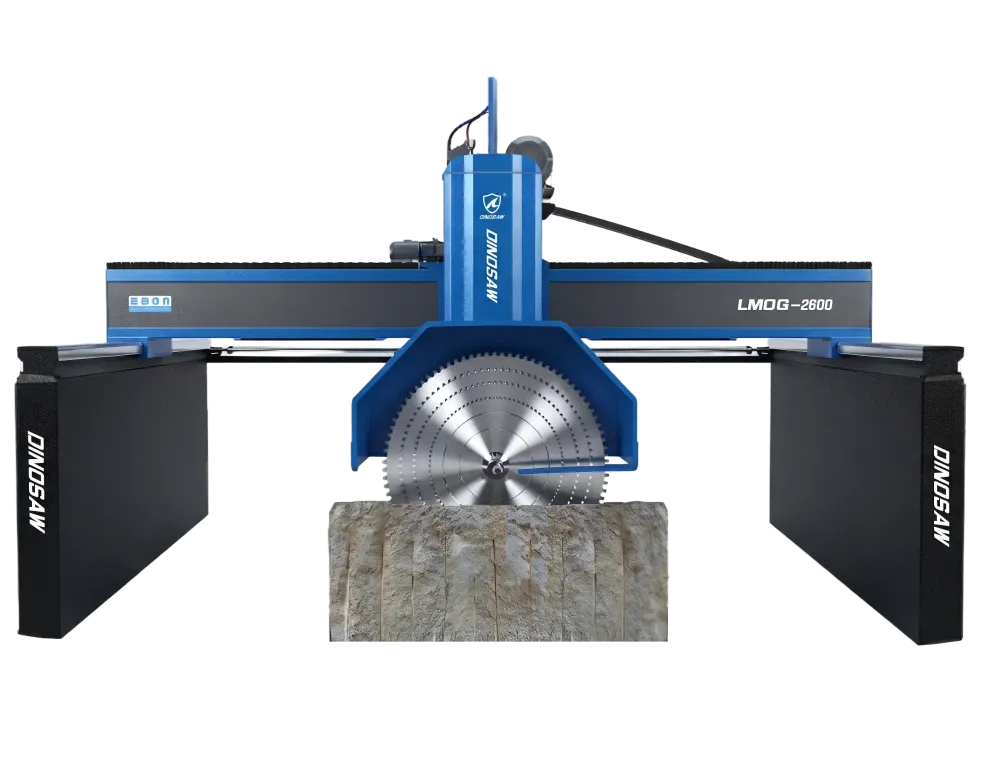
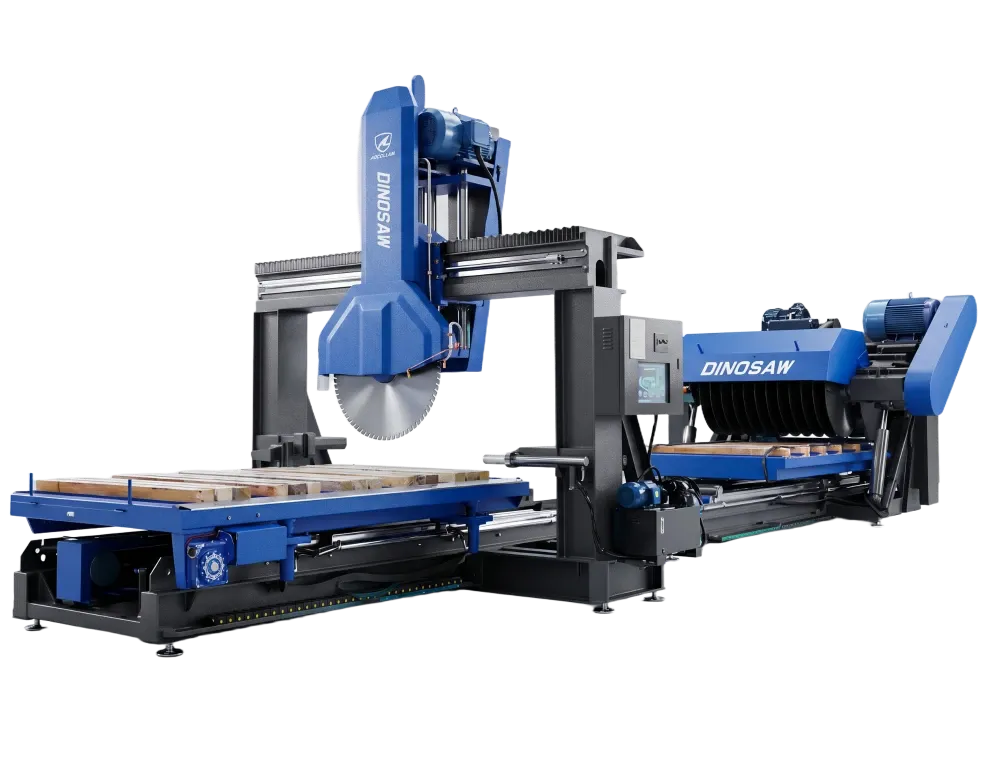
Stone block cutting machines are primary processing equipment — they convert raw quarry blocks and large stone sections into slabs, strips, and tiles for downstream fabrication. The five models in this range differ in structure, blade configuration, cutting direction, and the type of block-to-product workflow they are optimised for.
Machine / Model | Structure | Max Blade Ø / Max Blades | Max Cutting Size (L×W×H mm) | Best For |
|---|---|---|---|---|
Bridge Multiblade Stone Cutting Machine/LMDQ | Bridge-type, 4-pillar lifting; oil-immersed sealed guide rails; table or trolley optional (360° rotating table available) | Ø3,000 mmUp to 32 blades(single or multi-blade combination) | 3,500 × 2,200 × 1,350mm | High-volume granite, marble, limestone, and sandstone primary slicing for slab production lines. Up to 32 simultaneous blades for maximum throughput. PLC current monitoring. ±0.5 mm slab thickness tolerance. No foundation required. Suited to continuous 24/7 block processing. |
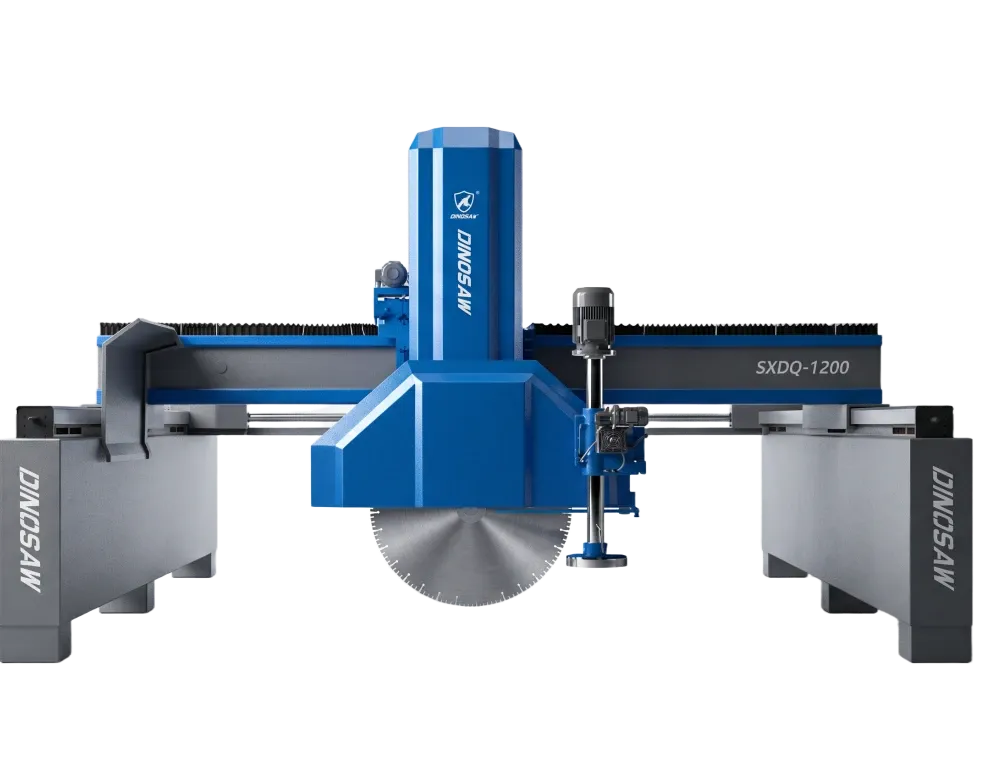
Vertical Plus Horizontal Stone Cutting Machine/SXDQ | Bridge-type with dual blade system: main vertical blade + independent horizontal blade column | Vertical: Ø1,600 mmHorizontal: Ø400–600 mmCombined two-direction cutting | 3,400 × 2,100 mm (Max. vertical travel: 1,350 mm Horizontal column stroke: 850 mm) | Block processing operations requiring both vertical slicing and horizontal cuts in the same setup — eliminates secondary repositioning. Suited to quarries and factories producing kerbstones, thick paving slabs, and tombstone blanks where two-direction cutting is routine. |
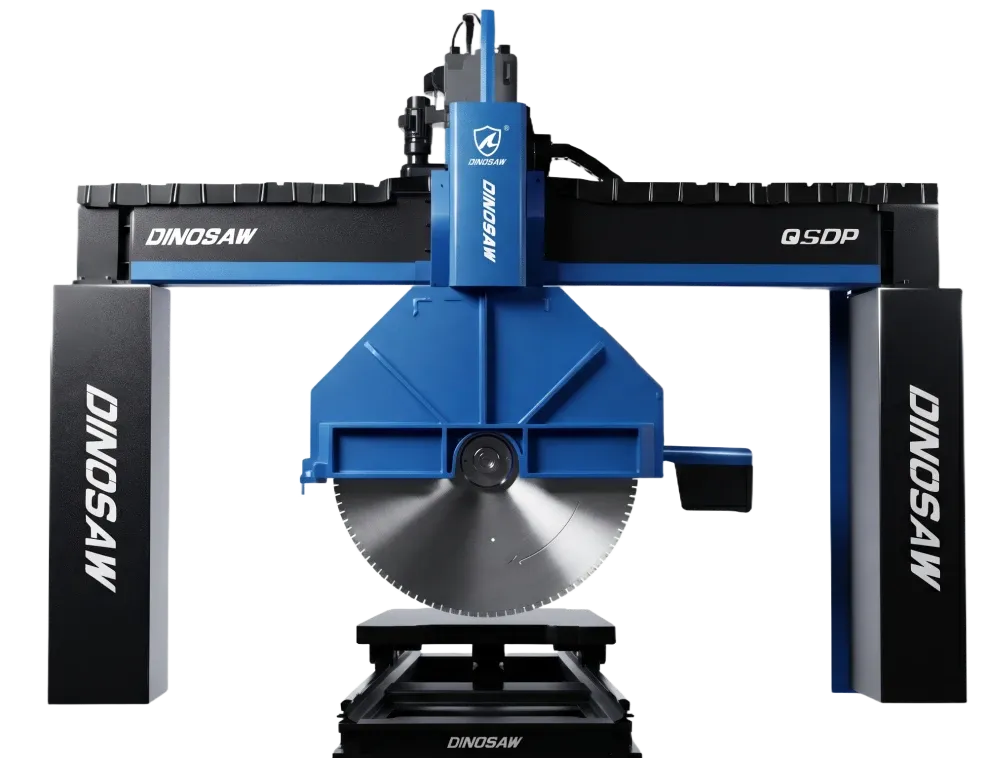
Bridge Single-Blade Stone Cutting Machine(With Trolley)/QSDP | Bridge-type with hydraulic slider; stone block loaded on trolley; simple structure, high stability | Ø3,200 mmSingle blade | Feeding travel: 5,200 mm Lifting stroke: 1,600 mm | Block trimming and primary sizing where a full multi-blade line is not required. The trolley positions the block for each successive cut. Simple maintenance and lower capital cost than multi-blade configurations. Suited to occasional large-format block cutting and quarry-adjacent operations. |
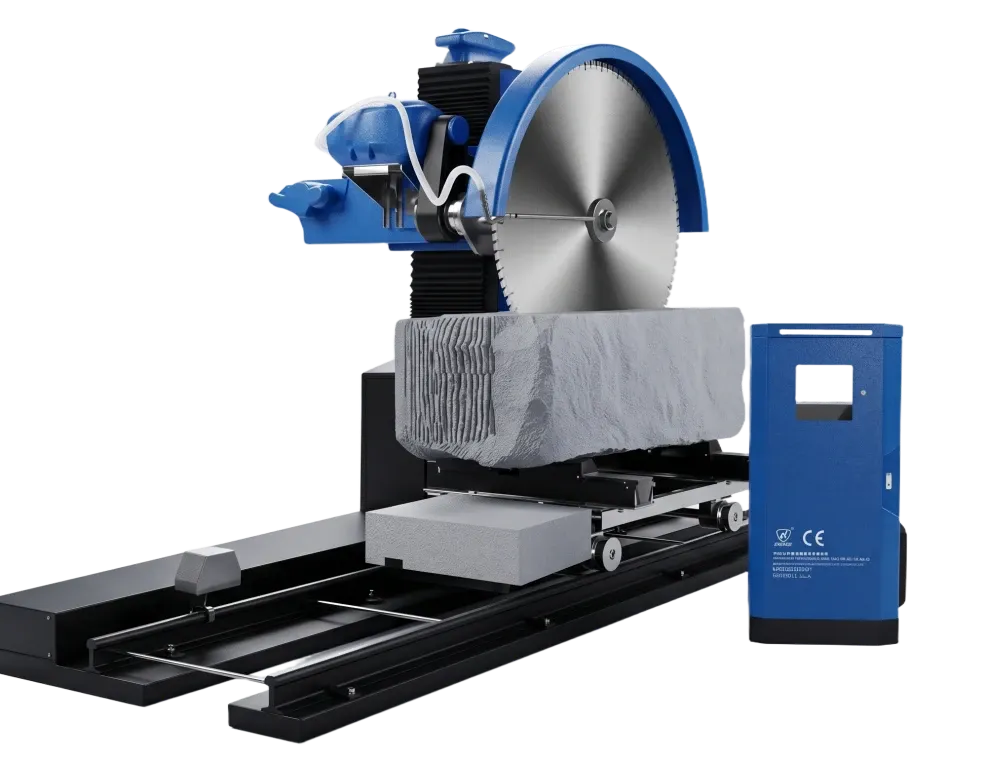
Single Column Auto Stone Cutting Machine/DBZQ | Single-column supporting structure; two-stage variable speed gear for smooth cutting head movement | Ø1,800 mmSingle blade (DBZQ-1600: up to 2 blades, Ø1,600+Ø940 mm) | 3,000 × 1,200 × 750mm | Medium-volume marble and granite operations needing automated block slicing in a compact floor footprint. Single-column structure reduces installation complexity versus full bridge machines. Two-stage variable speed ensures consistent cut quality on varying stone hardness. |
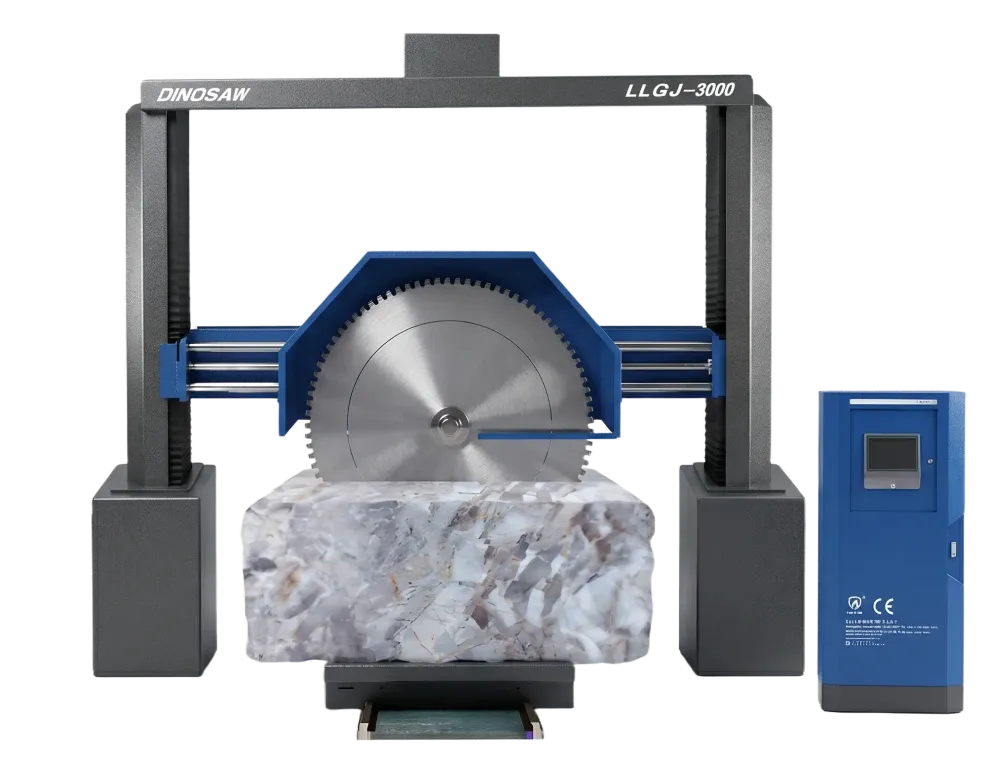
Gantry Stone Cutting Machine/LLQJ | Gantry-type: two heavy columns + main crossbeam; blade elevation driven by crossbeam; adjustable sliding speed | Ø3,000 mmSingle blade(LLQJ-2200: up to 3 blades Ø2,200/1,600/940 mm) | 3,400 × 2,000 × 1,350mm | Quarry operations and large stone factories processing very large granite, marble, bluestone, basalt, and slate blocks. Gantry structure provides exceptional stability on irregularly-shaped or oversize blocks. Suited to kerbstone production, monument rough-sizing, tombstone blanks, and large-slab production. |
Block cutting machines serve a different function from bridge saws — they process raw material before it enters the fabrication workflow. The right choice depends on block dimensions, required slab output, and whether you are cutting for downstream fabrication or for direct sale of finished products like kerbstones and tombstones.
Daily output volume is the primary variable for block cutting machine selection. More blades means more cuts per pass, which means more m² per shift — but also higher capital cost and more complex maintenance.
Block dimensions determine which machine structure can physically accommodate the material, and stone hardness determines the required motor power.
The end product shapes the machine choice as much as the raw material does.
Kerbstone production requires two distinct machine types depending on whether the curbstone profile is straight or curved. Dinosaw offers both.
Machine | Cutting Technology | Profile Capability | Key Specs | Daily Output | Best For |
|---|---|---|---|---|---|
Kerbstone Cutting Machine Line/LYFP | Curbstone Slicing Machine: 12 multi-blade circular saws , Curbstone Edge Cutting Machine: single blade Integrated on roller conveyor system | Straight kerbstones only(90° and chamfered profiles) | Max. cutting size: 3,000 × 1,600 × 450 mm Max. cutting depth: 450 mm Max. vertical stroke: 600 mm Worktable: 2,500 × 1,800 mm Edge cutter working length max: 3,000 mm | 30–35 m³ per 24 hours | Municipal road contractors and kerbstone factories producing high volumes of straight granite, marble, basalt, sandstone, and concrete curbstones. One-operator automated sequence covering slicing and edge cutting in a single line. |
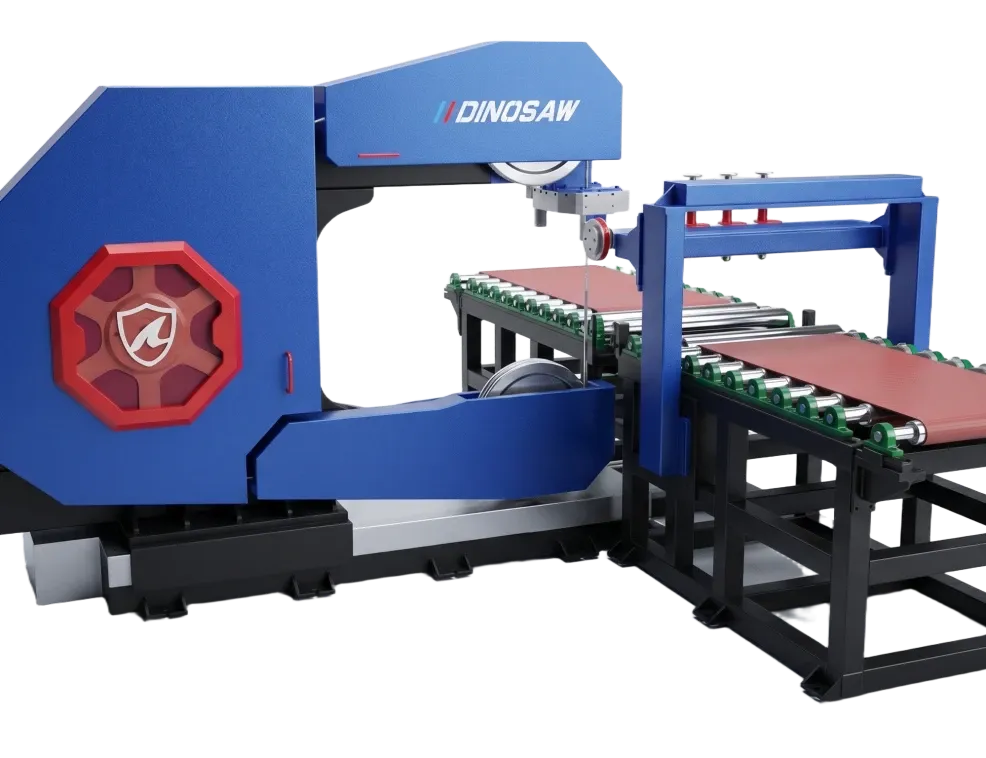
Kerbstone Diamond Wire Saw/LYSJ | CNC-controlled diamond wire automated conveyor-belt feed Siemens or Inovance servo drives integrated cast-iron monoblock frame | Straight AND curved kerbstones(inside and outside radius; chamfered profiles) | Precision: ±1 mm Max. processing depth: 400 mm Output: 10–20 pieces/hour at 20 cm thickness Frame: integrated cast-iron monoblock Certification: CE, ISO 9001:2015 Service life: 10 years precision retention | 100% higher than manual profiling methods(10–20 pieces/hour vs. manual) | Municipalities and contractors requiring curved curbstones for roundabouts, landscaping, and custom road layouts. The 400 mm processing depth exceeds the reach of standard bridge saws. Monoblock frame and Siemens servo drives ensure ±1 mm consistency across production runs without secondary grinding. |
This is the deciding question. The multi-blade cutting line produces only straight profiles. The diamond wire saw produces both straight and curved profiles.
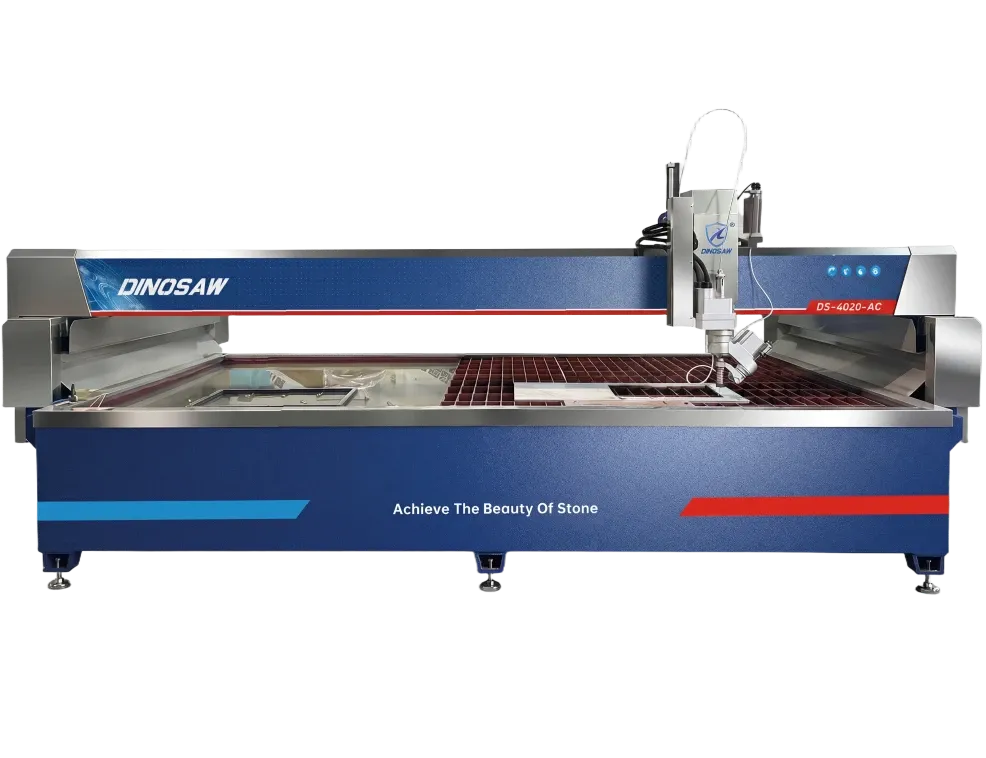
Waterjet cutting uses a high-pressure stream of water mixed with abrasive particles (typically garnet) to cut stone without generating heat. This cold-cutting process is the only viable method for materials where thermal stress causes micro-cracking, delamination, or surface damage — notably ultra-thin stone veneers, composite stone panels, and certain ceramics and glass.
Parameter | 5-Axis CNC Waterjet Machine — WZSD-4020-AC |
|---|---|
Model | WZSD-4020-AC |
Control system | AC shaft CNC system |
Processing range | 4,000 × 2,000 mm |
Cutting accuracy | ±0.1 mm |
Abrasive supply system | 100 L automatic sand supply |
Cooling tower capacity | 3 m³ |
X axis speed | 0–6,000 mm/min |
Y axis speed | 0–6,000 mm/min |
Z axis speed | 0–200 mm/min |
A axis rotation | ±106° |
C axis rotation | ±540° |
Compatible materials | All natural stone, sintered stone, porcelain, glass, metal, composites, stone-metal panels, ultra-thin stone veneer |
Certification | CE, ISO |
Waterjet cutting is not a universal replacement for blade-based stone cutting — it is slower and has higher consumable cost per cut. The correct question is: does your material or cut geometry require cold cutting? If yes, waterjet is the only viable option. If not, a CNC bridge saw will deliver better economics.
Dinosaw configures bridge saws, block cutters, and kerbstone lines around your specific material, block dimensions, target product, and daily throughput — covering worktable size, motor power, blade count and diameter, axis configuration, and conveyor integration. Describe your production requirement and Dinosaw will provide a technical proposal and quote.
Choose your preferred CNC systems, motor power, and automation levels for maximum efficiency.
Adjust table dimensions, rail lengths, and cutting thickness to fit your workshop and slab sizes.
Private label services including custom machine colors and logo placement on hardware and software UI.
 English
Get A Easy Solution
Chat Online
Hi, this is Lizzy from Dinosaw ( Not a Robot ). Which Machine ( model ) do you want? Please WhatsApp us now
Hello 👋 How can we help?
 中文
中文 Italian
 Türkçe
 Português
 Español
 Deutsch
 العربية
 Tiếng Việt
 Français
 Русский
 한국어
한국어