



Specs & Systems
Choose your preferred CNC systems, motor power, and automation levels for maximum efficiency.


Open Hours:8:30am-20:30pm

WhatsApp: +86 198-5901-3937
@2x.webp)
@2x.webp)
Dimensional stone quarrying — the non-explosive extraction of granite, marble, limestone, and sandstone blocks for the stone processing industry — requires a coordinated set of machines, not a single piece of equipment. Unlike aggregate quarrying that uses crushers and blasting, every machine here is engineered to remove intact, large-format stone blocks cleanly, without shock or micro-fracture, in the maximum saleable size. The six machines below cover the complete extraction workflow from drilling and primary cutting through to block squaring. Most quarries run three to four types in combination — use the Recommended For column and the buying guide below to match the right machines to your stone type and site.
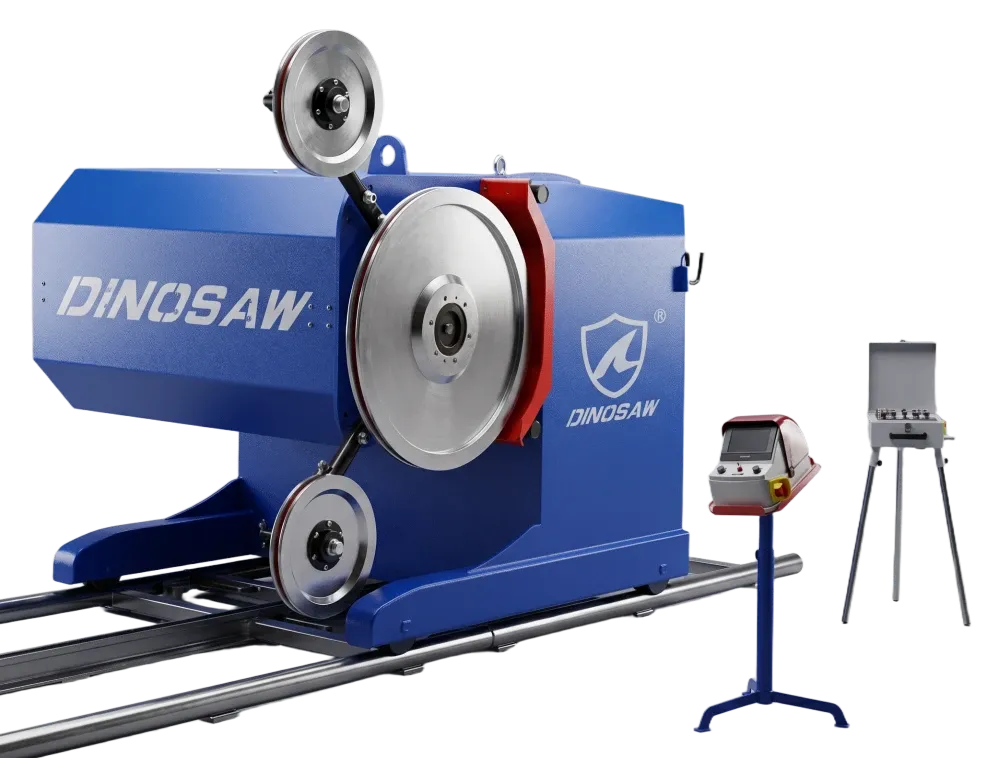
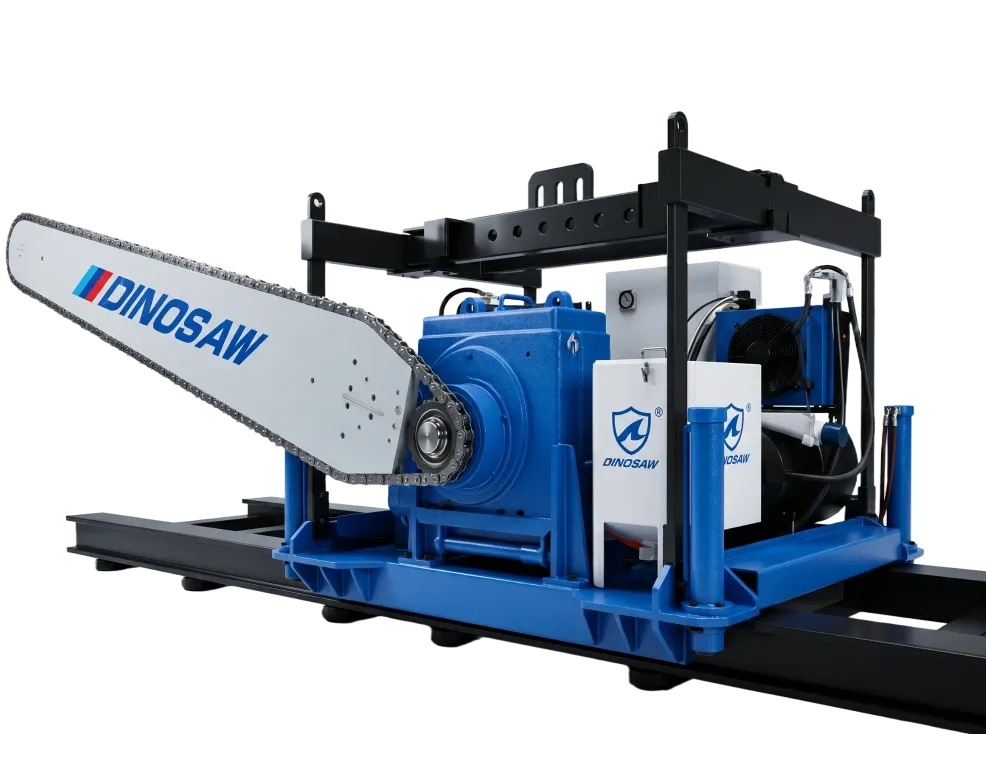
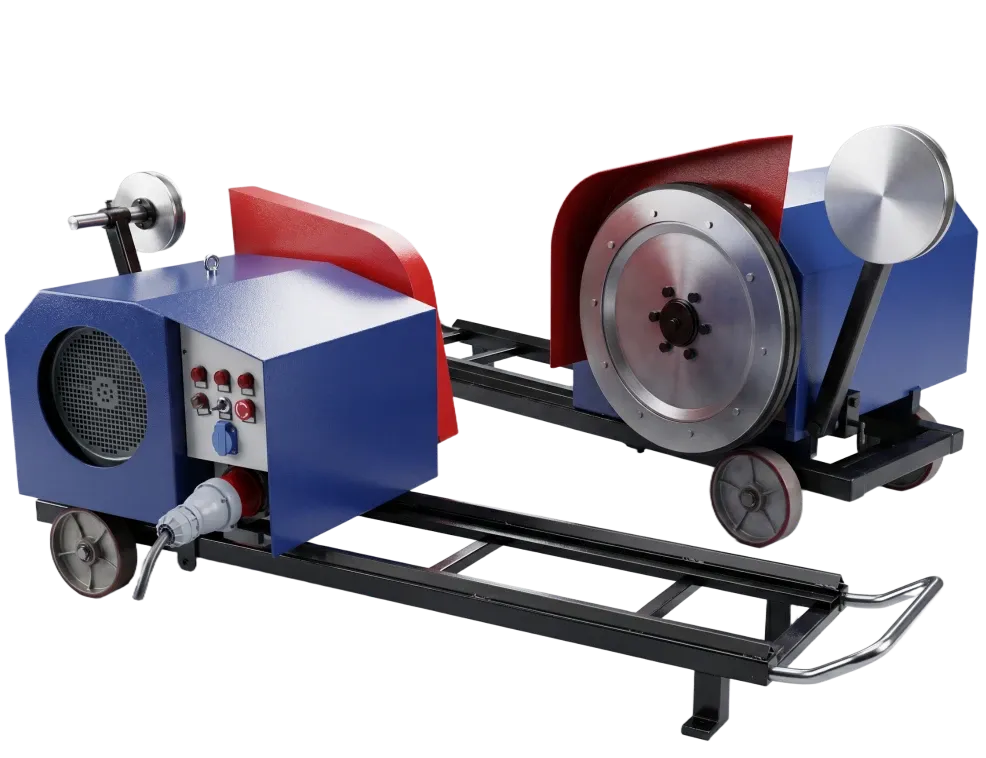
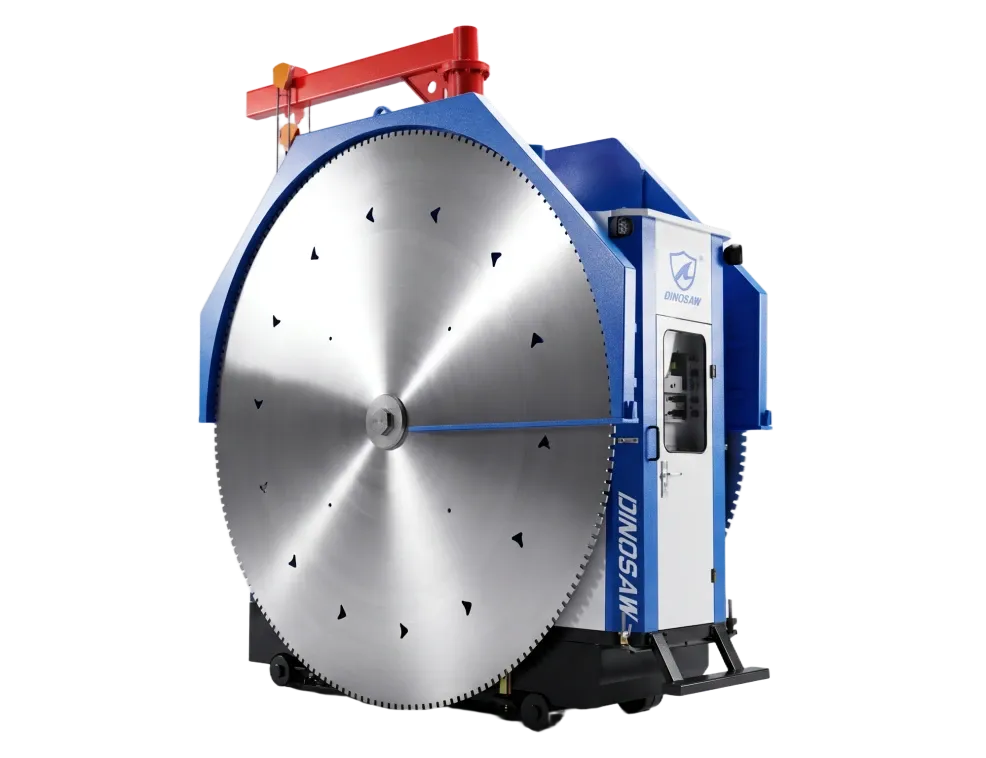
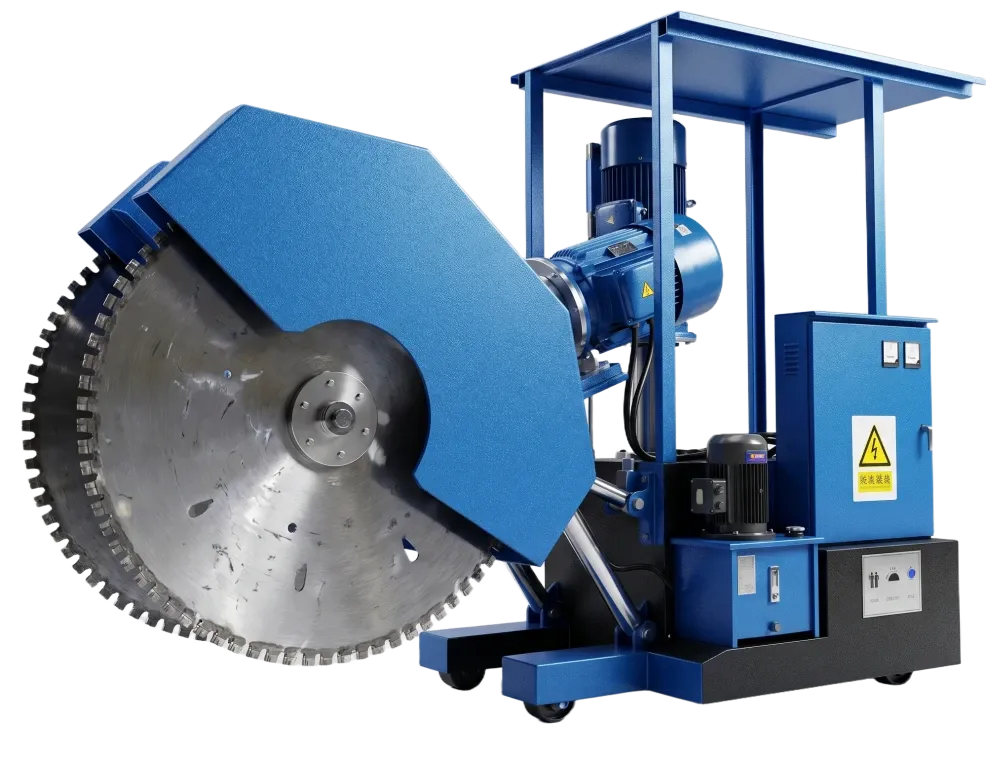
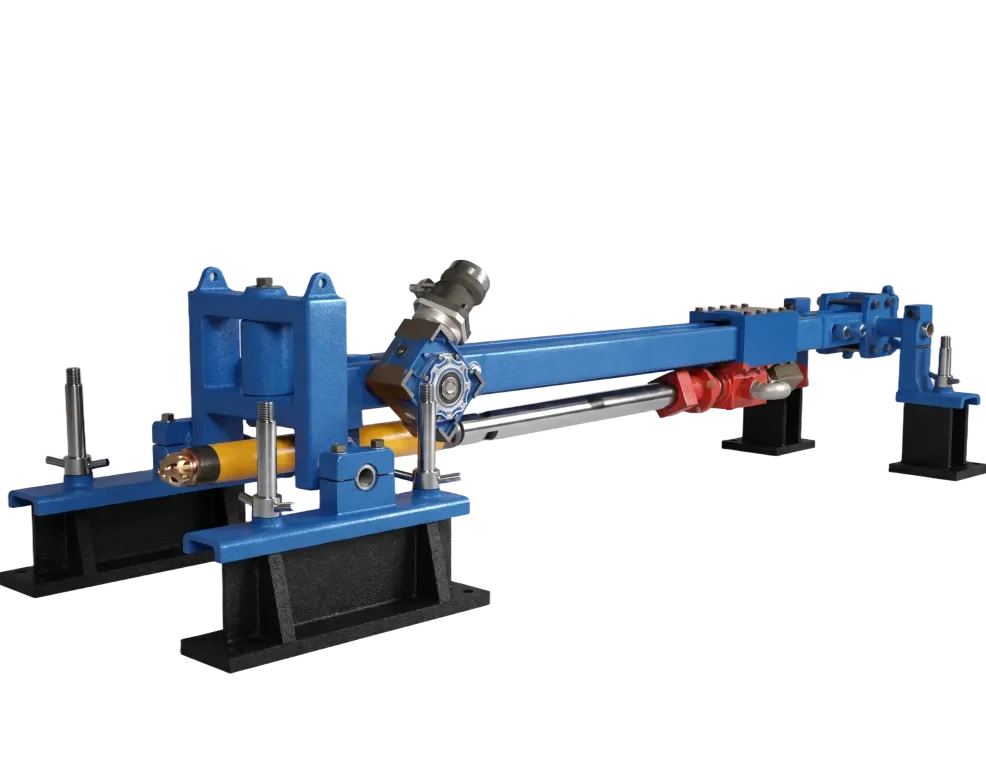
Specification | Quarry Wire Saw/KSSJ | Quarry Chainsaw/LBJ | Portable TrimmingWire Saw/BXSJ | Double Blade Cutter/DBM | Sandstone CuttingMachine/SSQJ | DTH Drilling Machine/QKZ |
|---|---|---|---|---|---|---|
Cutting / Drilling Technology | Diamond wire loop | Diamond chain arm | Diamond wire (portable) | Twin circular bladesΦ2400mm + Φ4800mm | Dual blades verticalΦ1330mm + Φ600mm horizontal | Down-the-hole percussion hammer |
Max. Cutting Depth/ Hole Diameter | Unrestricted(wire loop) | 5,600 mm arm depth | Configurable(2m rail standard) | 2,150 mm(cutting width up to 3,100mm) | 520 mm | Φ165mm |
Main Motor / Power | 37–110 kW(M: marble; G: granite) | 65 kW | 22 kW(total 23 kW) | 65 kW × 2(total 138 kW) | 75 kW vertical+ 600mm horizontal blade | Pneumatic / pneumatic-electric/ pneumatic-hydraulic |
Cutting Speed/ Penetration Rate | 4–8 m²/h(stone-dependent) | 3–7 m²/h | 0–30 m/s (BXSJ-22)0–40 m/s (DWS-22PM)wire linear speed | High-speed paralleldual-face cut | 10–45 m/mintravel speed | 4.8–8 m/h(granite/marble/limestone) |
Machine Weight | Heavy(rail-mounted) | 6,800–9,900 kg | 0.41 t (machine)+ 0.365 t (rail) | 11–12 t(DBM2600-3100) | SSQJ track unit | QKZ90/QKZ165-Hconfigurable |
Mobility | Rail-mounted(fixed quarry) | Rail-mounted(slopes up to 15°) | Portable(no fixed rail needed) | Rail-mounted | Track-mounted(mobile) | Self-propelled crawleror manual positioning |
Water Required | Yes | No | Yes | Yes | No (dry process) | No (air-powered) |
Compatible Stone | All stone typesGranite, marble,quartzite, basalt,limestone, sandstone | Marble, sandstone,limestone, soft-to-medium hard stone | All stone types(block trimming) | Granite, marble,limestone(medium–deep benches) | Sandstone, limestone,laterite, soft stone | All hard rock:granite, marble,basalt, limestone |
Quarry Role | Primary face extraction | Bench shaping,vertical + horizontalface separation | Block squaring& trimming anywherein quarry | High-speed parallelvertical face cuts;combined with wiresaw for undercutting | Primary extractionin soft stone quarries(simultaneous H+V cut) | Wire-threading holes;pre-splitting;geological core sampling |
Key Advantage | Narrow kerf,no micro-fractures,unlimited depth,auto wire tension | Fast on marble& soft stone; no water;cuts blind, no pre-drilling | No fixed infrastructure;set up anywhere;laser alignment option | Two simultaneousface cuts = doublethroughput per pass | Dry process, dual-cutin one pass; 35%less waste vs drilling | DTH precision:±5mm per 10m depth;3× faster than rotary;Direct wire-saw integration |
Recommended For | All granite and marble quarries — primary extraction. Maximum yield and block integrity priority. | Marble and sandstone quarries needing fast bench separation; uneven terrain; water-limited sites | Every quarry needing to square and trim extracted blocks; confined-space operations | High-volume operations with bench depths to 2,150mm; granite/marble quarries prioritizing throughput | Sandstone, limestone, and laterite quarries; arid sites; dry-process operations | Any quarry using wire saws: DTH drills the wire-threading holes. Also: geological survey, pre-splitting, anchor bolts |
Quarry machine selection is a workflow decision. Most professional dimensional stone quarries run three to four machine types in a coordinated extraction sequence. The four questions below identify the right combination for your specific quarry — stone type, cutting role, terrain, and water availability.
Stone hardness is the first filter. It determines whether diamond wire or chain technology is your primary extraction tool, and whether your DTH drilling application is for wire threading or pre-splitting.
Understanding the standard extraction workflow clarifies why most quarries need multiple machine types. A typical granite block extraction sequence runs:
The double blade cutter (DBM series) fits into Steps B and C for quarries where bench heights fall within its 1,550–2,150mm cutting depth range and high throughput on parallel vertical cuts is the priority.
Every quarry has its own geology, bench geometry, water supply, and climate. When standard machine configurations don't fit — deeper benches, harder stone, larger drill holes, or more demanding production targets — Dinosaw's engineering team designs around your exact requirements. Custom configurations cover cutting depth extensions, hard-stone tooling upgrades, IoT monitoring for multi-machine operations, and DTH hammer sizing for non-standard hole diameters.
Site conditions drive a second category of customization that specifications alone don't capture: cold-climate systems for sub-zero mountain quarries, dry-cutting variants for water-scarce sites, underground chainsaw configurations for tunnel operations, and motor and control adaptations for non-standard power supply. Tell us your stone type, bench dimensions, water availability, and operating environment — we'll provide a written technical proposal within 5 business days.
Choose your preferred CNC systems, motor power, and automation levels for maximum efficiency.
Adjust table dimensions, rail lengths, and cutting thickness to fit your workshop and slab sizes.
Private label services including custom machine colors and logo placement on hardware and software UI.
 English
Get A Easy Solution
Chat Online
Hi, this is Lizzy from Dinosaw ( Not a Robot ). Which Machine ( model ) do you want? Please WhatsApp us now
Hello 👋 How can we help?
 中文
中文 Italian
 Türkçe
 Português
 Español
 Deutsch
 العربية
 Tiếng Việt
 Français
 Русский
 한국어
한국어