



 中文
中文 Italian
 Türkçe
 Português
 Español
 Deutsch
 العربية
 Tiếng Việt
 Français
 Русский
 한국어
한국어


Ms.Lizzy
Hi, this is Lizzy from Dinosaw ( Not a Robot ). Which Machine ( model ) do you want? Please WhatsApp us now


Open Hours:8:30am-20:30pm

WhatsApp: +86 198-5901-3937

 May 13, 20245 MIN READ
 May 13, 20245 MIN READ
Limestone block cutting case study using CNC wire saw cutting, focusing on stable separation, surface continuity, and practical suitability for limestone processing workflows.
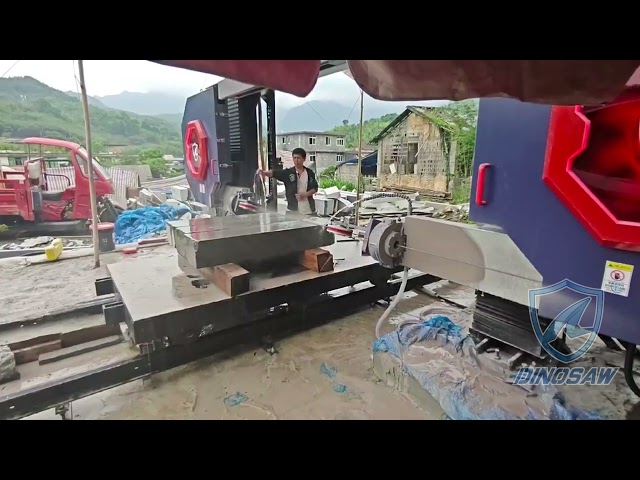 ▶
▶Case Snapshot
Material
Limestone
Processing Method
CNC wire saw block cutting
Typical Application
Limestone blocks for architectural and building stone production
Applicable Markets
Architectural stone processing, building material fabrication, stone block preparation
Processing Focus
Stable separation of limestone blocks with controlled surfaces for downstream processing
Associated Product
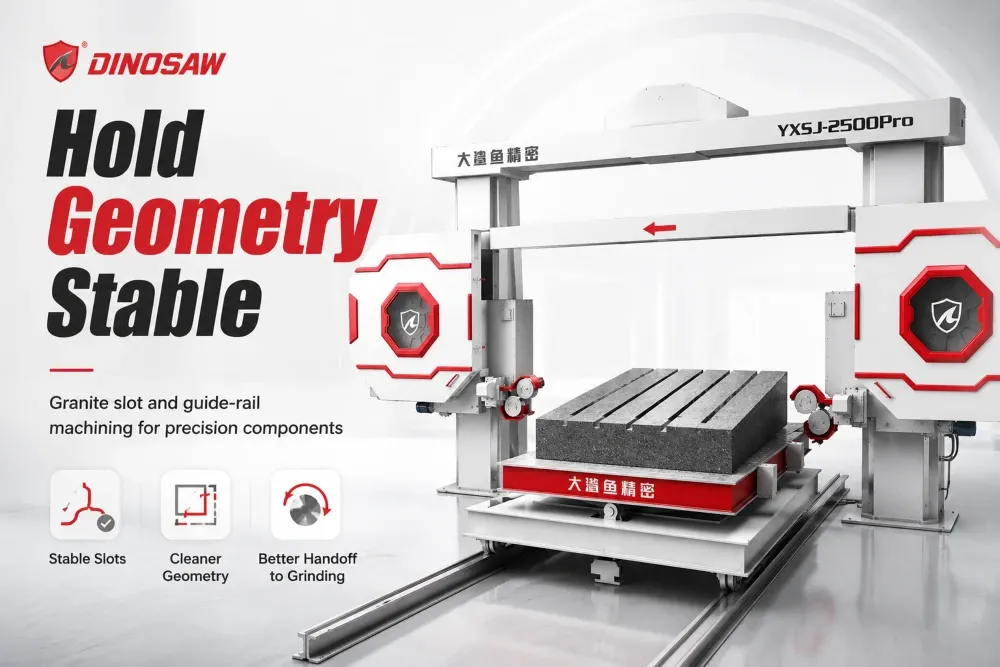
DINOSAW CNC wire saw stone cutting machine
Limestone is widely processed as a building and architectural stone, commonly supplied in block or semi-block form before being further cut into slabs, panels, or shaped elements.
In typical stone workshops, limestone blocks are separated into workable sizes as an early production step, setting the foundation for all subsequent processing stages.
Compared with harder igneous stones, limestone is easier to cut but more sensitive to uneven force and surface disturbance.
This makes the initial cutting process important not only for productivity, but also for preserving surface condition and structural integrity for later finishing.
Cutting limestone blocks presents a different balance of challenges than cutting harder stone types.
The material’s relatively softer structure makes it susceptible to surface tearing if the cutting action is unstable.
Large block sizes require consistent support and controlled cutting paths.
Irregular block geometry can complicate alignment and separation.
Surface condition after cutting directly affects slab yield and finishing quality downstream.
From an operator’s perspective, limestone reacts quickly to changes in cutting behavior.
If the cut is not steady, the surface can show tearing or uneven texture right away.
These issues may not stop the process, but they reduce the quality of material available for later stages.
Wire saw cutting offers a smooth and continuous cutting action that suits limestone well.
Instead of concentrating force in one area, the wire distributes cutting along the path, helping maintain surface continuity.
This is especially useful when separating large blocks intended for further processing.
Operators pay close attention to how the block is positioned and supported before cutting begins.
During the cut, they watch the consistency of the wire movement and the condition of the cut surface as it develops.
Any abnormal vibration or uneven progression is treated as a signal to reassess the setup.
Quality is judged by how cleanly the block separates and how uniform the cut surface appears.
If the block can move directly into slab cutting or shaping without surface correction, the cut is considered acceptable.
Limestone blocks were positioned and secured to ensure stable separation during cutting.
The wire saw followed a predefined cutting path designed to divide the block smoothly.
Cutting emphasized controlled, continuous motion rather than aggressive advancement.
After separation, blocks were visually inspected for surface condition before being transferred to the next production stage.
Separated limestone blocks showed clean division surfaces suitable for downstream slab or component cutting.
Surface continuity supported consistent results in subsequent processing steps.
The cutting process remained stable across repeated operations.
Overall outcomes aligned with routine expectations for limestone block preparation in building stone production.
If you are processing limestone in block form for architectural or building use,
if your workflow depends on clean block separation before slab or component cutting,
if surface condition after cutting affects downstream yield and quality,
this case reflects a practical and repeatable limestone processing scenario in stone workshops.
 English
Get A Easy Solution
Chat Online
Hi, this is Lizzy from Dinosaw ( Not a Robot ). Which Machine ( model ) do you want? Please WhatsApp us now
Hello 👋 How can we help?