



 中文
中文 Italian
 Türkçe
 Português
 Español
 Deutsch
 العربية
 Tiếng Việt
 Français
 Русский
 한국어
한국어


Ms.Lizzy
Hi, this is Lizzy from Dinosaw ( Not a Robot ). Which Machine ( model ) do you want? Please WhatsApp us now


Open Hours:8:30am-20:30pm

WhatsApp: +86 198-5901-3937

 Jan 2, 20265 MIN READ
 Jan 2, 20265 MIN READ
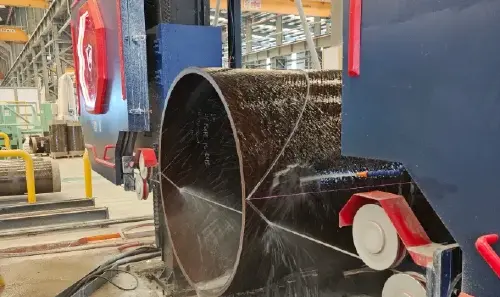
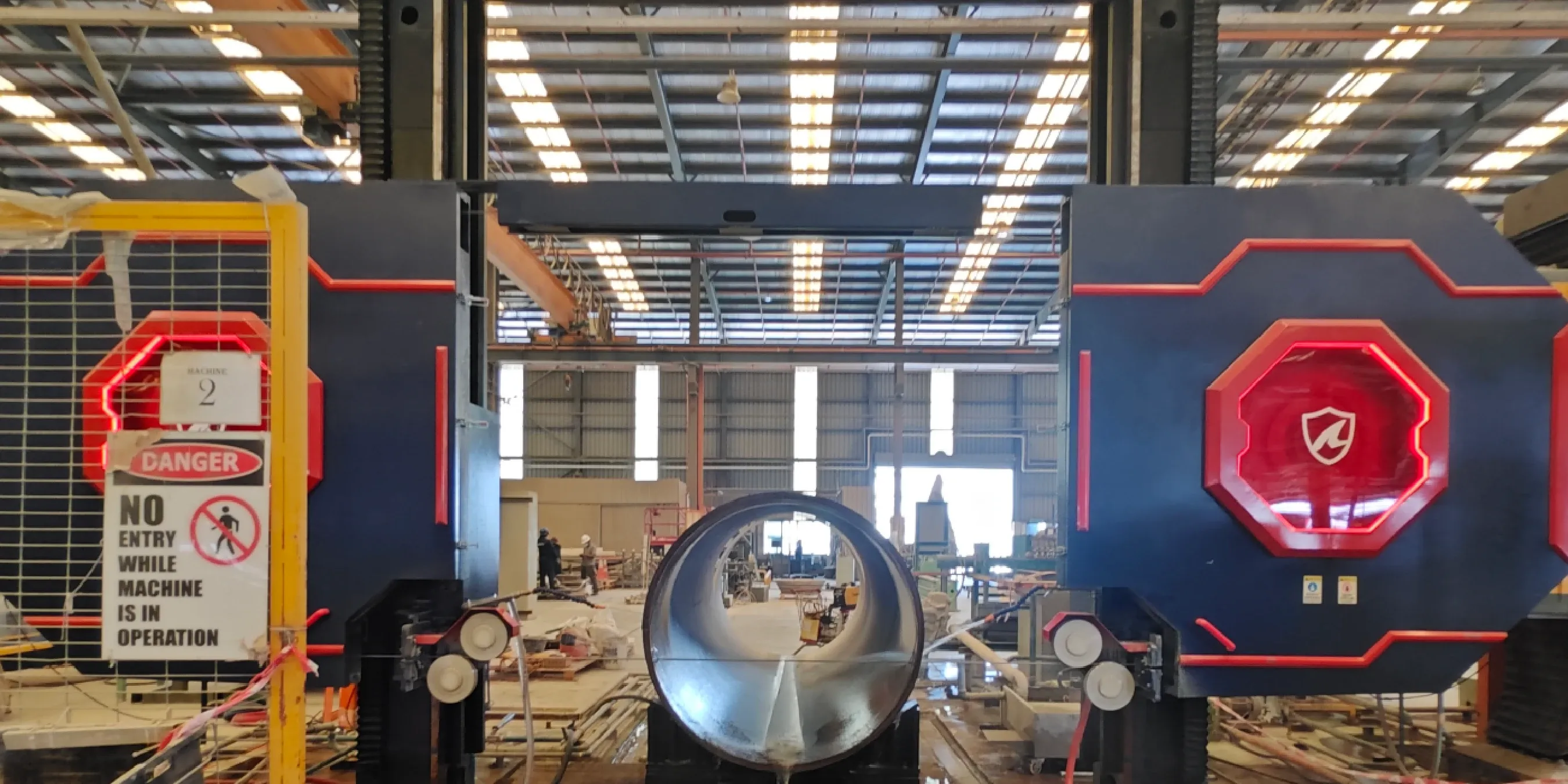
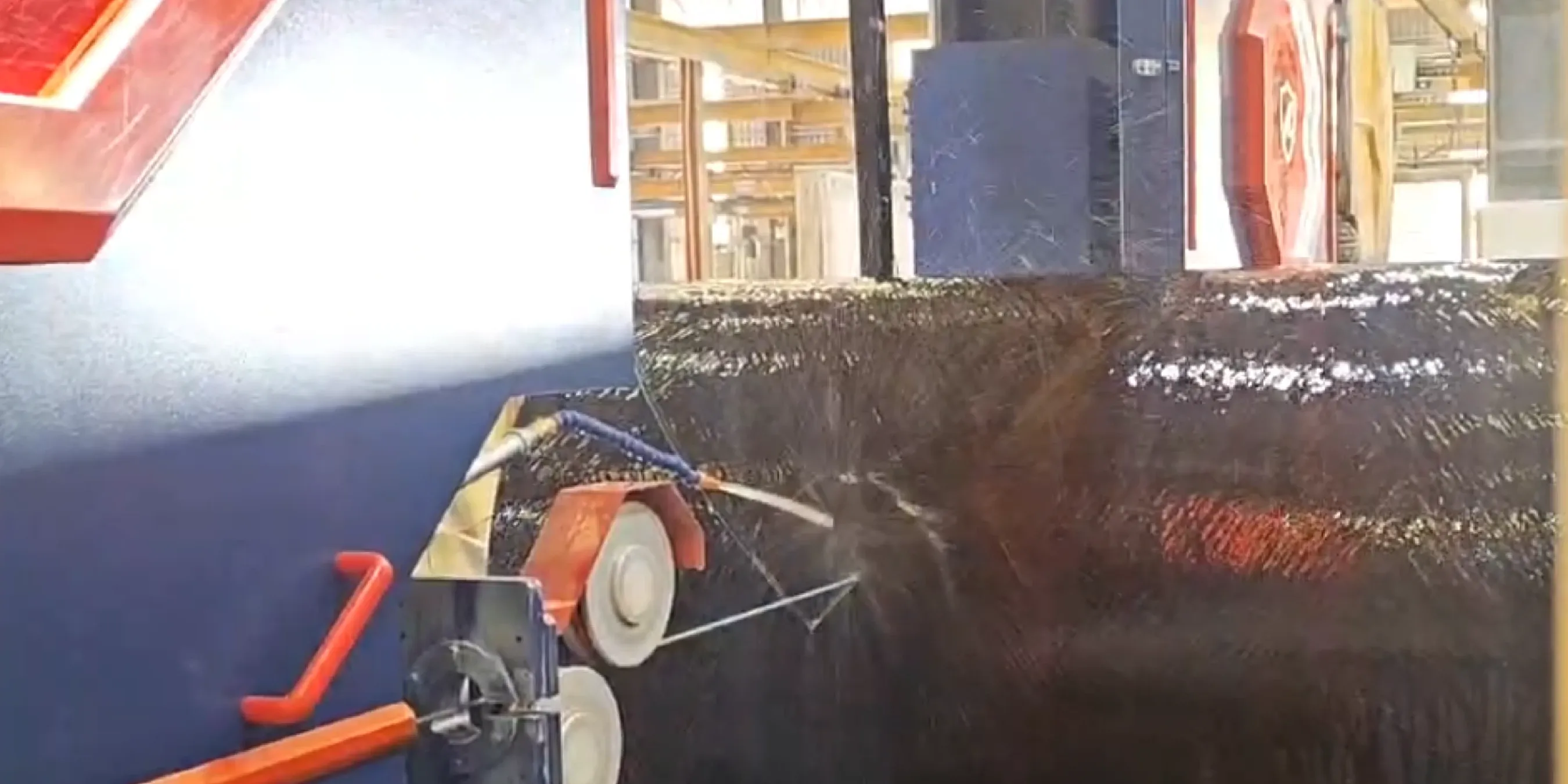
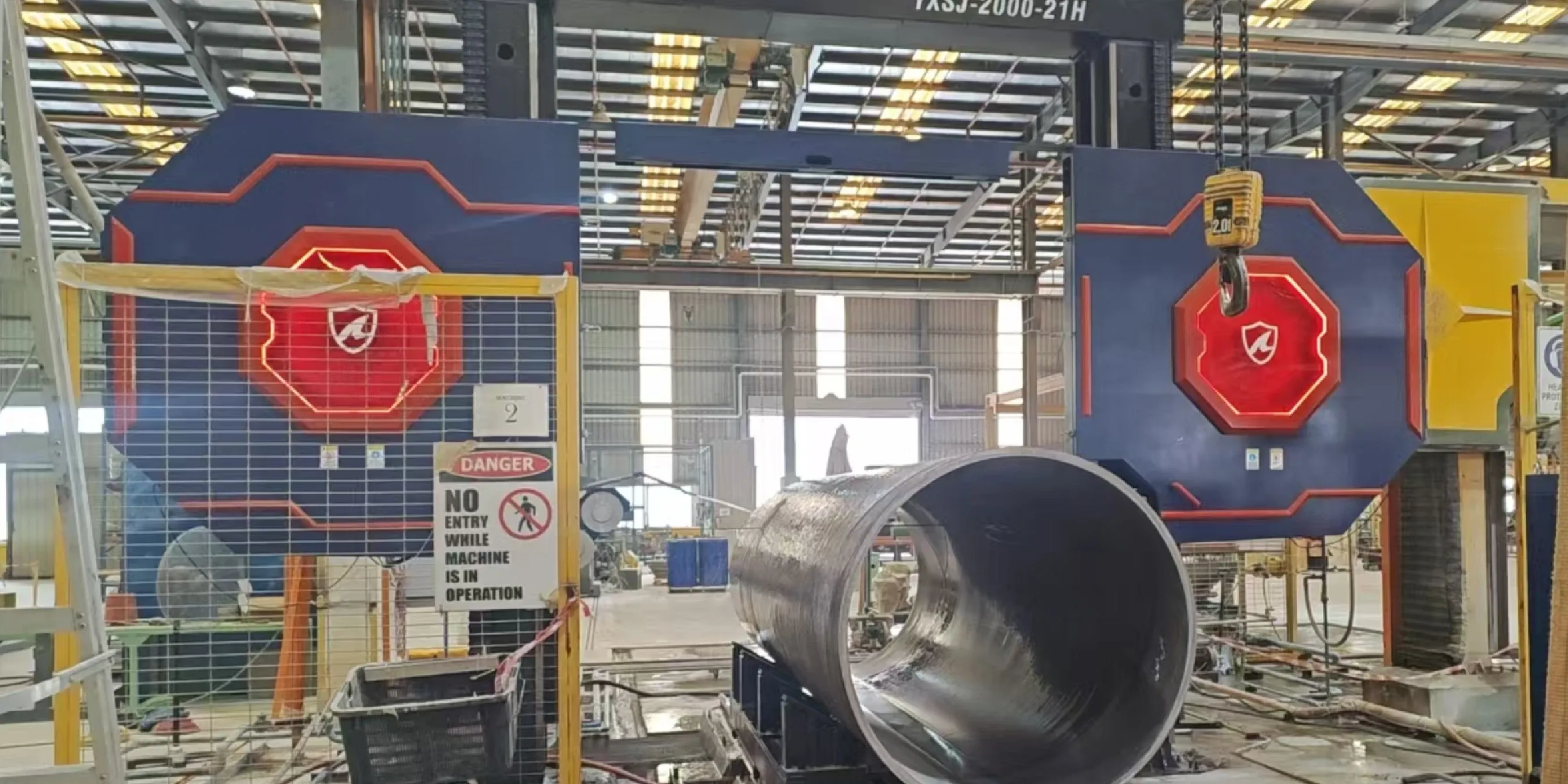
CNC wire saw cutting case for large-diameter FRP pipes, showing controlled curved and angled cuts for industrial piping and custom composite fabrication.
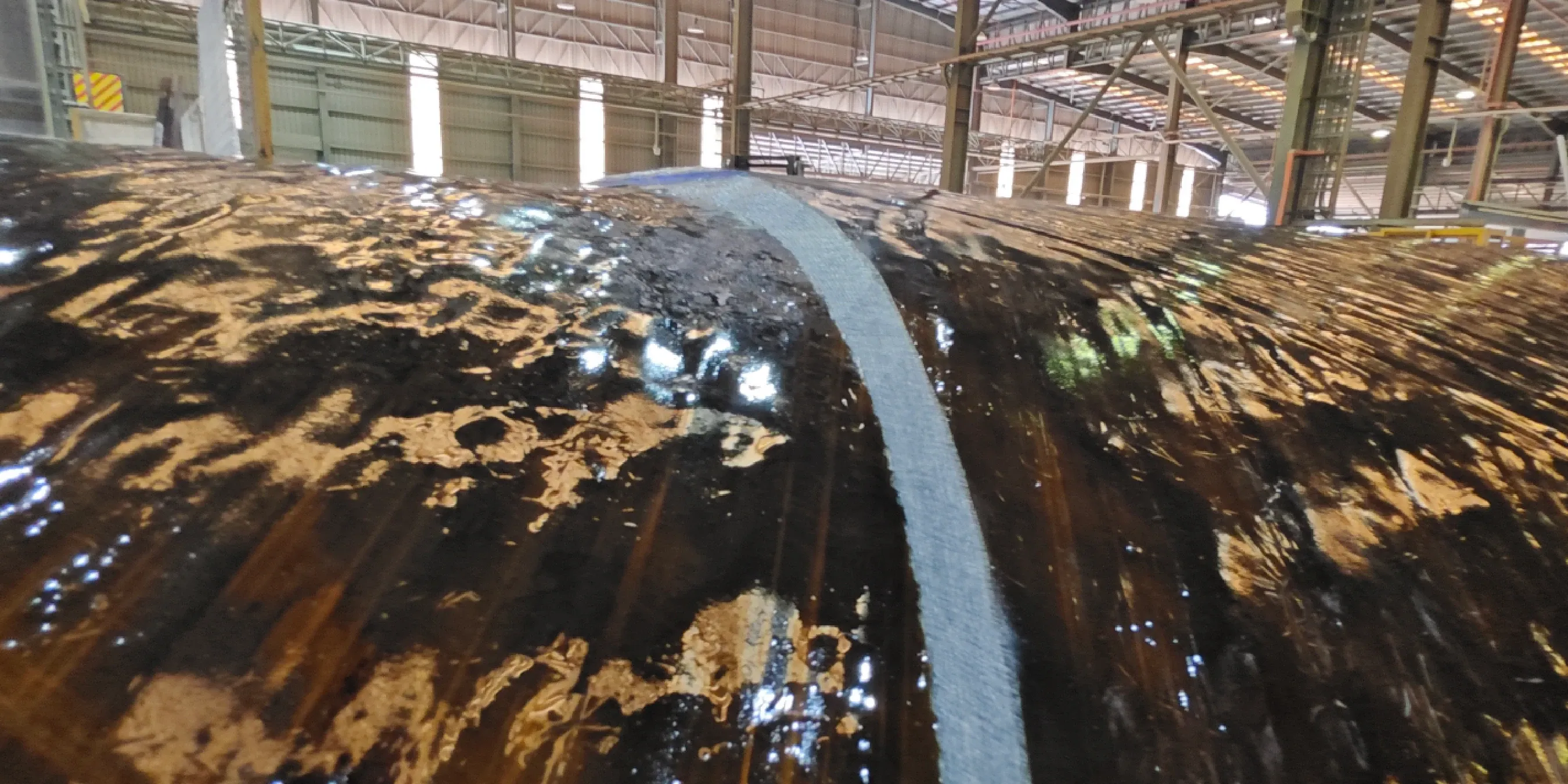
Case Snapshot
Material
FRP pipe (Fiber Reinforced Plastic / GRP)
Processing Method
CNC wire saw cutting
Typical Application
Industrial piping, chemical pipelines, custom composite pipe sections
Applicable Industries
Chemical engineering, water treatment, energy, industrial infrastructure
Processing Focus
Large-diameter pipe cutting with curved and angled profiles
Associated Product
Dinosaw CNC Diamond Wire Saw Machine
Large-diameter FRP pipes are widely used in industrial environments due to their corrosion resistance and structural stability.
In many projects, pipes must be cut at specific angles or curved profiles to meet installation requirements, rather than simple straight cross-cuts.
Compared with metal pipes, FRP materials behave differently during cutting.
They require stable cutting force and consistent coolant control to avoid surface tearing, fiber pull-out, or dimensional deviation.
Workshops handling FRP pipe cutting commonly face several issues:
Large pipe diameter makes stable positioning difficult
Curved or angled cuts must follow precise layout lines
Excessive vibration can damage the composite structure
Surface integrity must be preserved for later assembly
Traditional abrasive or blade-based cutting methods often struggle to maintain smooth edges on thick FRP sections, especially when the cut path is not straight.
Operators find that wire saw cutting applies continuous, evenly distributed cutting force, which is especially important for composite materials like FRP.
Instead of aggressive contact, the diamond wire gradually removes material, reducing stress concentration on the pipe wall.
The key focus is wire stability and feed consistency.
For large-diameter pipes, maintaining smooth wire travel prevents sudden fiber breakage and helps keep the cut edge clean and uniform.
Quality is judged by edge continuity, dimensional accuracy, and surface condition.
If the cut pipe can be directly fitted or moved to secondary finishing without additional rework, it meets production requirements.
The FRP pipe was securely supported to prevent deformation during cutting.
The cutting path was programmed to match the required curved profile along the pipe surface.
The CNC wire saw executed the cut with stable feed speed and continuous cooling, allowing the wire to pass smoothly through the composite structure.
After cutting, the pipe section retained clean edges suitable for installation or further processing.
The cutting process remained stable throughout the operation.
The pipe structure showed no visible delamination or fiber tearing.
Curved and angled profiles were achieved accurately along the full pipe diameter.
The resulting sections met on-site assembly requirements without additional corrective work.
This case is relevant if you are working with:
Large-diameter FRP or GRP pipes
Industrial piping systems requiring custom cuts
Composite materials sensitive to vibration
Projects where cut accuracy affects on-site installation
If your workshop handles non-metallic industrial pipes and needs controlled, profile-based cutting, this case reflects a practical, real-world solution.
 English
Get A Easy Solution
Chat Online
Hi, this is Lizzy from Dinosaw ( Not a Robot ). Which Machine ( model ) do you want? Please WhatsApp us now
Hello 👋 How can we help?