




 中文
中文 Italian
 Türkçe
 Português
 Español
 Deutsch
 العربية
 Tiếng Việt
 Français
 Русский
 한국어
한국어


Ms.Lizzy
Hi, this is Lizzy from Dinosaw ( Not a Robot ). Which Machine ( model ) do you want? Please WhatsApp us now


Open Hours:8:30am-20:30pm

WhatsApp: +86 198-5901-3937

 Mar 18, 20255 MIN READ
 Mar 18, 20255 MIN READ
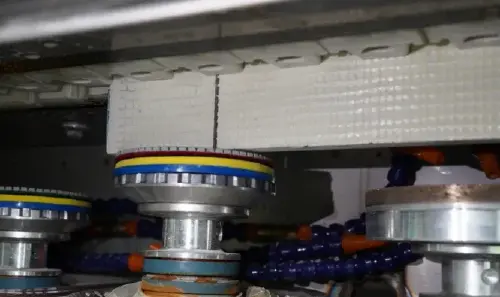
Tile edge finishing case study using a stone & glass edging machine, showing how ceramic tiles are edged smoothly and consistently for architectural and interior installations.
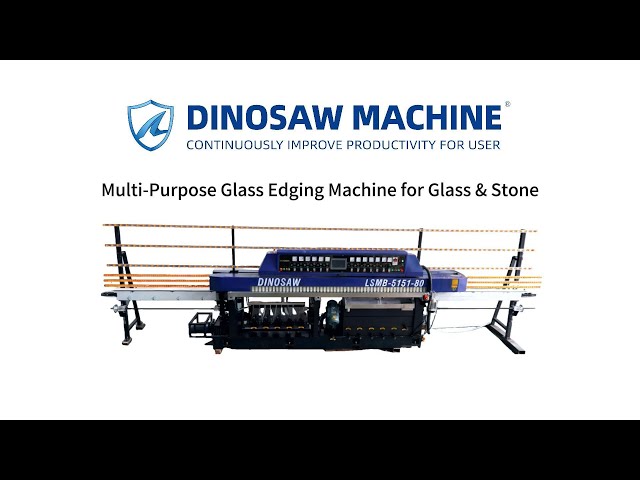 ▶
▶Case Snapshot
Material
Ceramic tile
Processing Method
Automated tile edge grinding and polishing
Typical Application
Finished tile edges for flooring, wall tiling, stairs, and decorative trims
Applicable Markets
Tile fabrication, interior finishing, architectural installation works
Processing Focus
Consistent edge smoothness and safe, installation-ready tile edges
Associated Product
Dinosaw Stone & Glass edging machine
In tile fabrication, the edge condition of a tile is just as important as its surface finish.
Tiles used for walls, floors, stair nosing, and exposed corners are often visible at close range, where sharp or chipped edges immediately affect perceived quality and safety.
Modern projects increasingly require tiles with refined edges rather than raw cut faces.
Whether tiles are installed with minimal grout lines or used as decorative trims, consistent edge finishing has become a standard expectation rather than an optional step.
Tile edge finishing presents challenges that are specific to ceramic materials.
Glazed tile surfaces are prone to edge chipping if grinding pressure is unstable.
Different tile bodies respond differently to edge contact, even within the same batch.
Manual edge finishing often leads to inconsistent results and visible variation between pieces.
For projects involving many exposed edges, small inconsistencies quickly accumulate into noticeable defects during installation.
From the workshop perspective, tiles look simple but behave unpredictably at the edge.
The glaze, the body, and the cut face all respond differently to tooling.
If the edge is rushed or handled unevenly, chipping happens instantly and cannot be corrected later.
Glass edging machines are designed for controlled, continuous edge contact.
They remove material gradually and evenly, which is exactly what ceramic tiles require.
Instead of aggressive grinding, the machine refines the edge into a smooth, consistent transition that is safe to handle and ready for installation.
Operators focus on stability and repeatability.
They watch how the glaze behaves at the edge and adjust the process to avoid flaking.
Consistency from the first tile to the last is more important than speed in tile edging work.
Quality is judged by touch and visual inspection.
Edges should feel smooth, show no visible chips, and align cleanly when tiles are placed together.
If tiles can be installed without additional manual touch-up, the edge finishing is considered successful.
Tiles were positioned to ensure stable contact with the edging heads.
The glass edging machine followed controlled grinding and polishing passes along each tile edge.
The process emphasized smooth material removal rather than aggressive cutting.
Finished tiles were inspected before being transferred to packaging or installation preparation.
Finished tiles showed smooth, uniform edges across batches.
Glaze chipping and edge defects were minimized.
Tiles aligned cleanly during mock installation without visible edge mismatch.
The edge finishing workflow integrated well into routine tile production.
If you are producing ceramic tiles with exposed edges,
if your projects require refined, safe, and visually consistent tile finishes,
if manual edge grinding creates variation or rework,
this case reflects a practical tile edge finishing scenario commonly seen in professional tile fabrication.
 English
Get A Easy Solution
Chat Online
Hi, this is Lizzy from Dinosaw ( Not a Robot ). Which Machine ( model ) do you want? Please WhatsApp us now
Hello 👋 How can we help?