




 中文
中文 Italian
 Türkçe
 Português
 Español
 Deutsch
 العربية
 Tiếng Việt
 Français
 Русский
 한국어
한국어


Ms.Lizzy
Hi, this is Lizzy from Dinosaw ( Not a Robot ). Which Machine ( model ) do you want? Please WhatsApp us now


Open Hours:8:30am-20:30pm

WhatsApp: +86 198-5901-3937

 Jul 24, 20255 MIN READ
 Jul 24, 20255 MIN READ
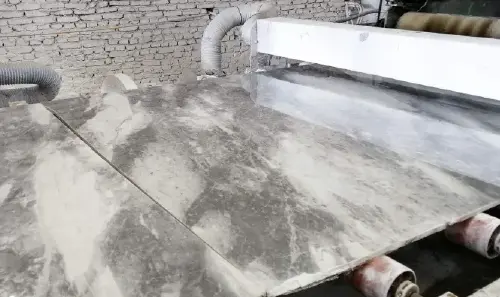
Marble slab polishing case study using automatic stone polishing machine for slab, showing consistent, high-quality polished surfaces suitable for floors, walls, and architectural panels.
 ▶
▶Case Snapshot
Material
Marble slab
Processing Method
Automated slab surface polishing
Typical Application
Polished marble slabs for floors, walls, countertops, architectural paneling
Applicable Markets
Architectural stone fabrication, interior finishing, slab production lines
Processing Focus
Stable surface finish and consistency across marble slabs of various thicknesses
Associated Product
Dinosaw Automatic stone polishing machine for slab
Marble slabs are a cornerstone material in interior finish and architectural design.
In projects where marble is used for floors, feature walls, countertops, and large panel applications, the surface finish defines both aesthetics and customer acceptance.
Unlike grinding or flattening, polishing is about refining surface reflectivity, removing micro-scratches, and achieving a uniform gloss across the entire slab surface.
In real production environments, slabs vary in thickness and size, yet must present a consistent polished appearance when installed side-by-side on site.
Polishing marble introduces challenges distinct from other stone finishing stages.
Marble’s crystalline structure reflects light non-uniformly if surface conditioning is uneven.
Thicker slabs are prone to surface waves if pressure is not controlled.
Thinner slabs can respond to vibration or support inconsistency with surface haze.
Manual polishing yields are often inconsistent when batches include slabs of mixed thicknesses, leading to visual variation that becomes obvious in installation.
In real workshops, the surface finish is what people judge first.
A slab with uneven gloss doesn’t “feel right” even if it is flat.
Marble’s crystalline surface highlights differences in polishing progression and tool contact.
Operators often say that polishing is where quality becomes visible, not just measurable.
Automatic slab polishing machines keep the process consistent across slabs.
When polishing with manual methods, every change in speed, pressure, or sequence becomes a variable.
Automatic systems manage feed motion, tool engagement, and sequence steps without manual interruption, which keeps slabs from one batch matching each other visually.
Operators watch how the surface changes under load — light reflection, resistance, and material response.
They focus on stable tool motion and even contact over large areas, rather than aggressive material removal.
Because marble shows polishing marks easily, operators treat it like a surface‐quality process rather than just “shiny vs dull”.
Acceptable quality is judged visually and tactically.
Slabs are checked for uniform gloss, absence of polishing lines, and consistent feel under light.
If multiple slabs of different thicknesses can sit together with no noticeable surface mismatch, the polishing is considered successful.
Marble slabs were loaded onto the polishing machine with stable support and orientation.
The CNC control executed a controlled polishing path from one end of the slab to the other.
Automatic tool changes and feed adjustments were managed without stopping the machine, even when slabs of different thicknesses were processed in sequence.
After polishing, slabs were inspected for surface quality before packaging or shipping.
Finished marble slabs showed consistent surface gloss across batches.
Edges and flat areas reflected light uniformly without noticeable variation.
Both thick and thin slabs blended visually when aligned.
Surface defects such as haze, lines, or inconsistent sheen were minimized, reducing the need for rework.
If you are polishing marble slabs for floors, walls, countertops, or architectural panels,
if your production line handles slabs of varying thicknesses,
if surface consistency and finish quality affect project acceptance,
this case reflects a practical polishing scenario commonly seen in stone fabrication workshops.
 English
Get A Easy Solution
Chat Online
Hi, this is Lizzy from Dinosaw ( Not a Robot ). Which Machine ( model ) do you want? Please WhatsApp us now
Hello 👋 How can we help?