




 中文
中文 Italian
 Türkçe
 Português
 Español
 Deutsch
 العربية
 Tiếng Việt
 Français
 Русский
 한국어
한국어


Ms.Lizzy
Hi, this is Lizzy from Dinosaw ( Not a Robot ). Which Machine ( model ) do you want? Please WhatsApp us now


Open Hours:8:30am-20:30pm

WhatsApp: +86 198-5901-3937

 Feb 2, 20266 MIN READ
 Feb 2, 20266 MIN READ
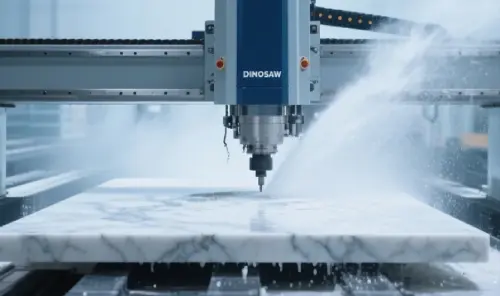
Streamline your stone fabrication workflow with our 2026 CNC stone milling guide. Discover professional methods for machining marble and granite, from precise feed rates to tooling strategies that cut waste and maximize efficiency.
Here's the truth about stone milling: it's the difference between creating a $3,000 countertop and watching $500 worth of granite turn into expensive gravel. Most shops think they can machine stone with their trusty wood router. That's like bringing a kitchen knife to a sword fight.
Stone milling isn't just about having sharp tools—though that matters. It's about recognizing that granite, marble, and quartz each have their own "personality." Push too hard, and granite chips. Move too fast with marble, and you generate heat that damages the surface. Treat engineered quartz like natural stone? You'll melt the resin binder faster than you can say "costly mistake."
This guide cuts straight to the point, stripping away technical jargon to give you what actually works. Whether you're a seasoned fabricator tired of frustrating tool failures or a shop owner considering your first CNC investment, you'll finish this article knowing exactly how to turn raw slabs into profitable, precision work.
Contact a DINOSAW engineer for further support
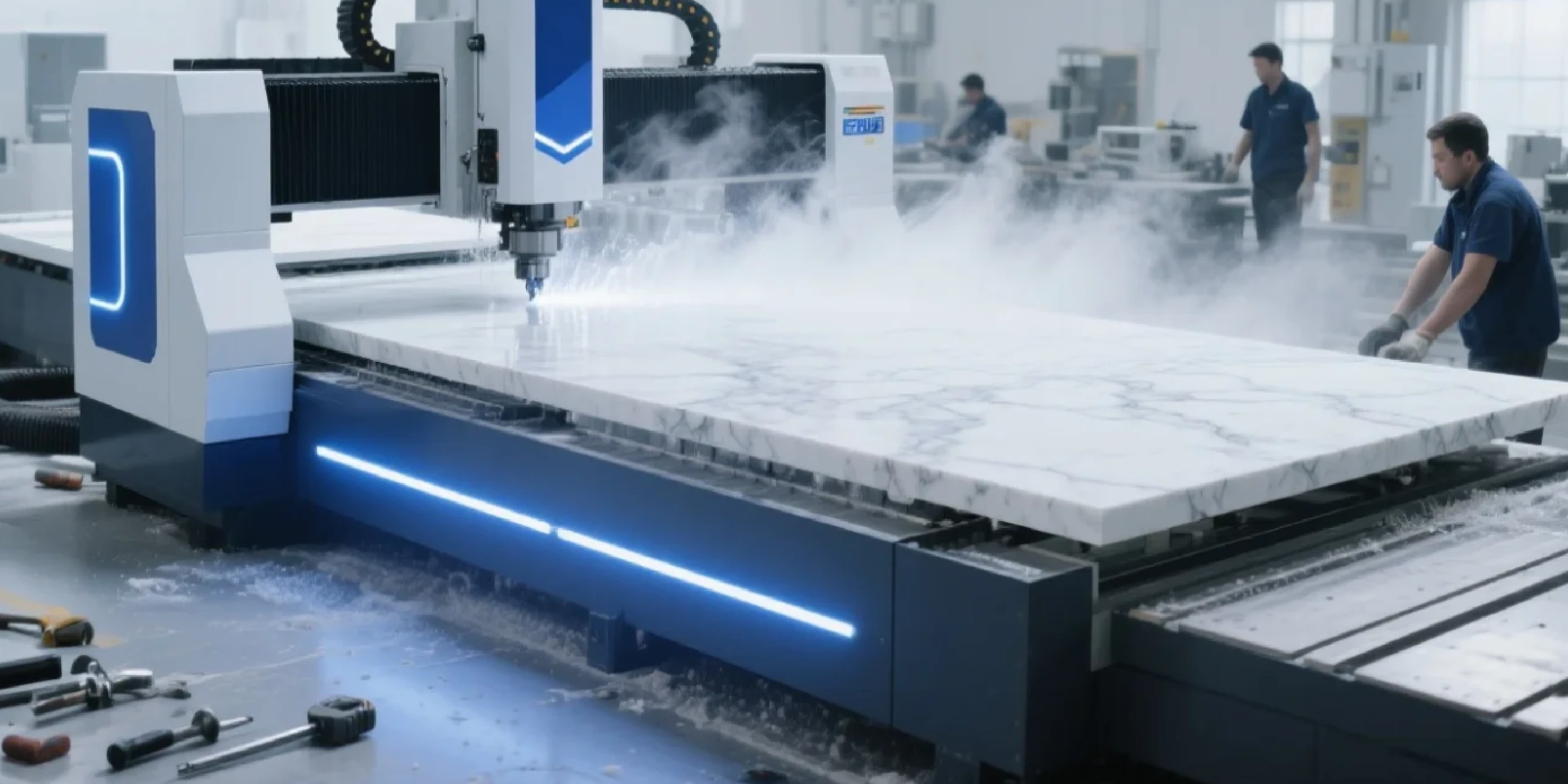
Let's address it head-on: using a wood CNC to machine stone. I've seen too many shops try this "budget" approach, only to end up with catastrophic spindle failures, cracked frames, and ruined slabs. Here's why stone demands a dedicated machine.
Think of vibration as stone's number one enemy. Even the slightest shake leads to chipped edges, premature tool failures, and—in the worst case—fractures that can ruin an entire slab. A true stone router weighs three to five times more than a wood router, with a thick-walled steel frame that absorbs these destructive vibrations.
At DINOSAW, we design our frames using finite element analysis. Why? Because resonance frequencies harmless for wood can literally destroy a diamond bit when cutting granite. It's not marketing—it's physics.
This is where most people get confused. Wood routers spin fast—up to 24,000 RPM. Stone routers? They focus on torque. You're not cutting wood fibers; you're grinding crystalline structures that would laugh at a high-speed wood bit.
A dedicated stone CNC uses high-torque, water-cooled spindles. Cooling serves two purposes: it prevents spindle overheating during long cutting sessions and provides a continuous flow of coolant directly to the cutting area. Without this setup, you're basically dry-cutting stone—a guaranteed way to destroy both tools and material.
Fact: a customer saved $30,000 by buying a "modified" wood router for stone. Six months later, he spent $45,000 on a real stone machine after destroying two spindles and countless diamond bits. The math is tough but clear.
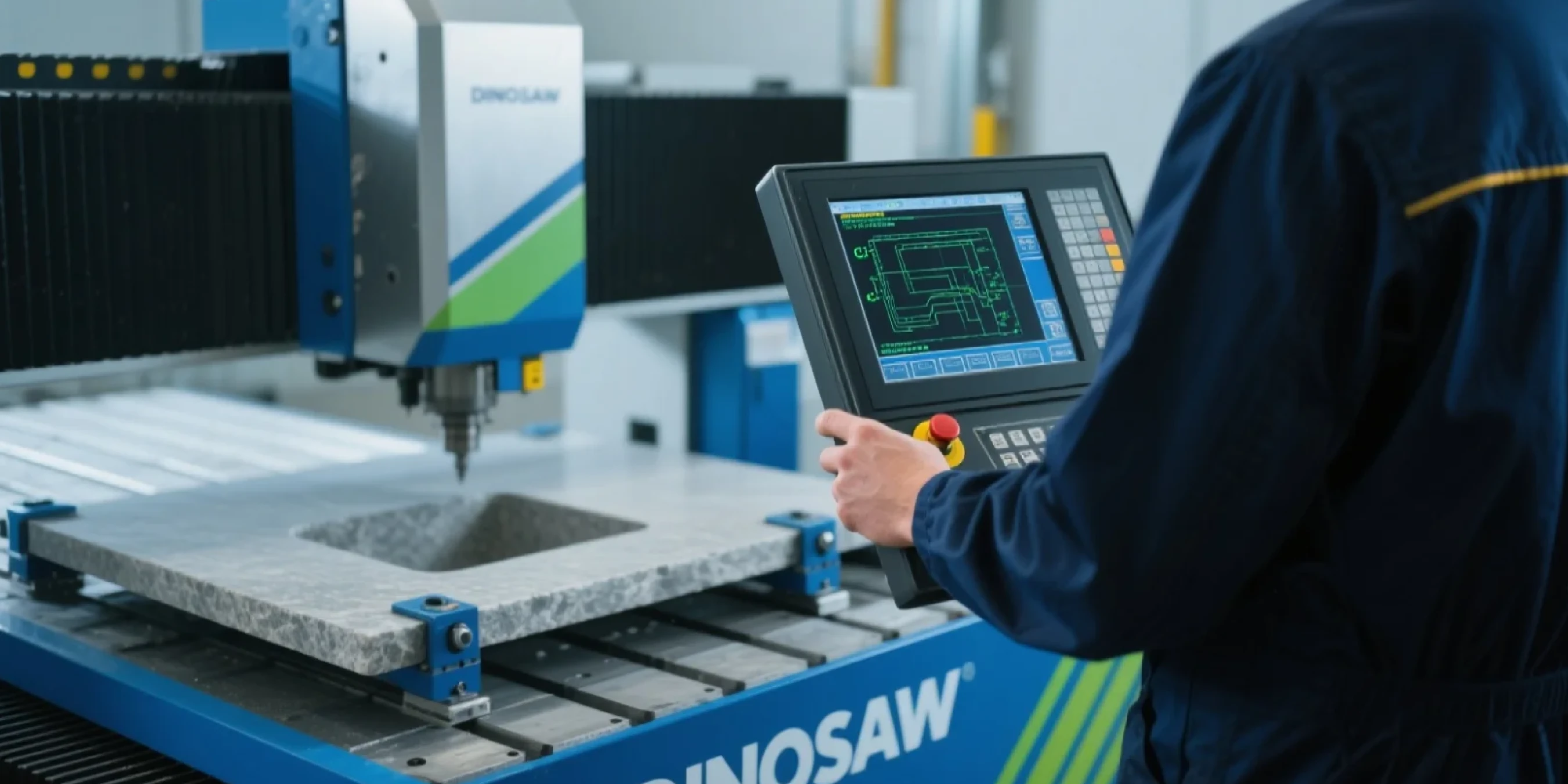
Not all stones are alike. What works for marble will ruin quartz. What's perfect for granite might irreparably chip marble. Let's look at the unique requirements of each material.
Granite is nature's concrete—extremely hard, fairly brittle, and absolutely unforgiving with the wrong parameters. The latest USGS minerals report shows granite remains the dominant dimensional stone in commercial applications, meaning mastering its machining is essential for any serious fabricator.
Marble seems easier to machine—and that's the trap. Yes, it's softer than granite, but it's also more prone to "stunning" (subsurface damage) and produces a fine, abrasive dust that can quickly clog the cutting area.
The secret with marble? Clean, sharp cuts with efficient debris removal. Electroplated or vacuum-brazed diamond bits often work best here because they maintain sharper cutting edges. But beware: you can generally increase feed rate compared to granite, but never allow abrasive slurry to recirculate in the cutting zone.
Engineered quartz is everywhere—and for good reason. It's homogeneous, non-porous, and beautiful. But it's completely different from natural stone. It's quartz crystals bound in polymer resin, which means heat is your enemy.
PCD (Polycrystalline Diamond) tools are the gold standard here. They cost more upfront, but for intensive quartz machining they're the only economical choice. The Natural Stone Institute emphasizes that proper fabrication techniques are critical to maintaining the integrity of both natural and engineered stone.
Never try to cut a 3 cm quartz slab in a single pass. Use multiple shallow passes with a final "clean-up" pass at very low depth. This prevents heat buildup and eliminates chipping that makes edges look unprofessional.
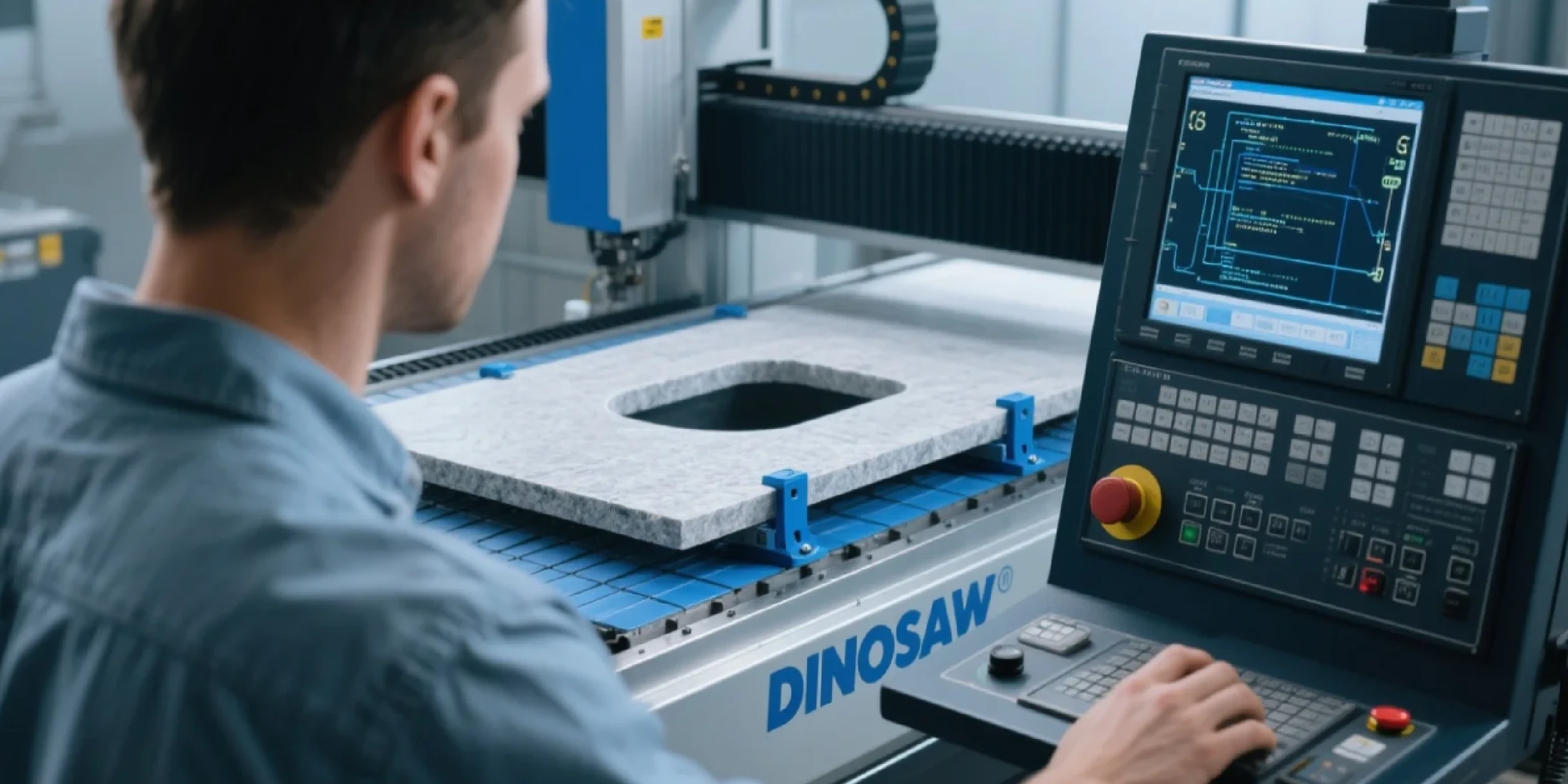
Successful milling starts long before the spindle spins. It's a systematic process where preparation matters as much as execution. Here's how the pros do it.
Your CAM software is where success or failure is decided. Programs like Vectric Aspire or Autodesk Fusion 360 let you define not just the cutting path, but the strategy. Are you roughing quickly or doing a precision finishing pass? Every operation needs different parameters.
The output—your G-code file—contains every instruction the machine will follow. Make a mistake here, and even the best equipment can't save you. For those wanting to dive deeper into the technical side, we have a full guide on G-Code optimization for stone machining.
A granite slab that moves even a millimeter during cutting is ruined. Period. Most stone CNCs use vacuum pods, mechanical clamps, or custom jigs. The key? Distribute clamping forces evenly and always check that the slab is perfectly level before starting.
This is where attention to detail separates pros from amateurs. You need to set the coordinate system (where X=0, Y=0, Z=0 on your workpiece) precisely. Install the cutting tool and verify length offset in the machine controller. One mistake here ruins everything.
Never walk away during the first minutes of a new program. Listen to the cut. A steady grinding sound is music to your ears. A sharp squeal means the feed rate is too slow. Sudden knocks or vibrations? Stop immediately—something's wrong with the setup.
Need expert advice on your specific project or want to find the perfect machine for your shop? Our specialist technicians are ready to help.
Get instant advice on WhatsApp →
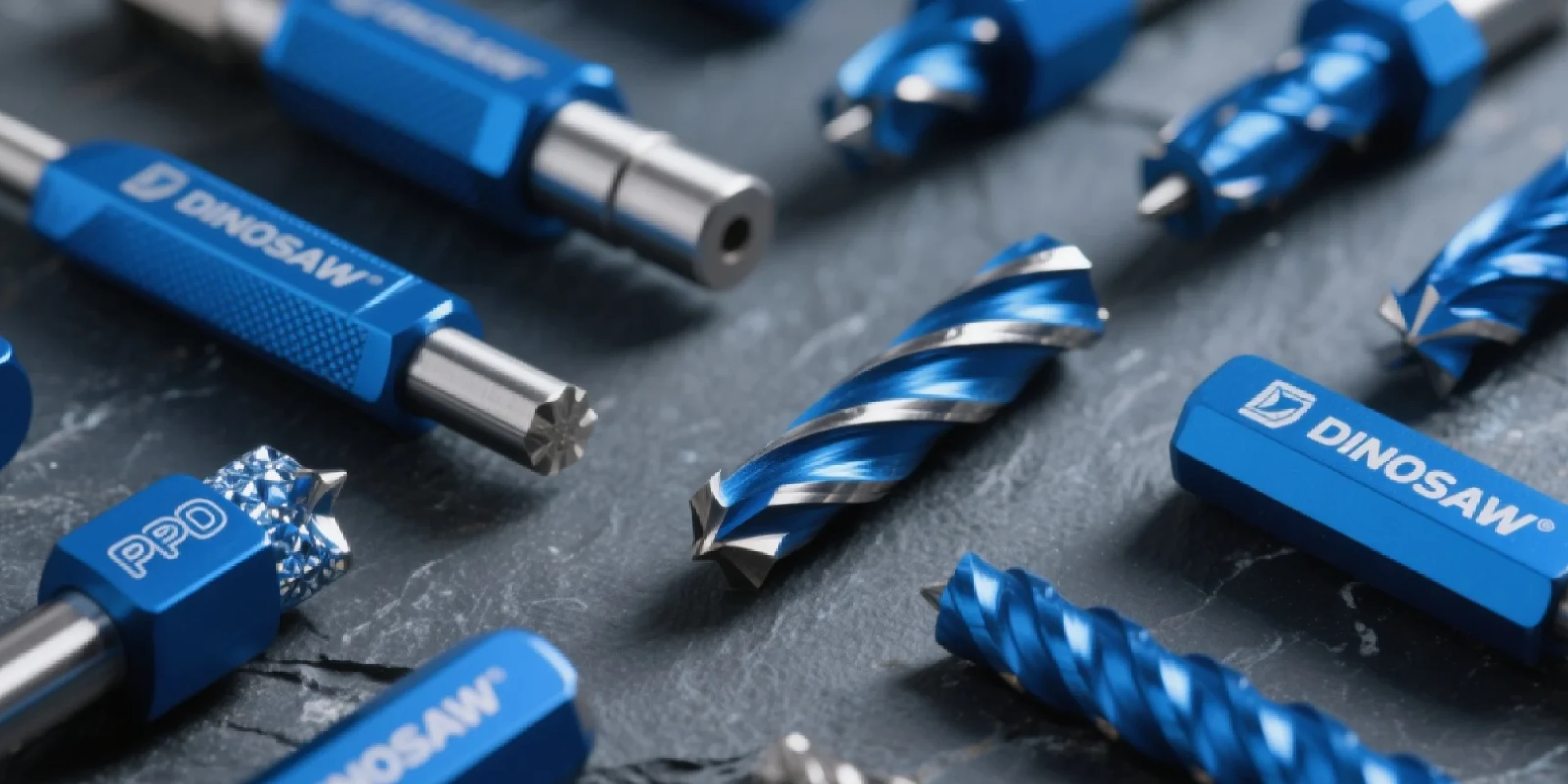
Your machine is only as good as the bits you install. Diamond tools aren't just recommended for stone—they're the only economically sensible option. But not all diamond tools are the same.
These are the go-to tools for heavy material removal. Diamond particles are fused into a metal matrix, and as the matrix wears, new diamonds are exposed. Think of them as self-sharpening. They're ideal for sink holes, edge profiling, and aggressive roughing operations.
A single layer of diamonds bonded to the tool surface delivers extremely sharp cutting action. They're excellent for detailed engraving, V-carving, and finishing on softer stones like marble. The downside? They wear out faster than sintered bits.
Polycrystalline Diamond tools cost much more upfront, but for intensive quartz machining they're the only economically viable option. A quality PCD bit can outlast dozens of conventional diamond tools while maintaining consistent edge quality.
Setting the right speeds and feeds is part science, part art, and absolutely critical for both tool life and cut quality. The goal is to create a consistent chip load—the amount of material each cutting edge removes per revolution.
Too aggressive? The tool breaks or the material chips. Too conservative? You're just rubbing and generating heat, wearing out expensive diamond bits without producing results. Here's how to find the right balance.
Experienced fabricators know how to diagnose problems just by listening. A steady, consistent grinding sound means everything's working right. A sharp squeal usually signals too much speed and not enough feed—you're polishing instead of cutting.
Heavy noises or vibrations? The machine's telling you the feed rate is too aggressive for the current RPM. Reduce feed or slightly increase spindle speed. Your material and equipment will thank you.
Always start conservatively with new materials or tools. Begin at 75% of recommended parameters, then gradually increase until you find the optimal balance between productivity and tool life. This approach has saved countless bits and expensive slabs.
Expect to spend $40,000 to $150,000 for a machine that can reliably handle professional stone machining. I know it sounds high, but here's the reality: anything significantly cheaper will cost you more over time in maintenance, failed jobs, and spare parts. DINOSAW machines are engineered specifically for the demanding stone machining environment, focusing on durability and ROI—not just low upfront cost.
Tool life varies greatly depending on material, parameters, and bit quality. A good sintered diamond bit on granite can deliver 300–500 linear meters of cutting. PCD bits on quartz can last thousands of meters. But what matters most is consistent results. A bit that starts chipping after 50 meters doesn't save you money, even if it was cheaper upfront.
Absolutely not recommended for production. Even if technically possible with the right setup, single-pass cutting on 3 cm puts enormous stress on everything—spindle, bit, and the stone itself. Multiple passes (usually 3–4 for a 3 cm slab) ensure better edge quality, longer tool life, and much lower risk of catastrophic failures.
Daily cleaning and lubrication, no question. Stone dust mixed with water creates an abrasive slurry that hardens like concrete on the machine's precision components. Fifteen minutes of proper cleaning at the end of the day prevents 90% of the mechanical issues we see in the field. Skip this step and you're headed for costly repairs and downtime.
Depends on your market. For standard countertops, sink holes, and basic edge profiles, a solid 3-axis machine covers 95% of the work. But if you want to offer premium services like waterfall edges, complex undermount sinks, or architectural details, 5-axis capability opens up possibilities that command premium prices. For inspiration on advanced techniques, check out our full guide to CNC stone sculpting.
Mastering stone milling isn't about having the most expensive tools or the biggest machine. It's about understanding the fundamental relationship between material, machine, and technique. Respect granite's hardness, work delicately with marble, and manage heat when cutting quartz.
Shops that succeed long-term are those that invest in the right equipment from the start, develop systematic workflows, and never stop learning from the materials. Every stone slab has something to teach you—the question is, are you listening?
Start with the fundamentals covered in this guide. Choose equipment based on engineering, not just price. Develop consistent processes for setup, cutting, and maintenance. Above all, remember that in stone machining there's no such thing as "good enough"—precision pays, and shortcuts always cost more in the end.
Ready to eliminate costly mistakes and unlock new profit opportunities? Our CNC stone routers are purpose-built for professional shops demanding reliability, precision, and profitability. Contact us for customized solutions
 English
Get A Easy Solution
Chat Online
Hi, this is Lizzy from Dinosaw ( Not a Robot ). Which Machine ( model ) do you want? Please WhatsApp us now
Hello 👋 How can we help?