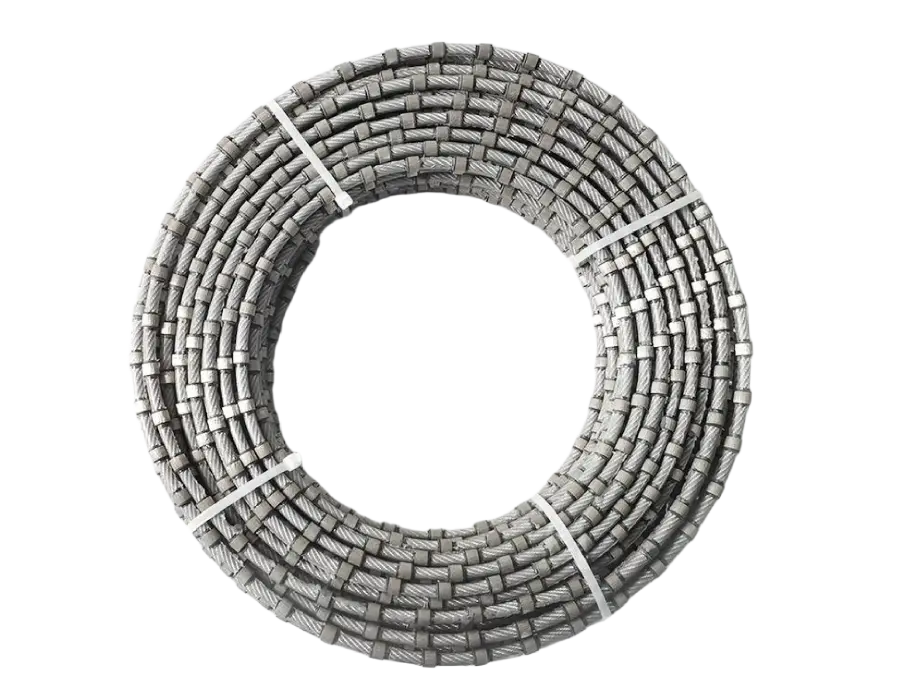
The DINOSAW diamond wire saw for marble is a two-wire program covering the two main marble cutting stages. The plastic-coated wire, in diameters of 6.3, 7.2, 8.5 and 9.0 mm with plastic injection fixing, 7/7/6/6 mm bead widths and 37 beads per meter, is a universal wet cutting wire for block squaring, chamfering and profiling cutting where accurate processing size and appearance matter. The electroplated wire, in a 10.1 mm diameter with spring or rubber+spring fixing, 9.8 mm bead width and 40 beads per meter, is built for marble quarrying with the high sharpness and efficient stone extraction that bench extraction demands. Selection follows the production stage: electroplated wire releases the block from the quarry face, and the plastic-coated wire brings the freed block to commercial dimensions in the workshop. DINOSAW supplies both wires against the customer's wire saw machine, flywheel size and cutting program.
6.3–9.0 mmFour plastic-coated wire diameters with plastic injection fixing for marble block squaring, chamfering and profiling.
37 / 40 beads/mBead density matched to the job: 37 beads/m for squaring precision, 40 beads/m for quarry extraction sharpness.
10.1 mmElectroplated quarry wire diameter with 9.8 mm beads and spring or rubber+spring fixing for marble extraction.
Applicable Materials
Marble blocks and slabs: Carrara, Statuario, Calacatta, Crema Marfil and similar commercial marble varieties
Certifications & Credentials
CE Certified · ISO 9001:2015 · Industry Standard Drafting Participant · 120+ Countries & Regions Served
Marble wire cutting appears at two production points: at the quarry bench, where the electroplated wire separates blocks from the face, and in the workshop, where the plastic-coated wire squares, chamfers and profiles the freed blocks.
Marble Block Squaring
Use the plastic-coated wire to bring quarried marble blocks to commercial dimensions on stationary wire saws. Four diameters from 6.3 to 9.0 mm let the workshop match kerf width and flywheel size, while plastic injection fixing keeps bead spacing stable through long, straight cuts that decide block value.
Marble Quarry Extraction
The 10.1 mm electroplated wire works on quarry machines at the bench, where 40 beads per meter of 9.8 mm width deliver the high sharpness needed for efficient stone extraction. Spring or rubber+spring fixing absorbs the vibration loads of cutting against the raw quarry face.
Chamfering Block Edges
Chamfering dresses the edges of squared marble blocks before shipment or sawing. The plastic-coated wire's accurate processing size keeps chamfer dimensions consistent across a block program, reducing correction work at the gangsaw or block cutter.
Profiling Cutting of Marble
For profiled marble sections and shaped architectural pieces, the plastic-coated wire follows programmed contours while the universal wet cutting design holds surface quality. Profile shops benefit from the wire's stable tracking on repeated contour passes.
Extraction-to-Squaring Marble Programs
Marble operations running both stages can source both wires from one supplier: the electroplated wire frees the block at the quarry, and the plastic-coated wire finishes it in the workshop. DINOSAW configures diameters, bead densities and loop lengths for both machines in the same program.
Real Wire Sawing Performance & Key Metrics
The DINOSAW marble wire family pairs a plastic-coated wire for block squaring, chamfering and profiling with an electroplated wire for sharp quarry extraction. Diameter, bead width and bead density are specified separately for each stage, so marble operations can match the wire to the job instead of running one wire for everything.
6.3–9.0 mm
Plastic-Coated Wire Diameters
Four diameters cover different marble block sizes and machine flywheel limits: 6.3 and 7.2 mm wires carry 7 mm beads, while 8.5 and 9.0 mm wires carry 6 mm beads, letting the squaring program match kerf width and cutting stability.
37 beads/m
Plastic Wire Bead Density
37 beads per meter spread the cutting load along the kerf during long squaring and profiling passes, supporting accurate processing size and clean appearance on premium marble blocks.
10.1 mm
Electroplated Wire Diameter
The single 10.1 mm electroplated diameter is built for quarry machines at the bench, where the wire must hold stable tension through deep, sharp extraction cuts in marble.
40 beads/m
Electroplated Wire Bead Density
40 beads per meter with 9.8 mm bead width raise the number of cutting points in the kerf, delivering the high sharpness and efficient stone extraction specified for marble quarrying.
Applicable materials: Marble blocks and slabs — Carrara, Statuario, Calacatta, Crema Marfil and similar commercial marble varieties.
Typical products: Quarry blocks extracted from the bench, squared commercial blocks, chamfered block edges and profiled marble sections for downstream slab and cut-to-size programs.
Actual cutting rate and wire life vary with marble hardness and abrasiveness, wire diameter and bead specification, cutting depth and length, water supply at the kerf, machine tension and operator settings.
Marble Wire Models & Specifications
Choose the wire by production stage first. For block squaring, chamfering and profiling cutting on stationary machines, select a plastic-coated wire diameter between 6.3 and 9.0 mm according to flywheel size and kerf width — 6.3 and 7.2 mm wires use 7 mm beads, 8.5 and 9.0 mm wires use 6 mm beads, all at 37 beads per meter. For marble quarrying at the bench, the 10.1 mm electroplated wire with 9.8 mm beads at 40 beads per meter is the quarry configuration, with spring or rubber+spring fixing selected against the machine and cutting conditions.
Specification
Plastic-Coated Wire
Electroplated Wire
Wire diameter (mm)
6.3 / 7.2 / 8.5 / 9.0
10.1
Bead fixing
Plastic injection
Spring / rubber + spring
Bead width (mm)
7 / 7 / 6 / 6
9.8
Beads per meter
37
40
Cutting strength
Good cutting effect, accurate processing size, beautiful appearance
Excellent cutting performance, high sharpness, efficient stone extraction, precise processing dimensions
Primary application
Block squaring, chamfering and profiling cutting
Marble quarrying
Core Technology & Tool Structure
Six engineering decisions behind the DINOSAW marble wire saw program. The numbered points on the tool diagram correspond to the systems below.
Marble Wire Cutting Workflow
1 · Select the wire: choose the plastic-coated wire for block squaring, chamfering and profiling, or the electroplated wire for quarry extraction; confirm diameter, bead width, bead density and loop length against the host machine. 2 · Mount & tension: spool the wire onto the machine flywheels, seat the beads in the cutting direction, then set working tension and water delivery. 3 · Run the wet cut: start at controlled feed, keep continuous water at the kerf, and monitor bead wear along the loop. 4 · Finish & inspect: complete the cut, release the block or finished profile, then inspect the wire and rotate or replace it on schedule.
01
Plastic Injection Bead Fixing
On the plastic-coated wires, bead clusters are fixed by plastic injection so each bead holds its position at 37 per meter while the coating protects the steel cable from guide abrasion. This stable bead spacing is what keeps kerf width consistent through long squaring and profiling passes.
02
Spring & Rubber+Spring Fixing
The 10.1 mm electroplated wire uses spring or rubber+spring fixing to hold its 9.8 mm beads at 40 per meter. The spring seats the bead firmly on the cable, and the rubber option adds damping against the shock and vibration loads that quarry extraction puts into the wire.
03
Electroplated Diamond Layer
Electroplating locks diamond grains in a bonded layer on the bead surface, giving the wire its high sharpness for efficient stone extraction. For quarry customers, that translates into faster face cutting on soft-to-medium marble without waiting for a bond to wear open.
04
Diameter-to-Bead-Width Matching
Bead width is matched to wire diameter across the plastic-coated range: 7 mm beads on the 6.3 and 7.2 mm wires, 6 mm beads on the 8.5 and 9.0 mm wires. Matching keeps the kerf proportional to the wire body, protecting both cutting stability and stone yield on premium blocks.
05
Universal Wet Cutting Design
The plastic-coated wire is specified as a universal wet cutting wire: continuous water cools the beads and flushes slurry from the kerf, which is the condition for the accurate processing size and clean appearance that squaring customers buy the wire for.
06
Two-Stage Marble Wire Program
Instead of one wire forced into every role, the program splits by production stage: electroplated wire for sharp extraction at the quarry, plastic-coated wire for dimensional control in the workshop. Customers running both stages can source both wires against the same machines from one supplier.
Plastic-Coated vs. Electroplated Diamond Wire for Marble
A within-page comparison for marble operations deciding which wire in the family matches their production stage.
Plastic-Coated vs. Electroplated Diamond Wire for Marble
Plastic-Coated Marble Wire
VS
Electroplated Marble Wire
6.3 / 7.2 / 8.5 / 9.0 mm
Wire diameter
✓10.1 mm
Plastic injection
Bead fixing
✓Spring / rubber + spring
37 beads/m; 7/7/6/6 mm
Beads per meter / bead width
✓40 beads/m; 9.8 mm
Good cutting effect, accurate size, beautiful appearance
Cutting character
✓High sharpness, efficient stone extraction
Stationary wire saws in the workshop
Primary machines
✓Wire saw machines at the quarry bench
Block squaring, chamfering and profiling cutting
Best for
✓Marble quarrying and block extraction
Dimension-critical finishing where appearance decides block value
Right for
✓High-output extraction where sharpness decides daily progress
Note: configurations vary by brand and model; actual performance depends on the specific machine, material and working conditions.
The Manufacturer Behind the DINOSAW Marble Wire Series
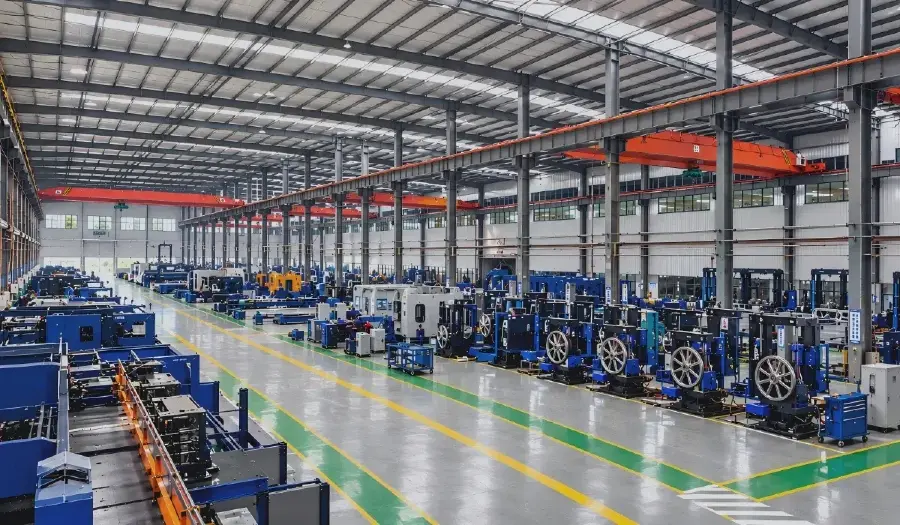
DINOSAW is a manufacturer of CNC stone processing machinery, specializing in diamond wire saw machines and CNC stone cutting equipment. With more than 20 years of R&D and manufacturing experience, DINOSAW contributes to industry standards including T/CMES 41001-2025 for CNC wire saw machines, holds 100+ technical patents, and supplies equipment and technical support to customers in 120+ countries and regions. Its manufacturing and management systems are certified to ISO 9001, ISO 14001 and ISO 45001, with CE-compliant machinery for international markets.
DINOSAW R&D & ManufacturingMechanical Design · CNC Control Development · Assembly · Testing · Commissioning · Global Delivery
Industry Standard Drafting
DINOSAW contributes to industry standards for stone machinery, including T/CMES 41001-2025 for CNC wire saw machines, as well as standards covering multi-wire saws, combined wire saw machines and five-axis bridge cutting equipment. This work reflects the company’s long-term involvement in machine design, manufacturing, testing and quality control.
20+Years of Stone Machinery R&D & Manufacturing Experience
100+Technical Patents — Covering machine structures, CNC control, cutting systems and stone processing technologies
120+Countries & Regions Served — Equipment, installation and technical support worldwide
CE Compliance & ISO Management Systems
CE: Stone cutting machinery assessed against Machinery Directive 2006/42/EC and relevant EN standards. ISO: Management systems certified to ISO 9001, ISO 14001 and ISO 45001.
Installation Requirements & After-Sales Support
DINOSAW provides installation guidance, operator training, remote diagnosis and spare-parts coordination for every machine.
Wire Configuration6.3–10.1 mm diameter, configured per destination
Diameter, bead width, bead density, fixing type and loop length are matched to the customer's wire saw machine and cutting program before production.
Confirm the host wire saw model, flywheel diameter and line speed so the selected wire runs within its designed tension range.
Water SupplyContinuous water at the cutting zone
Both wires are wet-cutting designs; plan stable cooling water and slurry drainage at the quarry bench or workshop machine.
01 · Pre-Shipment & DeliveryMachine configuration, packaging and transport requirements confirmed before dispatch, with factory inspection and documents verified.
02 · Installation & CommissioningOn-site utilities and foundation check, machine positioning, commissioning and acceptance.
03 · Operator TrainingHands-on training covering routine CNC operation and daily checks of blades, spindles, cooling and lubrication.
04 · After-Sales SupportRemote technical assistance, maintenance support and spare parts coordination throughout the machine's service life.
Diamond Wire Saw for Marble Selection, Installation & Operation FAQ
Answers to the main buying questions around plastic-coated versus electroplated marble wire selection, adjacent wire products, and quotation preparation.
Choose by production stage, not by price. The plastic-coated wire is the finishing-stage tool: diameters of 6.3, 7.2, 8.5 and 9.0 mm with 7/7/6/6 mm bead widths and 37 beads per meter, fixed by plastic injection. It is specified as a universal wet cutting wire for block squaring, chamfering and profiling cutting, where accurate processing size and beautiful appearance directly decide the block's selling price. The electroplated wire is the extraction-stage tool: a single 10.1 mm diameter, 9.8 mm bead width, 40 beads per meter, with spring or rubber+spring fixing, specified for marble quarrying where high sharpness and efficient stone extraction decide daily output. A practical rule: if the block is already separated from the face and needs dimensional control, order the plastic-coated wire; if the block is still attached to the bench, order the electroplated wire. Most marble operations eventually run both — the electroplated wire frees the block at the quarry, and the plastic-coated wire brings it to final commercial dimensions at the workshop. When you send your inquiry, describe which stage you are equipping and DINOSAW will quote the matching wire specification.
Do not buy these wires if your main material is granite. Granite is harder and more abrasive than marble and needs the bond system, bead fixing and rubber coating of DINOSAW's granite rubber wire family, which is engineered for that duty cycle; running a marble wire on granite typically means short bead life and unstable cutting. Also reconsider if you need dry cutting: both wires on this page are wet-cutting designs, with water cooling the beads and clearing slurry from the kerf, so for dry cutting or one wire across multiple scenes, look at the brazed wire range instead. A third boundary is machine size: the 10.1 mm electroplated quarry wire needs adequate flywheel diameter and drive power at the bench, while small stationary squaring machines should use the 6.3–9.0 mm plastic-coated wires. These wires are engineered around marble's hardness and abrasiveness, and they cover mixed marble and travertine programs well; the decision inside this page then becomes plastic-coated versus electroplated by production stage. Matching the wire family to the stone family is the cheapest way to protect both wire life and cut quality.
Send six items and DINOSAW can return a configured offer instead of a catalog guess. First, the stone: marble variety, hardness and abrasiveness, plus a photo of the quarry face or block if available. Second, the job: quarry extraction, block squaring, chamfering or profiling — this decides plastic-coated versus electroplated. Third, the machine: wire saw model, flywheel diameter and whether it is a stationary squaring machine or a quarry machine, since flywheel size limits wire diameter and loop length. Fourth, the wire specification you currently run or prefer: diameter, bead width, beads per meter and fixing type, so the new wire can be compared against your baseline. Fifth, cutting conditions: water supply at the machine, typical cut depth and length, and daily running hours. Sixth, commercial data: destination country, discharge port, required quantity and expected delivery window. With these, DINOSAW confirms the diameter between 6.3 and 10.1 mm, bead density at 37 or 40 beads per meter, fixing type, loop length and packaging, and quotes the wire against your actual cutting program rather than a default specification.
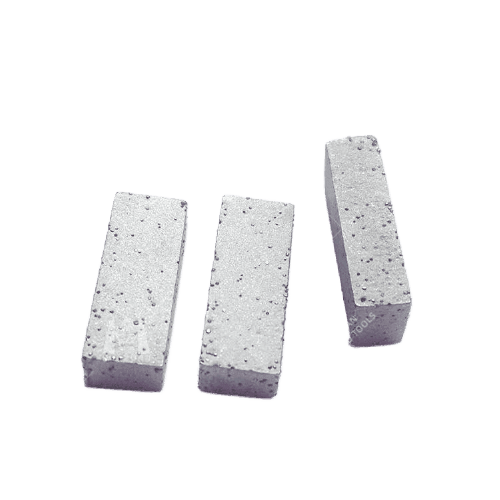
Beads per meter set how many diamond cutting points share the load in the kerf. The plastic-coated wire carries 37 beads per meter: 7 mm beads on the 6.3 and 7.2 mm wires and 6 mm beads on the 8.5 and 9.0 mm wires, a density that suits long, controlled squaring passes where accurate processing size and surface appearance matter more than raw feed speed. The electroplated wire carries 40 beads per meter of 9.8 mm width: more and wider beads in the kerf mean more cutting points at the quarry face, which is how the wire delivers the high sharpness and efficient stone extraction specified for marble quarrying. Diameter works together with density — a thicker wire runs higher tension and tracks more stably through deep cuts, while a thinner wire bends around smaller flywheels and leaves a narrower kerf, saving stone on expensive blocks. Bead width then sets how each cutting point engages the marble: wider beads spread the load and run cooler, narrower beads concentrate it. In practice, quarries stepping up to 40 beads per meter usually do it to raise extraction speed on soft, homogeneous marble, while workshops stay at 37 for finish-critical squaring where kerf stability decides dimensional accuracy.
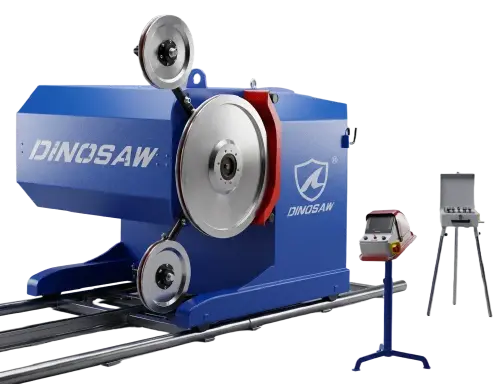
The fixing decides how the bead sits on the steel cable and how the wire behaves in the cut. Plastic injection fixing, used on the 6.3–9.0 mm plastic-coated wires, molds the bead clusters into the plastic coating itself, so the beads hold position at 37 per meter while the coating shields the steel cable from abrasion in the machine guides; the result is stable tracking and accurate processing size on long squaring and profiling passes. Spring fixing and rubber+spring fixing, used on the 10.1 mm electroplated wire, hold the 9.8 mm beads mechanically at 40 per meter, with the rubber option adding damping between bead and cable to absorb the shock and vibration of quarry extraction, where the wire runs at higher tension against an uneven, changing kerf. Choose plastic injection when the wire runs in guided, predictable machine paths in the workshop; choose spring or rubber+spring when the wire works against raw quarry faces. Both are wet-cutting designs, so keep continuous water at the kerf regardless of fixing type. For storage, keep spooled wires away from direct sunlight, moisture and kinks, and inspect the fixing area for movement or damage before mounting a used loop on the machine.
Contact Dinosaw
Discuss Diamond Wire Saw for Marble Pricing, Configuration & Application
Are you looking for the perfect cutting machines or processing solutions for hard and brittle materials?
Facing challenges in stone quarrying, countertop cutting, concrete and underwater pipeline cutting, stainless steel rust removal and grinding, luxury thin slab cutting, agate and gemstone cutting, graphite cutting, or even building demolition?
Leave your inquiry, and you can expect a reply within 12 hours with tailored solutions!
Diamond Wire Saw for Marble Block Squaring & Quarrying
What materials will you be working with? *
Your Name / Company Name? *
Phone Number / Email Address? *
+86
What specific requirements do you have?
Diamond Wire Saw for Marble Guides & Related Machines
Use wire selection, installation and application resources to confirm the right marble wire diameter, bead specification and cutting setup for your machines.














 English
 中文
 Italian
 Türkçe
 Português
 Español
 Deutsch
 العربية
 Tiếng Việt
 Français
 Русский
 한국어