


 中文
中文 Italian
 Türkçe
 Português
 Español
 Deutsch
 العربية
 Tiếng Việt
 Français
 Русский
 한국어
한국어


Ms.Lizzy
Hi, this is Lizzy from Dinosaw ( Not a Robot ). Which Machine ( model ) do you want? Please WhatsApp us now


Open Hours:8:30am-20:30pm

WhatsApp: +86 198-5901-3937

 May 29, 20264 MIN READ
 May 29, 20264 MIN READ
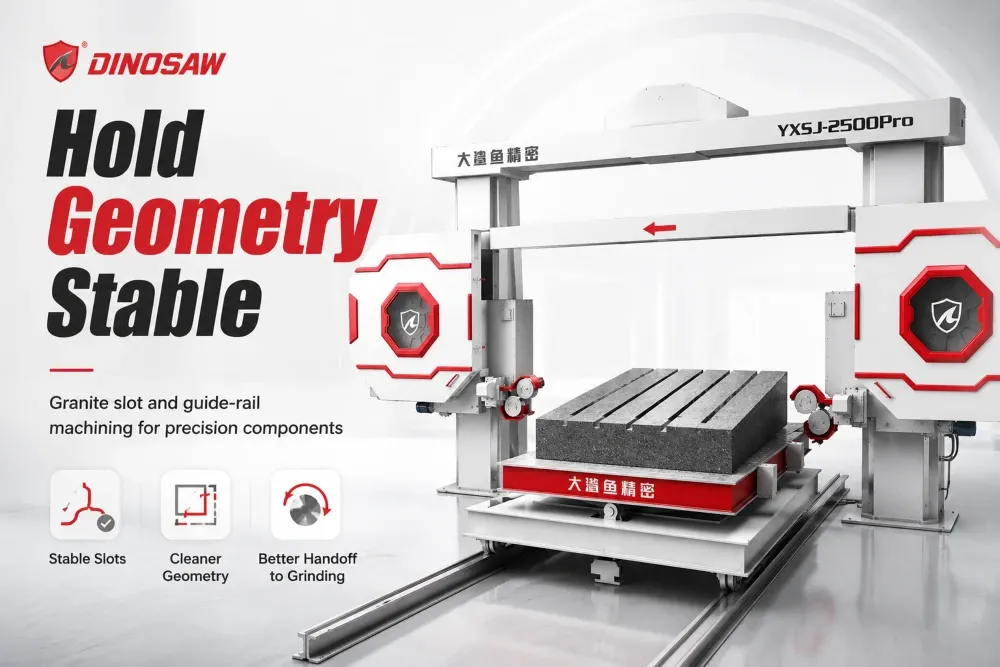
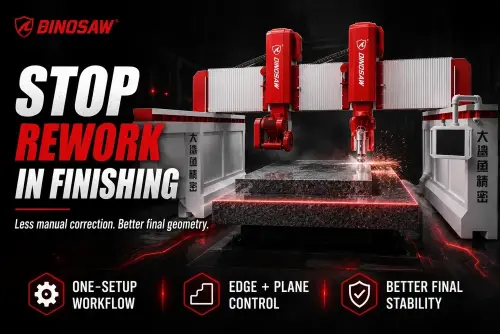
Learn how precision granite slot machining, guide-rail groove machining, and face milling stabilize key geometry for downstream finishing consistency.
In precision granite component production, milling is where geometry relationships are locked in. It defines groove depth, face references, contour position, and hole-slot relationships for the next stages.
If this stage drifts, finishing has to recover geometry instead of improving consistency. That increases cycle time and correction workload.
This is why precision slot and guide-rail machining matters after preform cutting. A controlled granite milling workflow helps move parts forward with cleaner geometry and less downstream pressure.
For this type of part, the key question is simple: can the machining stage hold slot-face-contour relationships stable across batches?
Dinosaw Machine applies this approach to precision granite platforms, machine bases, and instrument supports where geometry coherence matters more than generic stone routing.
If you are evaluating this stage, message Dinosaw on WhatsApp with your workpiece geometry, slot details, and current bottlenecks.
Preform cutting improves the blank, but it does not guarantee stable machining output.
Many factories still lose time when groove depth, face flatness, and contour references stop matching each other during milling. Then later processes must re-align features and recover target geometry.
In practice, this shows up in machine bases, measuring platforms, instrument supports, and long-slot parts. One feature drift can push error into the rest of the workflow.
This decision is about structural geometry control, not decorative carving.
Parts with guide-rail grooves, long slots, plane milling, edge transitions, hole-slot combinations, and outer contours need stable path control. Generic routing logic is usually not enough for this.
So the right comparison is not carving style. It is whether your process keeps recovering geometry, or keeps geometry stable during machining.
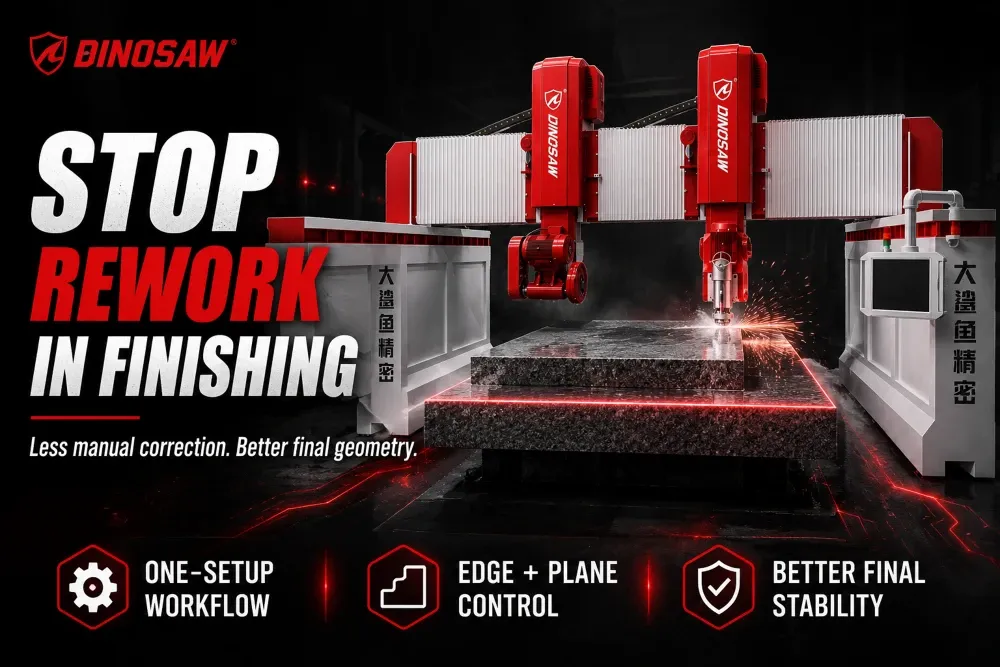
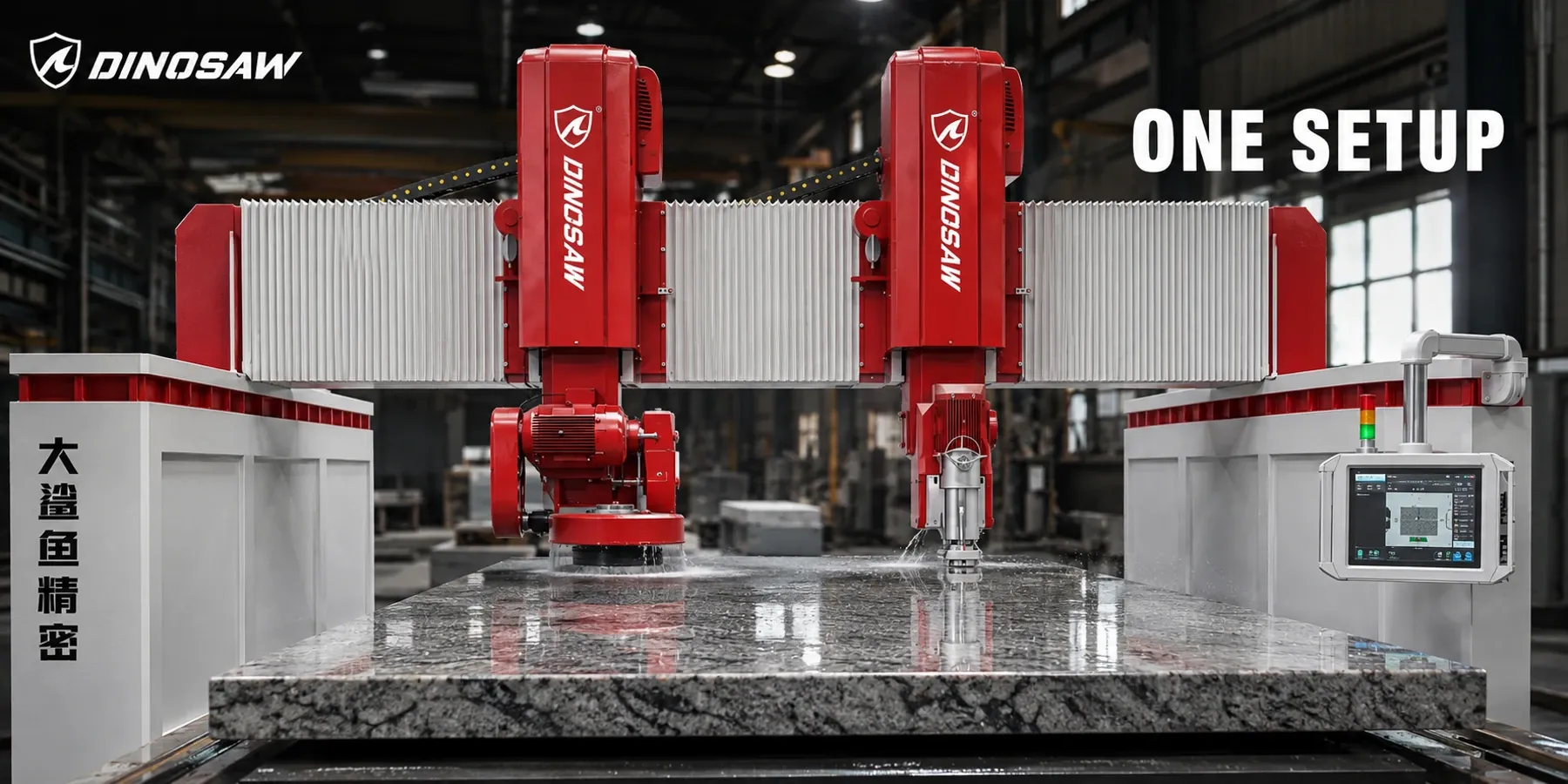
After the Dinosaw milling machine workflow is introduced, structured components that need multiple geometry operations can stay in one controlled process chain instead of being split into router-style single-purpose tasks.
When more operations stay in a controlled setup path, the line depends less on repeated transfer and re-alignment. That helps reduce transition loss before finishing.
Dinosaw emphasizes CNC automation, visual programming, and parameterized operation so process repeatability becomes the baseline.
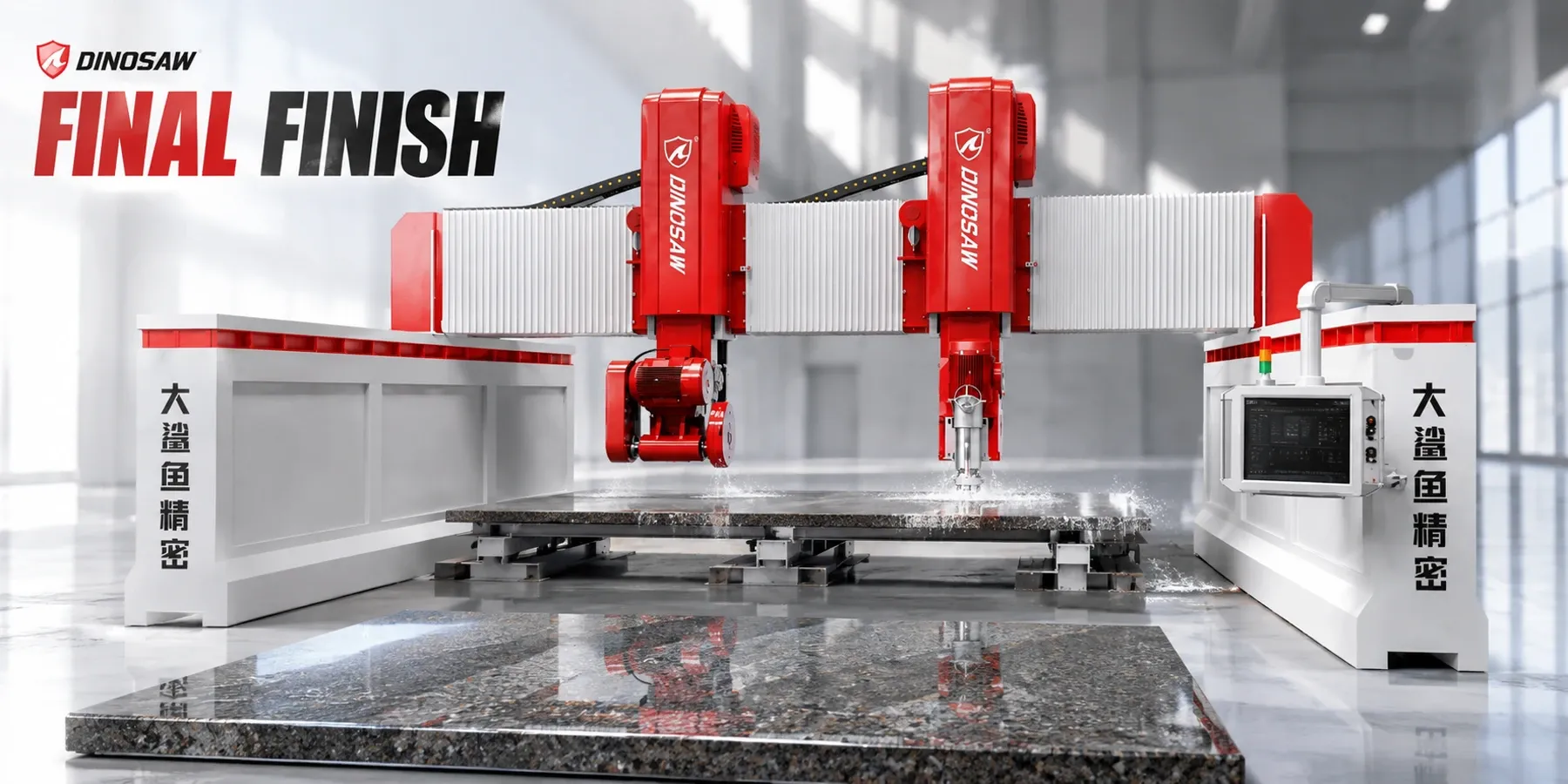
Together, these points support more stable slot geometry, better face consistency, and cleaner handoff to grinding.
The biggest gains usually appear in parts where multiple geometry features must stay coherent:
For these parts, milling is not a cleanup step. It is the stage that turns a shaped blank into a controllable structural component.
Review the milling stage when these signs appear together:
When these are recurring, hidden cost is usually being created in machining and paid in finishing.
Compare against your real geometry tasks, not generic machine labels.
Key checks:
For customized process design or deeper technical consultation, you can also contact the Dinosaw team.
No. Precision granite component machining focuses on structural geometry relationships, not decorative carving.
Machine bases, instrument platforms, measuring bases, and long-slot components benefit most because they depend on stable feature relationships.
It keeps slots, faces, and contours aligned before finishing, so grinding focuses on consistency instead of geometry recovery.
Workpiece size, slot and groove requirements, plane targets, contour complexity, current bottlenecks, required finishing consistency, and target tolerance/inspection acceptance criteria.
If your team wants a fast first-pass fit check, start a WhatsApp discussion with Dinosaw.
Useful inputs:
 English
Get A Easy Solution
Chat Online
Hi, this is Lizzy from Dinosaw ( Not a Robot ). Which Machine ( model ) do you want? Please WhatsApp us now
Hello 👋 How can we help?