



 中文
中文 Italian
 Türkçe
 Português
 Español
 Deutsch
 العربية
 Tiếng Việt
 Français
 Русский
 한국어
한국어


Ms.Lizzy
Hi, this is Lizzy from Dinosaw ( Not a Robot ). Which Machine ( model ) do you want? Please WhatsApp us now


Open Hours:8:30am-20:30pm

WhatsApp: +86 198-5901-3937

 May 29, 20264 MIN READ
 May 29, 20264 MIN READ
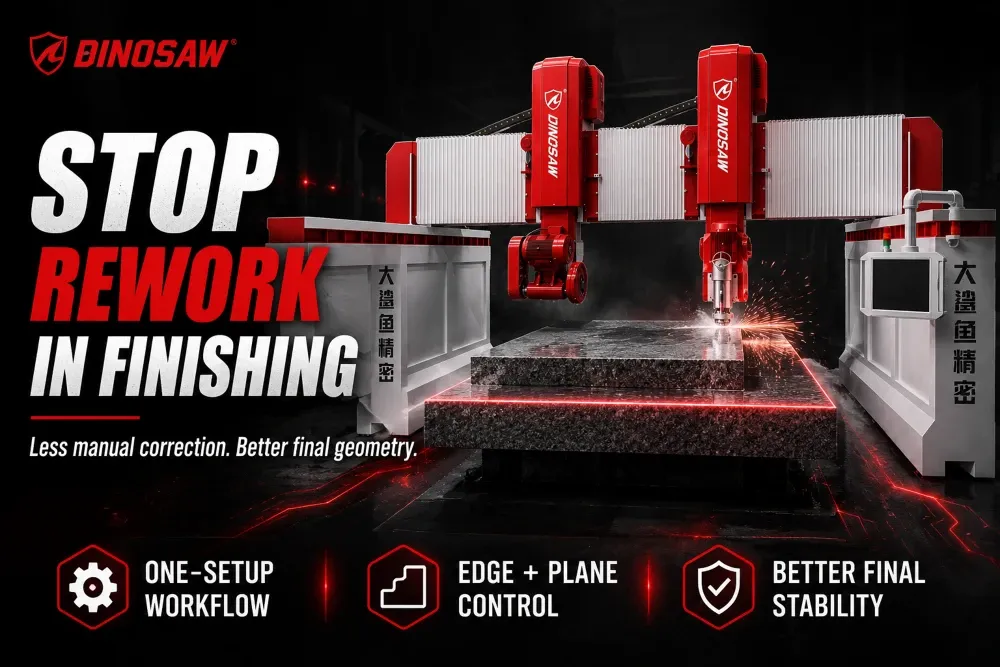
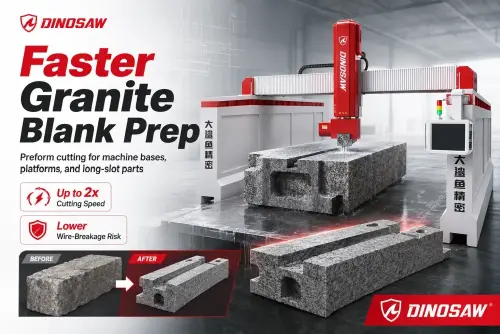
Learn how one-setup granite edge and plane finishing stabilizes final consistency across faces, edges, and dimensional relationships.
In precision granite component production, grinding is the stage that stabilizes final consistency. It controls edge quality, plane coherence, step transitions, chamfers, and dimensional relationships before final inspection.
If this stage is unstable, the last part of production becomes correction-heavy, labor-intensive, and hard to scale.
This is why one-setup finishing control matters after cutting and milling. A controlled granite grinding workflow reduces repeated correction and keeps multi-face consistency steadier from part to part.
For this type of component, the key question is simple: can finishing hold final edge-plane relationships stable across batches?
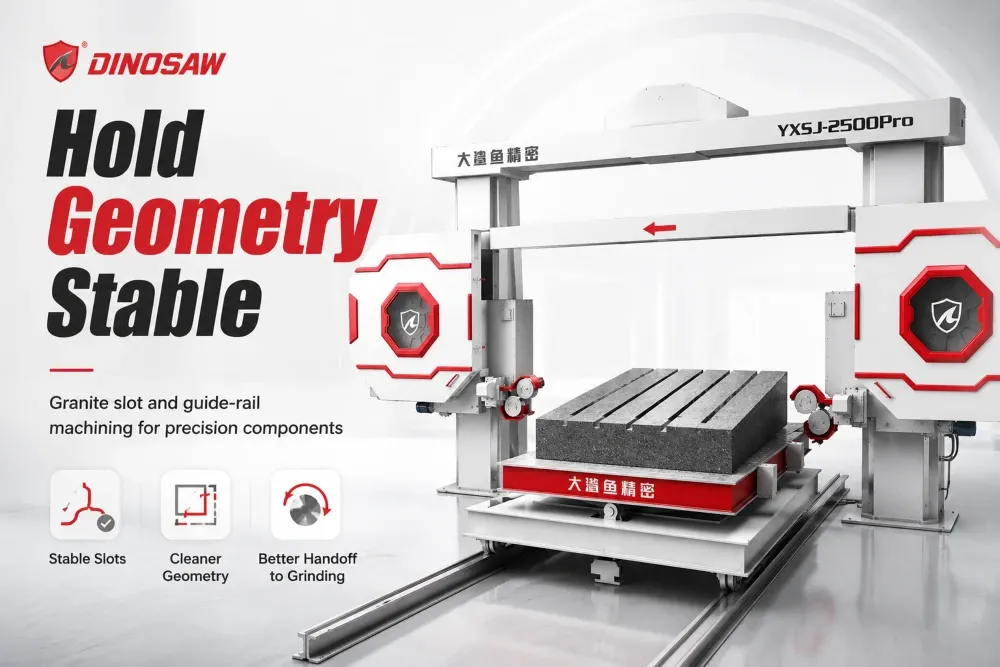
Dinosaw Machine applies this approach to precision granite platforms, machine bases, and long structured parts where consistency is more important than slab-style surface gloss.
If you are evaluating final grinding, message Dinosaw on WhatsApp with your part geometry, finishing pain points, and correction workload.
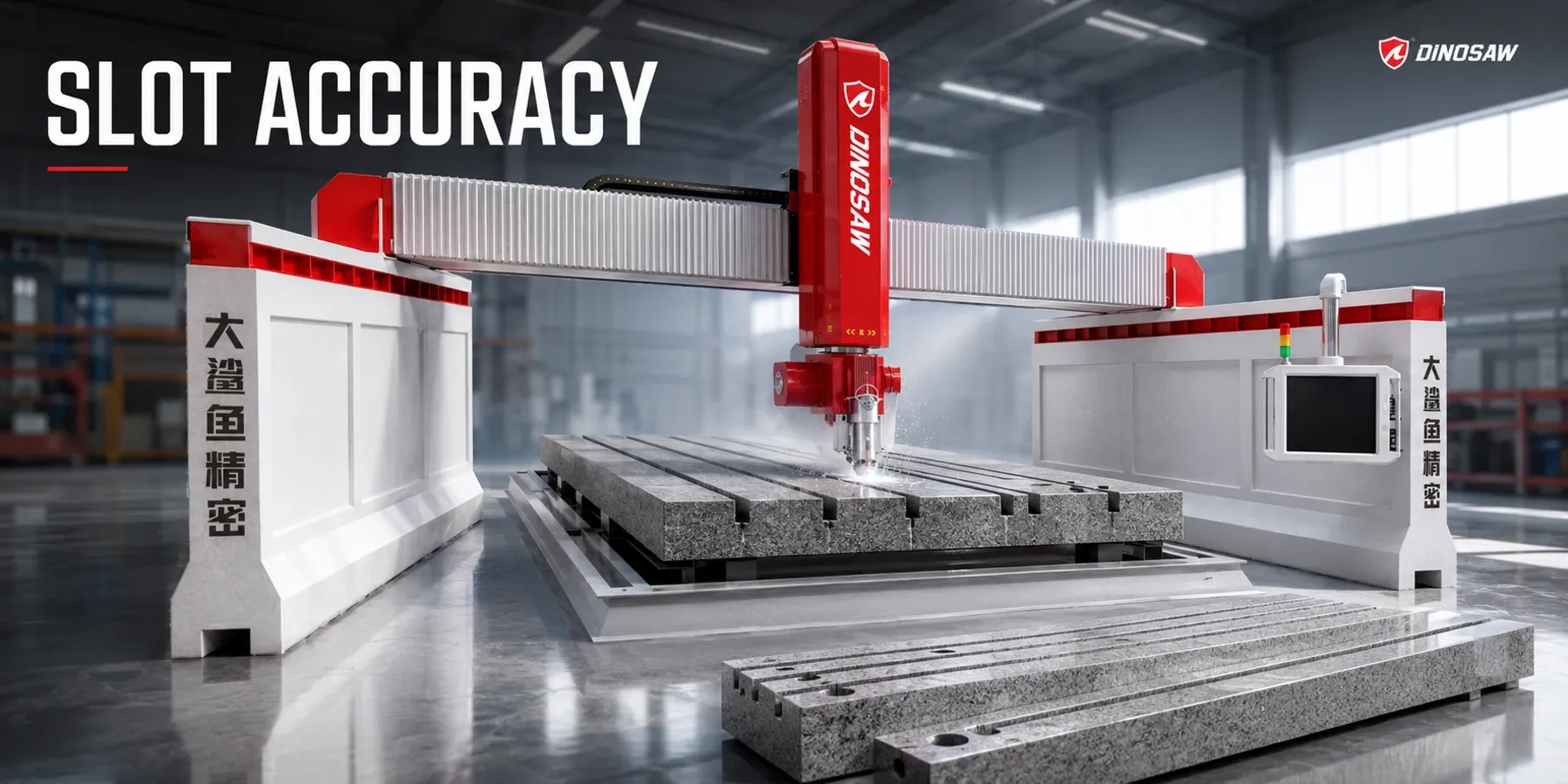
By the grinding stage, many teams expect geometry to be nearly done. In reality, finishing often absorbs instability passed from both cutting and milling.
If edges, planes, and transitions are unstable before grinding, the process spends more time on recovery work. That increases labor and pushes pressure into final inspection.
This is common in platforms, instrument bases, long structural parts, and any component where multi-face coherence directly affects use or assembly.
This decision is about controlled final geometry, not visual polishing style.
When one part needs edge grinding, plane finishing, step cleanup, chamfer handling, and multi-face consistency, repeated setup changes can increase variation exactly where control should be tightest.
So the right comparison is not polishing method. It is whether your finishing path keeps chasing drift, or keeps final geometry stable in one controlled reference condition.
After the Dinosaw grinding machine workflow is introduced, more finishing tasks can stay in one setup whenever part geometry and process conditions allow it.
When more work stays in one controlled path, the process depends less on repeated hand correction between surfaces.
Dinosaw focuses on structured parts where final judgement is consistency and dimensional coherence, not only appearance.
Together, these points support more stable final geometry and lower manual finishing pressure.
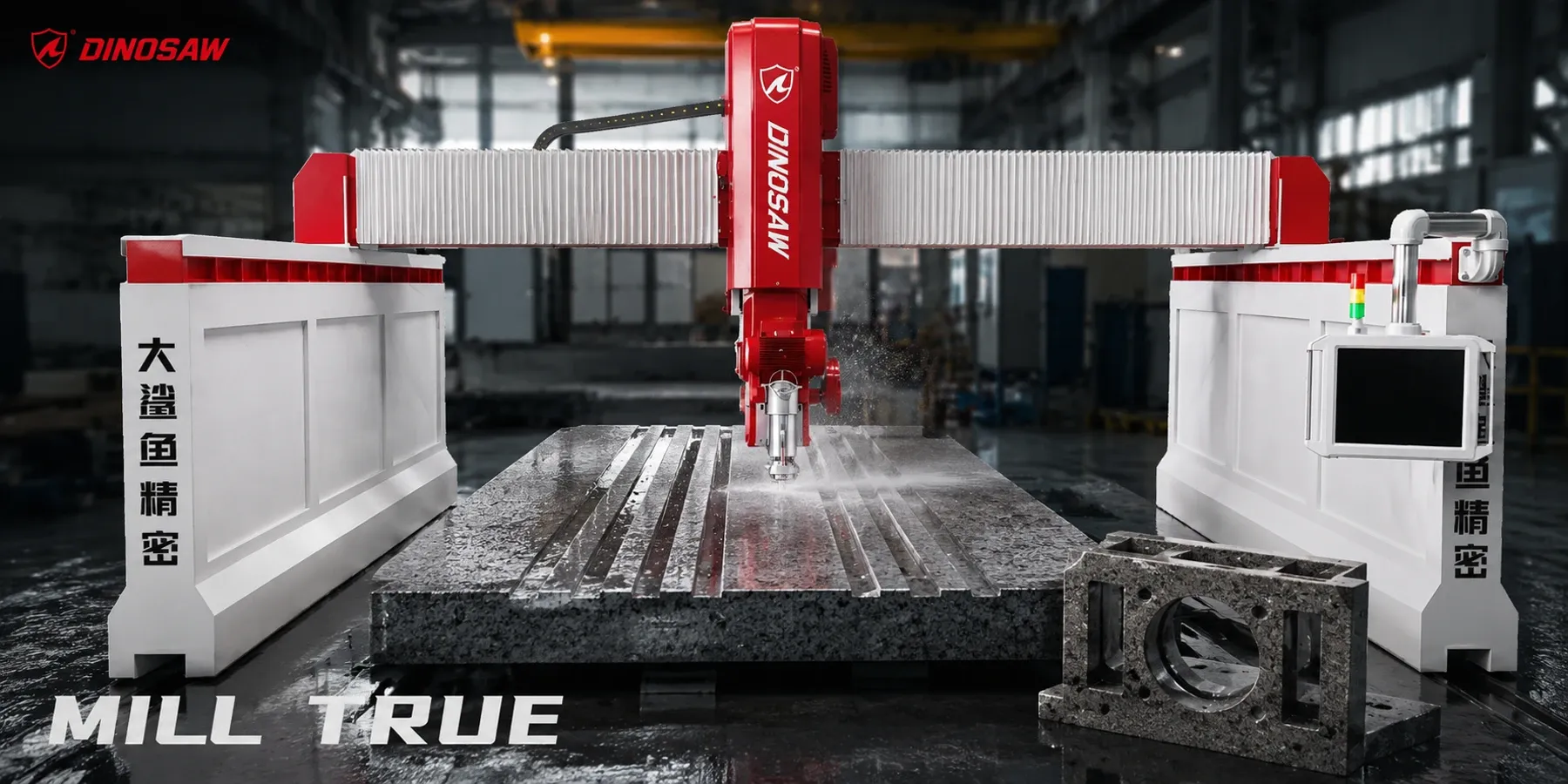
The strongest gains usually appear in parts where edge-plane consistency directly affects final usability:
For these parts, grinding is not cosmetic. It is the stage that stabilizes final usability and dimensional coherence.
Review the finishing stage when these signs repeat:
When these appear together, hidden cost is usually being carried through finishing instead of being controlled.
Choose against final-consistency requirements, not just surface-treatment labels.
Key checks:
For customized process design or deeper technical consultation, you can also contact the Dinosaw team.
No. Precision component grinding focuses on post-machining edge-plane consistency and dimensional coherence, not slab gloss.
Platforms, machine bases, instrument bases, and long structured parts benefit most because they depend on stable multi-face relationships.
It keeps more finishing work in a controlled path, reducing repeated repositioning and improving edge-plane stability before inspection.
Part size, edge-plane requirements, step/chamfer details, current correction workload, batch-consistency issues, final inspection targets, and target tolerance/inspection acceptance criteria.
If your team wants a fast first-pass fit check, start a WhatsApp discussion with Dinosaw.
Useful inputs:
 English
Get A Easy Solution
Chat Online
Hi, this is Lizzy from Dinosaw ( Not a Robot ). Which Machine ( model ) do you want? Please WhatsApp us now
Hello 👋 How can we help?