

 中文
中文 Italian
 Türkçe
 Português
 Español
 Deutsch
 العربية
 Tiếng Việt
 Français
 Русский
 한국어
한국어


Ms.Lizzy
Hi, this is Lizzy from Dinosaw ( Not a Robot ). Which Machine ( model ) do you want? Please WhatsApp us now


Open Hours:8:30am-20:30pm

WhatsApp: +86 198-5901-3937
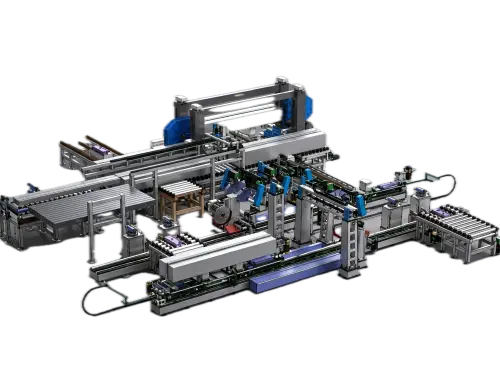

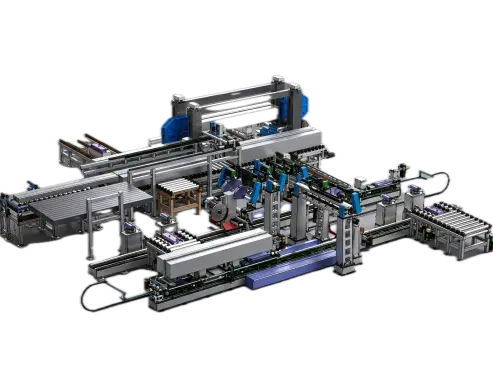
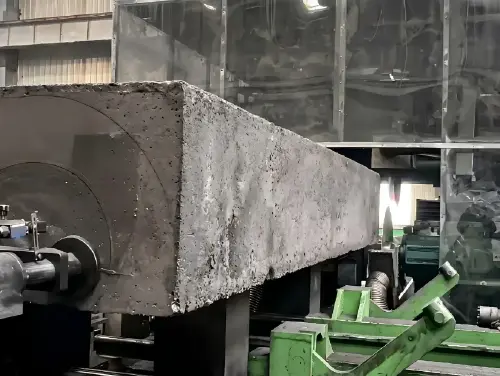
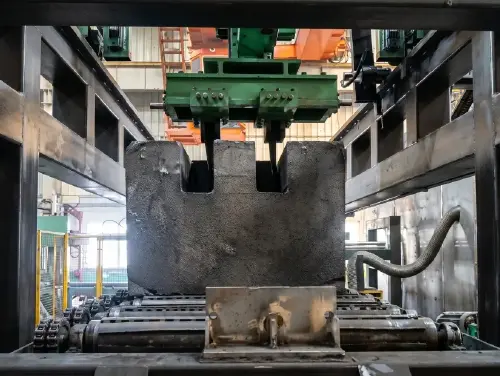
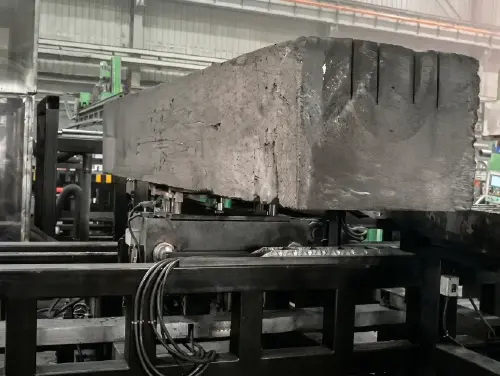
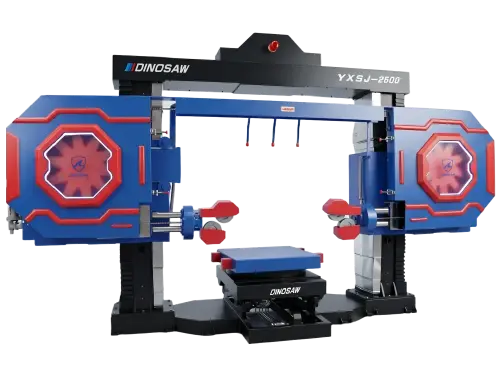
Configured for cathode carbon blocks and graphitized workpieces. This machining line eliminates manual scrap release and slotting variations, outputting finished blocks directly ready for downstream integration.
 ▶
▶
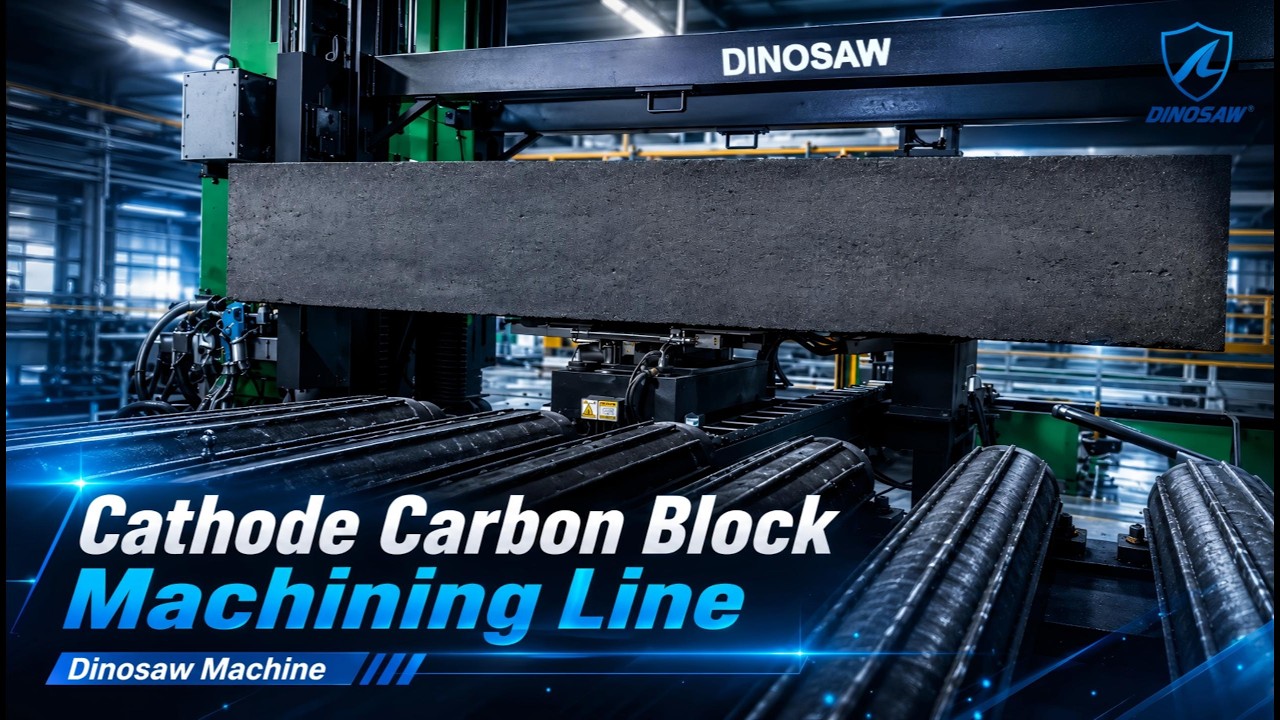
Process verification of the multi-station workflow. The footage demonstrates measurement-driven alignment, multi-blade slotting, and wire saw bottom release cutting, proving stable scrap separation and dust control in real workshop conditions.
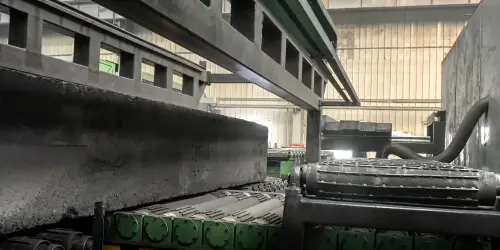
Designed for cathode carbon blocks that must leave this stage trimmed, slotted, scrap-released, and ready for downstream machining or installation.
Most inquiries in this category come from new aluminum smelter projects, cathode-block preparation workshops, or retrofit lines where the block cannot simply be cut smaller and pushed forward. The usual trouble starts when incoming block variation shifts groove position, bottom bridge release becomes inconsistent, scrap still needs manual cleanup, and the finished block no longer transfers cleanly into the next station.
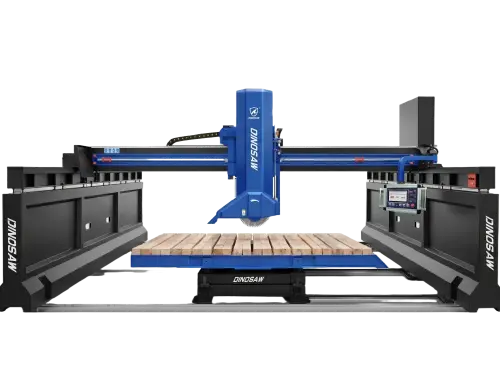
Our engineering approach is to let measurement set the position first, use bridge saw stations for side trimming, multi-blade stations for repeated groove-side cuts, and wire saw cutting where bottom release needs tighter control. That usually gives the buyer a more usable block for the next process, with less correction and less release work left to operators.
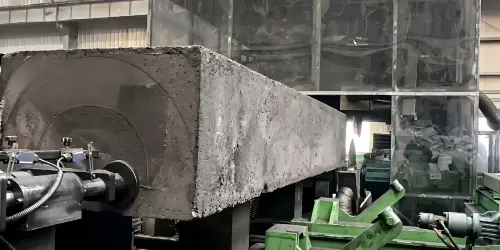
Suitable for graphitized cathode blocks where chipping control, cut stability, and position consistency matter across multiple stations.
In graphitized block projects, the real concern is rarely one fast cut. Buyers usually care more about whether the block can stay stable through alignment, repeated cuts, release cutting, and transfer without edge damage or growing correction work. If the first position is wrong, later stations tend to inherit and amplify the error.
For that reason, we do not treat graphitized blocks like ordinary rough stock. The line is arranged around measurement feedback, controlled clamping, staged cutting, and coordinated transfer, so early positioning is more stable and the downstream route sees less correction pressure and lower breakage risk.
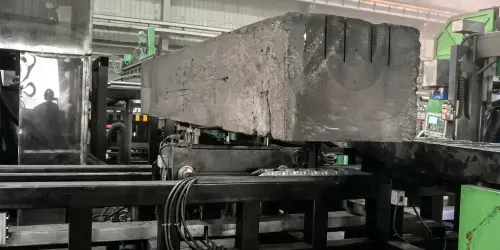
The line can be configured for different groove counts, groove positions, and block geometries instead of forcing one standard layout onto every project.
This is a common requirement when customers run different block drawings, groove counts, or groove spacing across projects, suppliers, or expansion stages. A fixed machine may look acceptable on paper, but once the groove layout changes, the project often starts absorbing the difference through setup compromise, manual correction, or off-line rework.
We usually start from the actual drawing, groove layout, and target output, then match trimming, slotting, positioning, and release-cut logic to that workpiece. That gives the buyer a proposal built around the real block instead of a nominal machine format that expects every project to behave the same way.
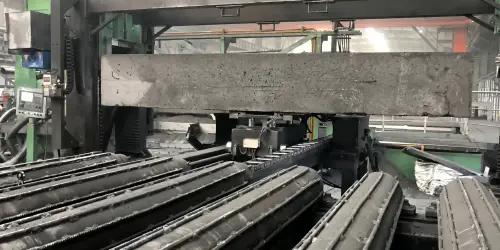
This line is built to output trimmed and slot-processed cathode blocks with scrap removed, not just to reduce raw block size.
Some buyers are not looking for a rough cutting machine at all. What they need is a block that can move into the next machining, handling, or installation step without another round of manual release, turning, repositioning, or transfer correction.
That is why this line combines trimming, slotting, bottom release cutting, scrap separation, and transfer in one coordinated route instead of stopping after the first cut. The goal is to improve downstream readiness, not only to reduce raw block dimensions.
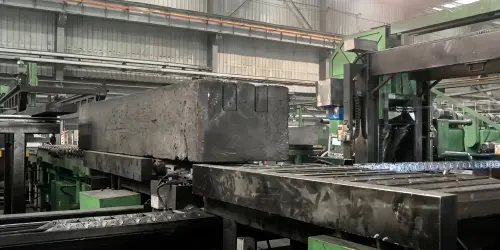
It is also suitable for projects where finished blocks must be transferred into an existing machining line or workshop handling system.
Many carbon and graphite buyers are adding capacity inside an existing workshop rather than building a greenfield line from zero. In those cases, the main problem is often not whether the material can be cut. It is whether the new line can fit the available space, keep the existing infeed and outfeed direction, match connection height, and join the current route without creating a new bottleneck.
We treat transfer direction, line height, interface conditions, scrap discharge, and dust-control layout as front-end engineering inputs, not site cleanup items. That makes retrofit projects easier to judge because the buyer can see equipment fit and route fit together.
Specifications customizable upon request.
Cathode carbon block projects are usually won or lost on process fit, not on a fixed size-and-power table. For that reason, this line is specified through technical standards and custom configuration scope.
Networked PLC control for coordinated multi-station operation
Measurement feedback for block detection and position adjustment
Hydraulic alignment and clamping before cutting
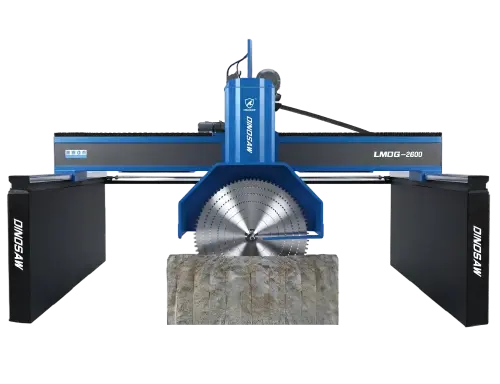
Bridge saw, multi-blade, and wire saw stages configured around groove and release-cut requirements
Automatic position correction based on measured block data
Dust-protected electrical design for carbon and graphite processing environments
Emergency stop, guarding, and wire-break alarm/stop protection
Line design focused on stable operation, maintenance access, and workshop integration
Block size range and geometry
Groove quantity, groove position, and groove layout
Target output per shift or per day
Loading, transfer, rotation, and flipping configuration
Scrap collection and discharge method
Dust extraction and enclosure strategy
Infeed and outfeed direction
Existing line connection height and interface
Preferred electrical, hydraulic, and control brands
Eliminate Manual Handling & Downstream Bottlenecks

Trimming, slotting, release cutting, and scrap handling run in one workflow.
One Line, Fewer Hand-offs

Transfer, rotation, flipping, and scrap removal reduce operator workload.
Less Manual Handling

Dust-protected design supports carbon and graphite processing environments.
Built for Dusty Workshops
What Buyers Usually Need to Confirm Before Specifying a Cathode Block Line
A cathode carbon block machining line is a custom production line that prepares cathode blocks for the next process through measurement, trimming, slotting, bottom release cutting, scrap separation, and transfer.
A standalone cutting machine handles one cutting task. A cathode block machining line is selected when the project must also control groove layout, release cutting, scrap separation, and transfer as one route.
It can be configured for cathode carbon blocks, graphitized cathode blocks, and similar carbon block products used in aluminum reduction cell projects.
Cathode block projects vary by block size, groove design, target output, plant layout, dust-control needs, and existing line interfaces, so a fixed standard table rarely fits the real production route well enough.
The line uses measurement feedback and station coordination to correct processing positions after the block enters the line.
Each stage solves a different process problem, so combining them is often more practical than forcing one cutting method to do everything.
It is usually time to review the current method when correction work keeps growing and the cutting step is no longer the only issue in the route.
Yes. The line can be configured around transfer height, line direction, available space, and downstream interface conditions already in use.
Dust control can include extraction points, guarding, cabinet sealing, and project-specific enclosure layouts around major cutting stations.
Prepare the workpiece and workshop information that determines whether the line can be configured correctly from the start.
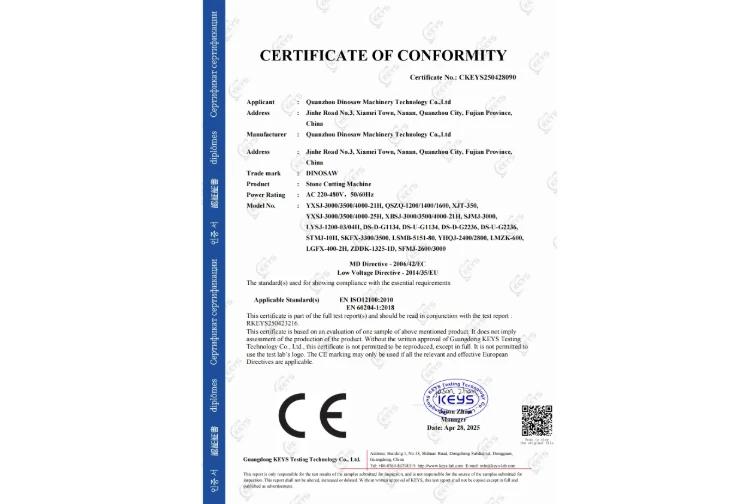
CE Certification
100+ Tech Patents
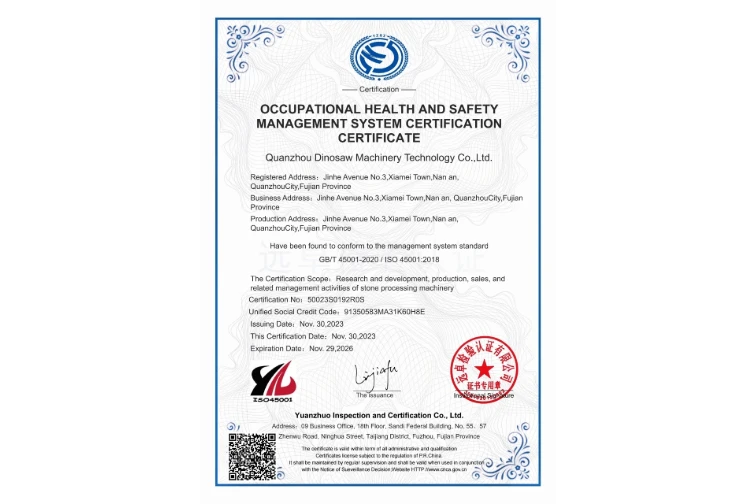
ISO 9001:2015
Industry Standards
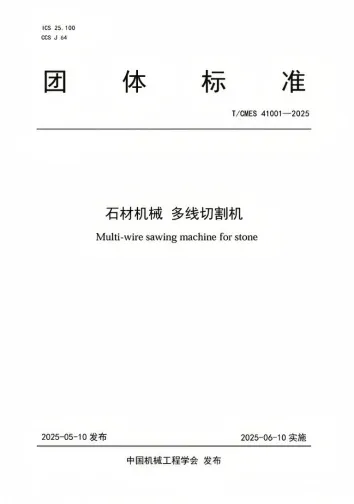
DINOSAW goes beyond merely complying with international engineering standards—we actively lead their formulation. As the principal drafter of key industry benchmarks for Stone Multi-Wire Saw Machines, CNC Wire Saw Machines, and Bridge Saws, we define the rules of precision manufacturing. Backed by ISO 9001, CE certification, and 100+ technology patents, our products guarantee exceptional durability and safety in the most demanding high-load environments.
75+
Countries Served Worldwide
20+
Industry machinery expertise
Trusted by clients in over 75 countries, DINOSAW delivers lifecycle quality traceability and specialized technical support across 20+ machinery sectors. From traditional mining and stone processing to high-precision manufacturing (semiconductors, quartz glass) and specialized fields like nuclear decommissioning, our comprehensive solutions consistently meet the world's most rigorous operational requirements.
Complete Production Solutions & Equipments
Choose equipment combinations for your product needs to establish efficient automated production lines and maximize profitability.
DINOSAW manufactures and supplies industrial CNC machinery. Our equipment is specifically built to process hard and brittle materials with high precision, including natural stone, refractory bricks, quartz glass, graphite, and fiberglass (FRP).
Buy directly from our factory to eliminate middleman markups. We provide processing plants with heavy-duty machines at factory-direct prices, helping you lower equipment costs and shorten your payback period.

We offer profitable wholesale programs for global distributors. For specialized applications, our engineering team provides OEM/ODM customization—adjusting machine dimensions, motor power, and CNC parameters to fit your exact material workflow.

 English
Get A Easy Solution
Chat Online
Hi, this is Lizzy from Dinosaw ( Not a Robot ). Which Machine ( model ) do you want? Please WhatsApp us now
Hello 👋 How can we help?