DINOSAW DTH Drilling Machines for Stone Quarrying & Rock Mining

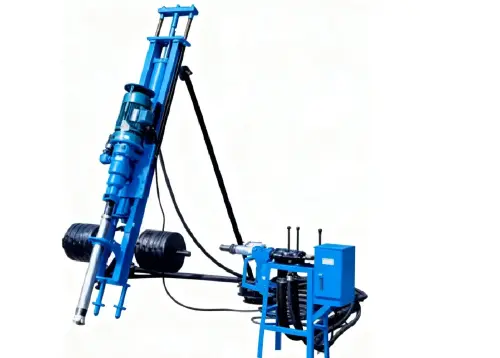
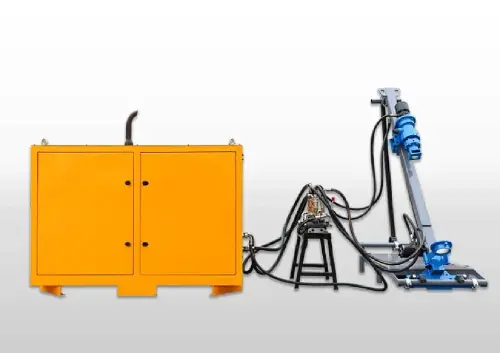
QKZ165-H
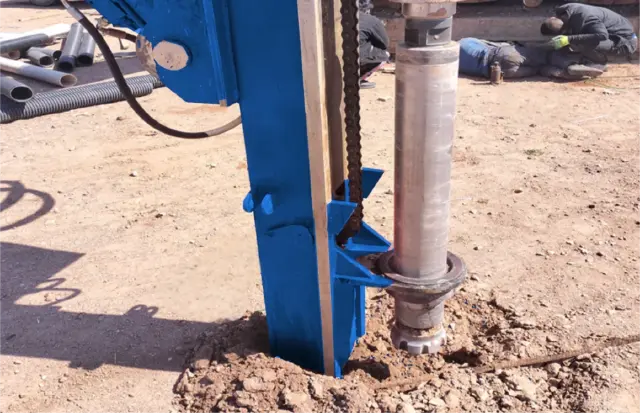
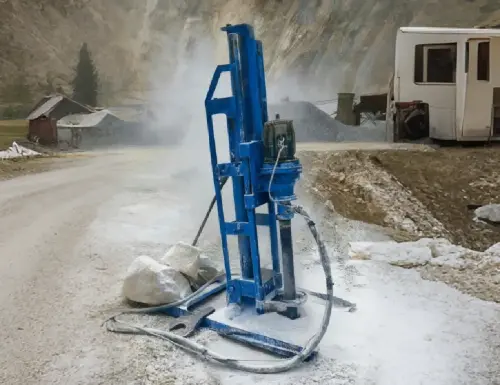
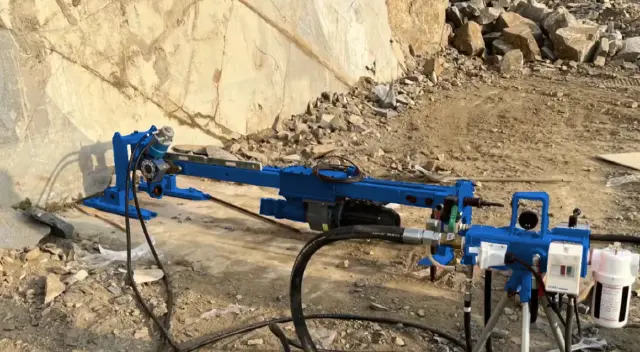
DINOSAW DTH drilling machines deliver 6-8m/h speeds, with hole diameters ranging from 65-165mm and depths up to 40m for stone extraction. Available in pneumatic, electric, or hydraulic power options, these machines excel in quarrying operations across diverse environments with minimal setup requirements. These DTH drillers efficiently extract granite, marble, limestone, sandstone, quartzite, basalt, and slate. Their precision ensures clean separation while reducing material waste in challenging terrains.
Φ65–165 mmHole classes from pre-splitting to larger production holes
Up to 40 mDeep bench drilling for quarry extraction and blasting patterns
6–8 m/hReference feed rate on Φ65–90 mm quarry drilling (large-hole QKZ165-H: 2–4 m/h)

Applicable Materials

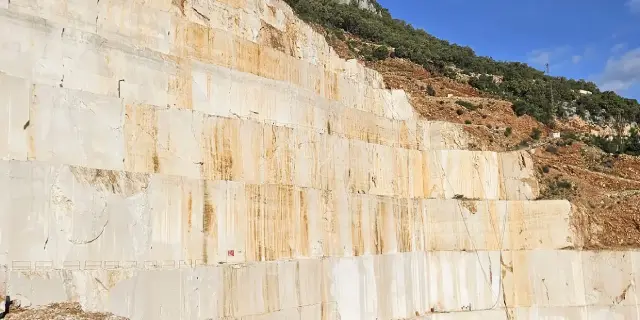
Marble, limestone, granite and hard rock formations

Certifications & Credentials

CE Certified · ISO 9001:2015 · Industry Standard Drafting Participant · 120+ Countries & Regions Served

Compatible Materials & Products

DTH Drilling Performance for Multiple Stone Types

Real Drilling Performance & Key Metrics

The DINOSAW DTH drilling range covers quarry hole preparation from Φ65 to Φ165 mm and depths to 40 m — with pneumatic, electric and hydraulic power options matched to hole diameter, rock hardness and site infrastructure.

Φ65–165 mm

Hole Range

Three models cover the full quarry drilling range: the QKZ90-P and QKZ90-E drill Φ65–90 mm, the QKZ165-H drills Φ90–165 mm for larger breaking holes.

Up to 40 m

Drilling Depth

Maximum depths of 35–40 m (30 m on the large-hole model) cover bench drilling, pre-splitting and blasting hole patterns in dimensional stone quarries.

6–8 / 2–4 m/h

Feed Range by Hole Class

Reference feed rates of 6–8 m/h on Φ65–90 mm holes and 2–4 m/h on the QKZ165-H large holes — the hole class sets the pace, not one headline number.

Pneumatic / Electric / Hydraulic

Drive Options

Pneumatic (QKZ90-P), electric (QKZ90-E) and fully hydraulic (QKZ165-H) rotary drives match the quarry's compressed air, power infrastructure and hardest rock.

Applicable materials: Marble, limestone, granite and hard rock formations.

Typical applications: Blast hole drilling for block extraction, bench preparation, pre-splitting holes and foundation engineering in hard rock.

Actual drilling speed varies with rock hardness, hole diameter, air pressure and bit condition.

Specs and options

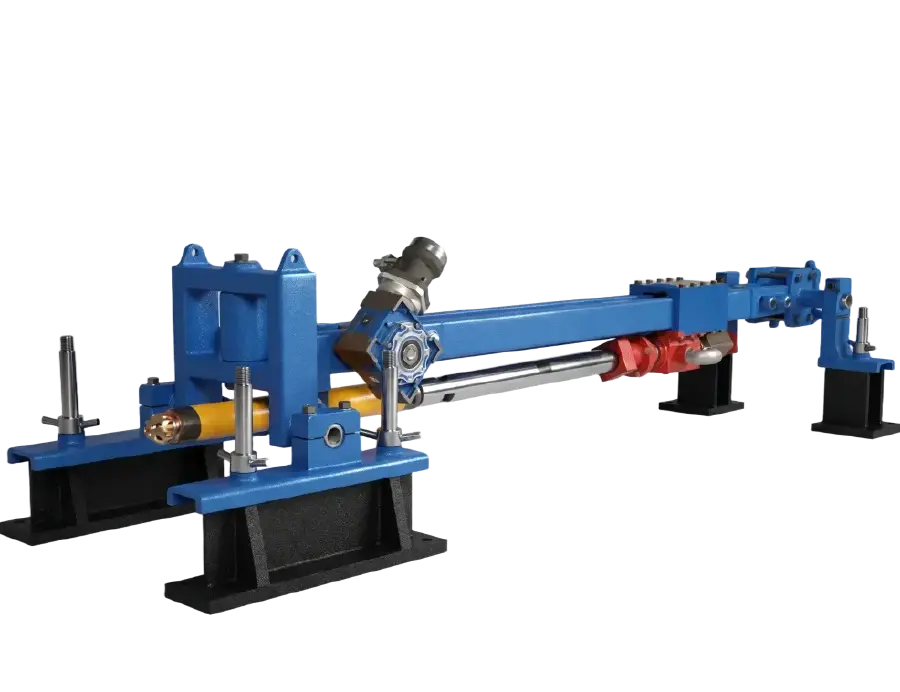
Three DTH configurations cover quarry drilling classes: the QKZ90-P (pneumatic rotary, 500 kg, air 12–14 m³/min) and QKZ90-E (electric rotary, 520 kg, air 7–9 m³/min) drill Φ65–90 mm to 35–40 m at 6–8 m/h; the QKZ165-H (hydraulic rotary and feed, 700 kg, 1.5 m stroke, 400 mm base adjustment) drills Φ90–165 mm to 30 m at 2–4 m/h in hard conditions. All run at 0.5–0.7 MPa working air pressure with Φ73–76 mm drill rods.

Product modelQKZ90 - PQKZ90 - EQKZ165 - H
Hole diameter (mm)Φ65 - 90Φ65 - 90Φ90 - 165
Drilling depth (m)Max.35Max.40Max.30
Feed rate (m/h)6 - 86 - 86 - 8 / 2 - 4
Stroke (m)111.5
Air consumption (m³/min)12 - 147 - 97 - 12
Working air pressure (Mpa)0.5 - 0.70.5 - 0.70.5 - 0.7
Rotary power sourcePneumaticElectricHydraulic
Feed power sourcePneumaticPneumaticHydraulic
Equipped drill rod (mm)Φ73*1000Φ73*1000Φ76*1500
Adjustable height of base (mm)220220400
Total weight (kg)500520700

Core Technology & Machine Structure

Four engineering decisions behind the DTH quarry range. The numbered points on the machine diagram correspond to the systems below.

Dinosaw machine DINOSAW DTH Drilling Machines for Stone Quarrying & Rock Mining

Quarry Drilling Workflow

A drilling pattern follows four steps: mark the bench pattern and position the drill, set hole angle and depth for the blast design, drill the hole at controlled feed and air pressure, then move to the next position — the drilled pattern feeds blasting, splitting or wire saw extraction downstream.

01

DTH Impact at the Bit

The hammer works directly behind the bit at the bottom of the hole, delivering impact energy to the rock face instead of transmitting it through a long drill string — penetration in hard granite and broken formations stays high where top-hammer drills lose energy to rod vibration.

02

Three Drive Configurations

Pneumatic suits compressor-rich quarries with simple site infrastructure; electric suits sites with stable power lines and lower air capacity; hydraulic serves the largest holes and hardest rock with controlled feed. The drive choice follows the site, not a catalog default.

03

Hydraulic Large-Hole Feed

The QKZ165-H adds hydraulic feed to hydraulic rotation: controlled thrust on Φ90–165 mm holes protects drilling stability in hard or fractured rock, where uncontrolled pneumatic feed stalls or deviates.

04

Base & Stroke Adjustment

A 1–1.5 m stroke with 220–400 mm base height adjustment covers bench leveling variation — the drill stays on pattern when the quarry floor does not cooperate.

05

Quarry Mobility

Compact 500–700 kg frames are easier to reposition between holes and benches than large crawler drilling rigs — the drilling pattern keeps moving with the quarry face.

06

Blast Pattern Coverage

The Φ65–165 mm range covers the full blast design space — pre-splitting holes, production blast holes and extraction preparation — so one drilling fleet serves soft limestone benches and hard granite extraction with bit and model changes.

DTH vs. Top-Hammer Quarry Drilling

A mechanism comparison for bench drilling and block extraction buyers.

DTH vs. Top-Hammer Quarry Drilling
Top HammerVSDTH
Surface — energy travels down rodsHammer location✓ At the bit face
Higher through rod stringDeep-hole energy loss✓ Lower, even at 30–40 m
Suitable for shallow holesHard rock✓ Strong deep-hole performance
Depends on setupHole straightness✓ Stable at depth
—Typical DINOSAW use✓ Quarry blast & pre-split holes

Note: configurations vary by brand and model; actual performance depends on the specific machine, material and working conditions.

The Manufacturer Behind the DTH Range

DINOSAW is a manufacturer of CNC stone processing machinery, specializing in diamond wire saw machines and CNC stone cutting equipment. With more than 20 years of R&D and manufacturing experience, DINOSAW contributes to industry standards including T/CMES 41001-2025 for CNC wire saw machines, holds 100+ technical patents, and supplies equipment and technical support to customers in 120+ countries and regions. Its manufacturing and management systems are certified to ISO 9001, ISO 14001 and ISO 45001, with CE-compliant machinery for international markets.

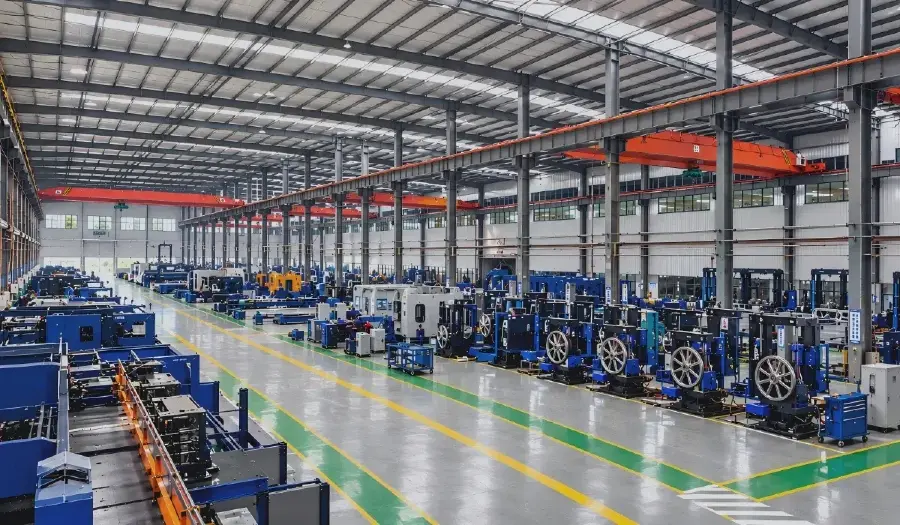
DINOSAW CNC stone machinery manufacturing workshop
DINOSAW R&D & ManufacturingMechanical Design · CNC Control Development · Assembly · Testing · Commissioning · Global Delivery
Industry Standard Drafting

DINOSAW contributes to industry standards for stone machinery, including T/CMES 41001-2025 for CNC wire saw machines, as well as standards covering multi-wire saws, combined wire saw machines and five-axis bridge cutting equipment. This work reflects the company’s long-term involvement in machine design, manufacturing, testing and quality control.

20+Years of Stone Machinery R&D & Manufacturing Experience
100+Technical Patents — Covering machine structures, CNC control, cutting systems and stone processing technologies
120+Countries & Regions Served — Equipment, installation and technical support worldwide

CE Compliance & ISO Management Systems

CE: Stone cutting machinery assessed against Machinery Directive 2006/42/EC and relevant EN standards.
ISO: Management systems certified to ISO 9001, ISO 14001 and ISO 45001.

Installation Requirements & After-Sales Support

DINOSAW provides installation guidance, operator training, remote diagnosis and spare-parts coordination for every machine.

Footprint500–700 kg portable units

Compact frames reposition between benches with light assistance.

Air Supply0.5–0.7 MPa; 7–14 m³/min by model

Compressor sizing confirmed per model and hole diameter.

PowerPneumatic / electric / hydraulic rotary

Drive choice matched to site infrastructure at order stage.

01 · Pre-Shipment & DeliveryMachine configuration, packaging and transport requirements confirmed before dispatch, with factory inspection and documents verified.
02 · Installation & CommissioningOn-site utilities and foundation check, machine positioning, commissioning and acceptance.
03 · Operator TrainingHands-on training covering routine CNC operation and daily checks of blades, spindles, cooling and lubrication.
04 · After-Sales SupportRemote technical assistance, maintenance support and spare parts coordination throughout the machine's service life.

DTH Quarry Drilling Machine Selection, Setup & Operation FAQ

Common Questions About DINOSAW DTH Drilling Machines

DTH (Down-The-Hole) drilling places the hammer at the bottom of the drill string, directly above the drill bit, delivering percussion energy directly to the rock face. This makes DTH drilling more efficient in hard materials like granite and marble, with energy transfer efficiency up to 80% compared to just 40-55% in rotary systems.

Rotary drilling relies on rotation and downward pressure from the surface, with energy traveling through the entire drill string before reaching the bit. This energy loss through the drill string makes rotary drilling less effective for materials with compressive strengths exceeding 100 MPa.

For stone quarrying operations, DTH drilling typically achieves 3-5 times faster penetration rates in hard stone compared to rotary methods, while also creating straighter holes with deviation as low as 0.5% of depth - critical factors for efficient stone extraction and precise block separation.

DINOSAW DTH drilling machines offer a range of hole diameters to accommodate various quarrying and construction applications:

The QKZ90 series (models P and E) can drill holes from Φ65mm to 90mm in diameter with high precision (±5mm deviation per 10m depth), ideal for most stone block extraction work and applications like anchor holes in construction or diamond wire saw insertion points.

The QKZ165-H model extends capabilities further, handling hole diameters from Φ90mm up to 165mm with the same precision standards, suitable for larger-scale quarrying operations, blast hole drilling, and foundation work requiring substantial anchoring systems.

These diameter ranges cover 95% of stone extraction requirements in the industry, from dimensional stone production to construction applications, allowing quarry operators to select the appropriate machine for their specific material properties and production targets.

DINOSAW DTH drilling machines offer depth capabilities that vary by model:

The QKZ90-P pneumatic model can reach maximum drilling depths of 35 meters with hole deviation less than 1%, suitable for most quarrying applications and exceeding the industry average depth capacity by approximately 15%.

The QKZ90-E electric model extends this capability to 40 meters with the same precision standards, providing additional depth for deep deposit extraction and specialized geotechnical applications.

The QKZ165-H hydraulic model achieves depths up to 30 meters while handling larger diameter holes (up to 165mm), delivering the optimal balance of depth and diameter for commercial quarrying operations.

These depth capabilities can be extended by adding additional drill rods as needed for specific projects. Each machine's standard configuration includes appropriate-length drill rods (typically 1-1.5m sections) that can be connected to reach the required depth while maintaining drilling accuracy.

DINOSAW offers DTH drilling machines with three distinct power source options to accommodate different operational environments and project requirements:

Pneumatic (QKZ90-P): Powered by compressed air (12-14 m³/min at 0.5-0.7 MPa), this model offers good mobility and operational simplicity, ideal for remote locations without reliable electricity. The pneumatic system provides robust performance in harsh environments and requires minimal maintenance, making it practical for isolated quarry operations.

Electric (QKZ90-E): Featuring electric rotary power with pneumatic feed (requiring 7-9 m³/min air), this hybrid model provides cleaner operation with reduced air consumption (approximately 35% less than fully pneumatic models), suitable for operations with access to stable power supplies and where environmental considerations are important.

Hydraulic (QKZ165-H): Utilizing hydraulic systems for both rotation and feed functions, this powerful model works well in demanding applications, handling larger hole diameters while maintaining precise control. The hydraulic system delivers high torque (up to 1650 N·m) and consistent performance regardless of ambient temperature variations.

All models can be customized with alternative power configurations based on specific operational requirements and site conditions, ensuring optimal performance across various quarrying environments.

When encountering DTH drilling issues, follow these systematic troubleshooting steps to quickly identify and resolve problems:

Poor Penetration Rate: Check air pressure first - ensure it's within 0.5-0.7 MPa range. Inspect drill bit for excessive wear (replace if button height is reduced by >30%). Verify rotation speed (15-25 RPM is optimal for most stone applications). For hard formations like granite, reduce feed pressure initially to allow bit stabilization before applying full pressure.

Hammer Stalling: Usually indicates insufficient air volume. Verify air compressor output meets machine requirements. Check for air leaks along supply lines and connections. Ensure hammer lubrication system is functioning properly.

Excessive Bit Wear: Most commonly caused by improper rotation speed or feed pressure. Maintain proper rotation-to-percussion ratio for specific stone types (slower in abrasive stones like granite). Ensure sufficient lubrication to reduce friction heat. When drilling through varied stone layers, adjust parameters to match the hardest material present.

Hole Deviation: Check alignment of drill guide mechanisms. Reduce feed pressure when starting holes. Ensure drill string components are straight and threads are in good condition. In layered or fractured stone, start with lower percussion energy until hole is established.

DINOSAW provides 24/7 technical support , and our service technicians can remotely diagnose many issues through our optional telemetry system to minimize downtime.

The hammer location decides the physics. In DTH (down-the-hole) drilling, the impact hammer sits at the bottom of the hole behind the bit — impact energy goes directly into the rock face, and energy loss through the drill string stays minimal even at 30–40 m depth. In top-hammer drilling, the hammer is at the surface and impact travels down the rods: at quarry depths, rod coupling losses and vibration eat penetration rate, especially in hard granite and fractured formations. The practical consequences: DTH holds straighter holes at depth, keeps penetrating in hard rock, and wears rods less — which is why DTH is the quarry standard for bench drilling. Top-hammer rigs keep their place in shallow holes and geotechnical work, but bench patterns for block extraction point to DTH. Both rotate — the difference is where the hammer works.

Three variables decide it. Hole size first: Φ65–90 mm pre-splitting and production holes are the QKZ90 machines; Φ90–165 mm large breaking holes are the QKZ165-H. Site infrastructure second: the QKZ90-P runs on quarry compressed air (12–14 m³/min), the QKZ90-E suits sites with reliable electric power (7–9 m³/min air), and the QKZ165-H is fully hydraulic where the hardest rock demands maximum feed control. Rock hardness third: the hydraulic feed of the QKZ165-H holds 2–4 m/h in large hard-rock holes where pneumatic feed would stall. Specify your blast design, air capacity and rock conditions, and DINOSAW matches the model and bit package.

Size the compressor to the model and the hole class. The QKZ90-P needs 12–14 m³/min at 0.5–0.7 MPa — the pneumatic rotary drive consumes air continuously, so undersizing the compressor shows up immediately as stalling feed and slow penetration. The QKZ90-E drops the air demand to 7–9 m³/min because the electric motor drives the rotation; the air feeds the hammer only, which is why electric-drive models suit sites with power lines but modest compressor capacity. The QKZ165-H uses 7–12 m³/min depending on the hole, with hydraulic rotation and feed. Rule of thumb: compressor capacity is the first check after hole diameter — a correctly sized drill on an undersized compressor performs like an undersized drill. Confirm your compressor's free air delivery and pressure with DINOSAW before finalizing the model.

Contact Dinosaw

Discuss DTH Drilling Configuration for Your Quarry

Are you looking for the perfect cutting machines or processing solutions for hard and brittle materials?

Facing challenges in stone quarrying, countertop cutting, concrete and underwater pipeline cutting, stainless steel rust removal and grinding, luxury thin slab cutting, agate and gemstone cutting, graphite cutting, or even building demolition?

Leave your inquiry, and you can expect a reply within 12 hours with tailored solutions!

Prefer email?

You can also reach us at

gma@dinosawmachine.com
DINOSAW DTH Drilling Machines for Stone Quarrying & Rock Mining

What materials will you be working with? *

Your Name / Company Name? *

Phone Number / Email Address? *

+86

What specific requirements do you have?

DTH Drilling Guides & Related Machines

Selection guides and related equipment for quarry drilling, block extraction and mining.

Get A Easy Solution

Chat Online
Ms.Lizzy

Hi, this is Lizzy from Dinosaw ( Not a Robot ).  Which Machine ( model ) do you want? Please WhatsApp us now

WhatsApp Chat Now
Contact Us

Hello 👋 How can we help?