Let's get straight to the point. A stone polishing robot is not just another polisher; it's a specialized automation solution. Its primary job is to tackle complex, non-flat surfaces—like those needed for automated polishing for sinks—that are difficult, time-consuming, and expensive to finish by hand. Think of it as your expert for the tricky parts.
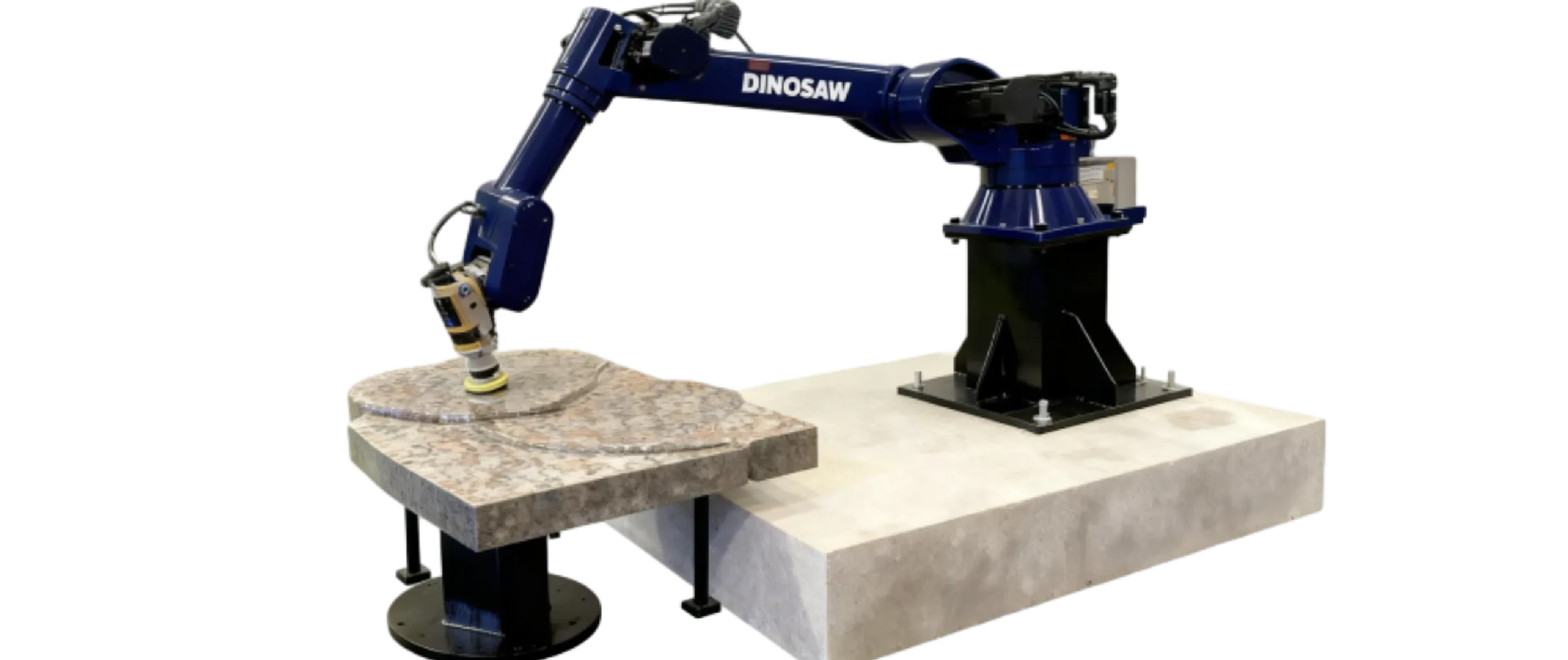
The magic lies in its 6-axis arm and advanced force control systems. Unlike rigid CNC machines that follow a fixed path, a robotic arm can maneuver like a human arm, applying consistent pressure while polishing curved stone or navigating the contours of a vanity top. This is how it achieves a flawless, uniform finish every time, eliminating the inconsistencies of manual work.
For high-value pieces like marble bathtubs, granite kitchen islands with integrated sinks, or quartz countertops with complex edge profiles, this machine provides unmatched precision. Our Robot Arm for Stone Polishing is specifically engineered for these demanding tasks. 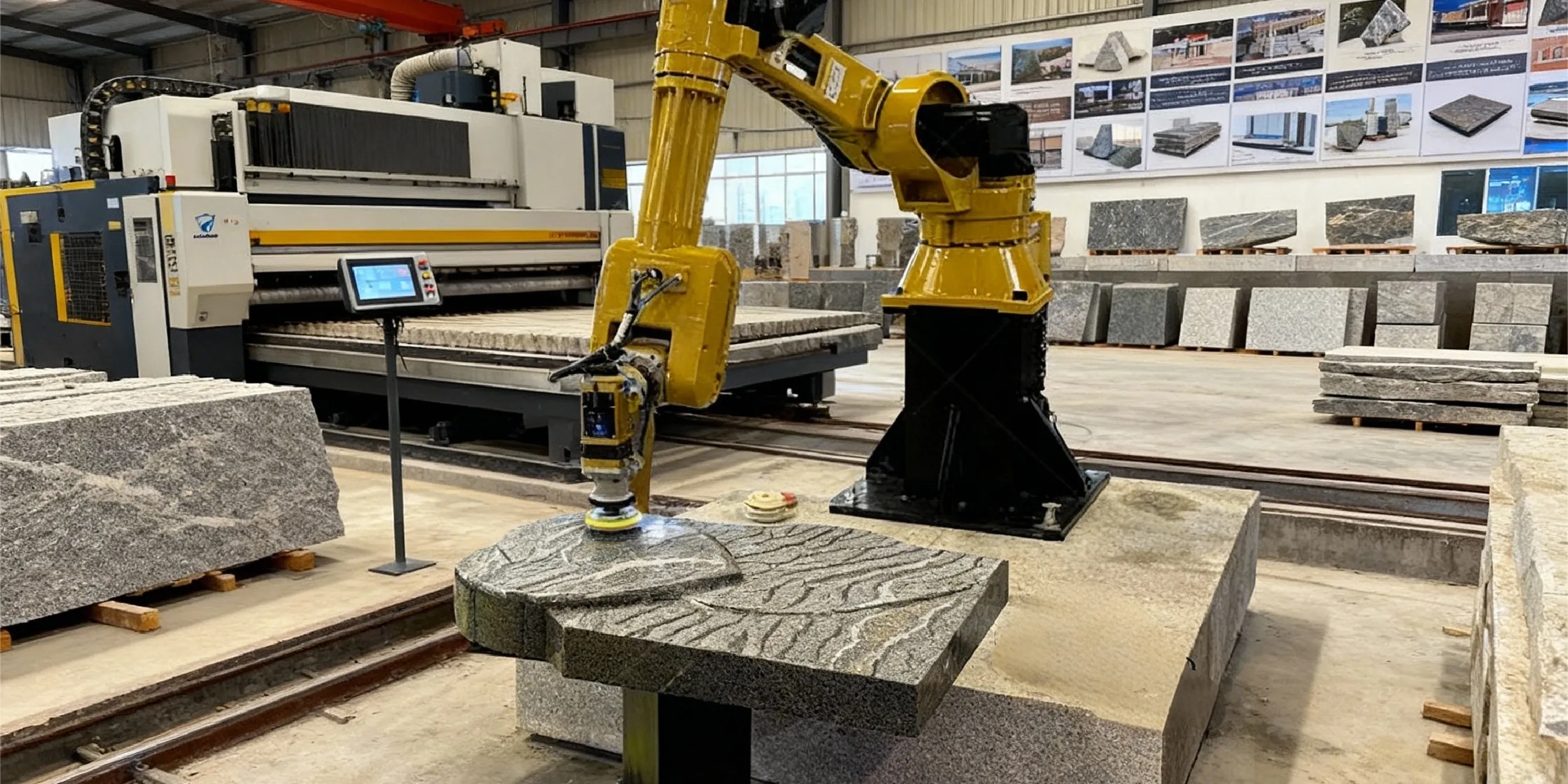 What Materials Can Robotic Polishing Handle?
A robotic polishing system can handle a wide variety of stones. Success depends on using the right abrasives and programming the correct pressure and speed for each material.
Granite & Hard Stones
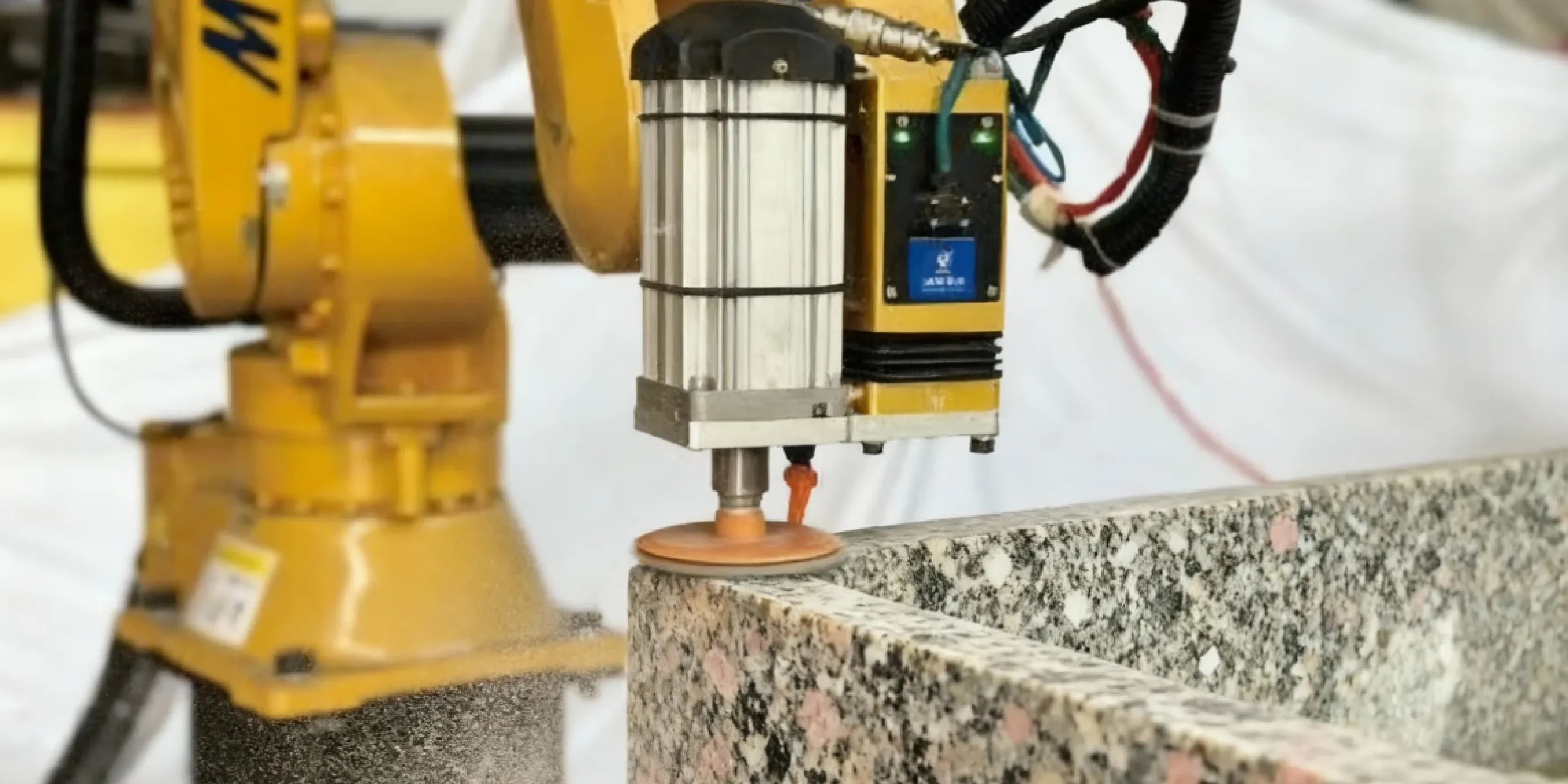
Robots easily handle the pressure required for polishing hard materials like granite. They can achieve a mirror finish by progressing through a full set of diamond polishing pads, making them ideal for tasks like robot handling granite countertops and memorials.
Marble & Softer Stones
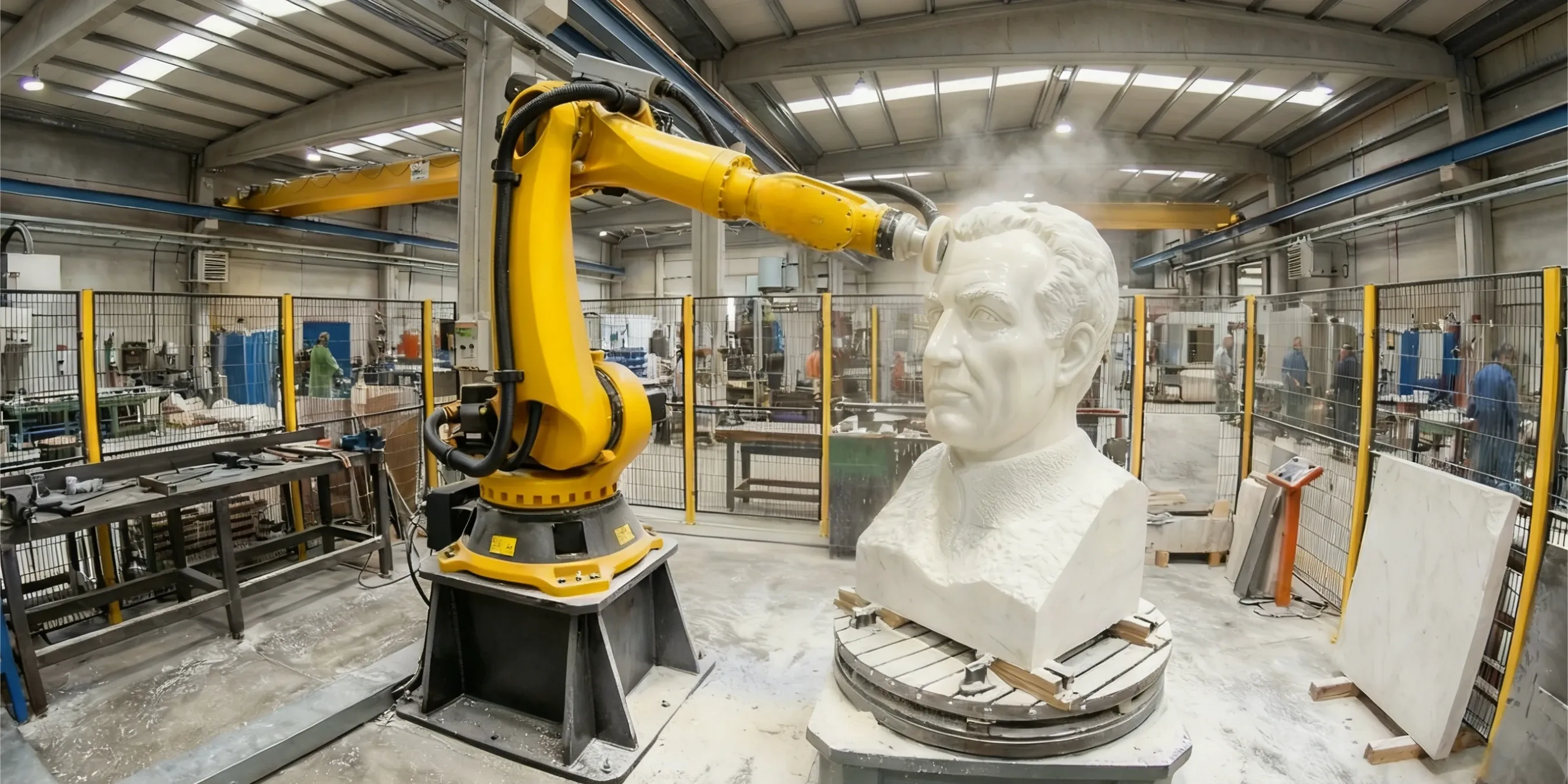
For softer, heat-sensitive stones like marble, the robot's precise force control is critical. It prevents overheating and bruising, ensuring a deep, lustrous shine on complex pieces like statues, fireplaces, and washbasins. The process of robot handling marble is significantly de-risked.
Engineered Stone (Quartz)
The key to robotic polishing for quartz is consistency. Robots ensure uniform speed and pressure, preventing the resin from burning and delivering the consistent sheen that customers expect on items like waterfall edges and custom shower pans.
 3 Mini-Cases: Where Stone Fabrication Robots Deliver ROI
Let's look at real-world scenarios where stone fabrication robots make a tangible difference.
Case 1: The High-Volume Countertop Fabricator
Problem: Inconsistent polishing on sink cutouts and curved edges led to a 15% rework rate and delayed shipments.
Solution: Implemented a robotic arm dedicated to robotic countertop fabrication, specifically for finishing edges and bowl cutouts after the CNC saw.
Result: Rework rate dropped to under 1%. The robot runs overnight, increasing polishing capacity by 50% without adding staff. The robotic polishing ROI was achieved in 22 months.
Case 2: The Monument & Memorial Manufacturer (Robotic Statue Polishing)
Problem: Polishing complex 3D carvings on granite tombstones was a major bottleneck, requiring highly skilled artisans and taking days per piece.
Solution: A 6-axis granite polishing robot was programmed using 3D scan data to automate the polishing of sculpted surfaces.
Result: Polishing time for a complex headstone was reduced from 2-3 days to just 6 hours. Quality became perfectly uniform, and artisans could focus on new designs instead of repetitive finishing.
Case 3: The Luxury Bath & Spa Designer
Problem: Creating one-piece marble bathtubs and integrated sinks resulted in extremely high labor costs and occasional cracking during manual finishing due to uneven pressure.
Solution: A large-reach robotic arm was installed to handle the entire interior and exterior polishing of the bathtubs.
Result: Material wastage from finishing errors was eliminated. The automated stone polishing process enabled the company to offer more complex designs and reduce the lead time for a custom bathtub by 70%.
 Risks & Key Installation Requirements
A robotic polishing arm is a major piece of industrial equipment, not a plug-and-play device. Here’s what you need to plan for:
Permanent Installation: These robots are heavy and powerful. They must be securely bolted to a reinforced concrete floor to maintain stability and accuracy. They are not designed to be moved around a workshop or taken to job sites.
Industrial Power: The system requires a dedicated three-phase industrial power supply. It cannot run on standard residential or light commercial electricity.
Factory Environment: This is a solution for a dedicated stone fabrication factory. The workspace must accommodate the robot's full range of motion and include proper safety guarding, water management, and slurry disposal.
Safety and Compliance: The work cell must be designed to meet safety standards for robotic equipment. Furthermore, wet polishing stone generates slurry and silica dust. Effective engineering controls are mandatory. According to NIOSH, "engineering controls such as water sprays are the most effective way to control silica dust." Your setup must comply with local regulations, such as the OSHA standard for respirable crystalline silica.
Frequently Asked Questions (FAQ)
What are the main benefits of a stone polishing robot?
Primarily, a robot delivers superior quality, consistency, and labor independence.
Context: It excels when polishing complex 3D surfaces where manual work is inconsistent. It is designed for a factory setting with stable work-holding.
Benefits: It guarantees a uniform finish, reduces reliance on scarce skilled artisans, and enables 24/7 operation to increase factory throughput.
How much does a robotic polishing machine price?
The initial investment for a complete system is significant, but the price reflects a full automation solution, not just a machine.
Context: The total price includes the robot arm, polishing head, control software, safety cell (fencing, sensors), and installation.
Parameters: A typical system ranges from $150,000 to $300,000, depending on the robot's size, payload, and software features.
Boundaries: This does not include facility upgrades like a reinforced concrete foundation or three-phase power installation, which are prerequisites.
Can a stone edge polishing robot handle curved countertops?
Yes, this is a core strength and a primary reason for investing in a robot.
Context: Its 6-axis arm allows it to perfectly follow any edge profile, from a simple bullnose to complex ogee or waterfall edges on granite, marble, or quartz.
Parameters: The system uses force control (e.g., 20-50N) and programmed paths to ensure a consistent sheen and shape that is very difficult to achieve manually.
Boundaries: The workpiece must be securely fixtured to resist polishing forces without shifting.
What is the typical robotic polishing ROI?
Most shops achieve a full return on investment within 18 to 36 months.
How difficult is it to program a polishing robot?
It depends on your production style. Modern systems are user-friendly, but a skill threshold exists.
For Repetitive Parts: Programming is done once. An operator can then load the program and run production. No programmer is needed for daily operation.
For High-Mix/Custom Parts: A skilled programmer is essential for creating new paths for each unique workpiece. This is a significant consideration.
Boundary: If you lack programming staff and handle diverse jobs, an intelligent CNC polisher with a simpler operating system might be a better fit.
Next Step: Discuss your product mix and team skills with our experts to determine the right machine for you.
Robotic polishing machine vs manual: which is better?
For repetitive, complex production, the robot is unequivocally better.
Robot Wins On: Quality, speed, and consistency. It perfectly reproduces the same result 24/7 without fatigue.
Manual Wins On: Flexibility for one-off artistic pieces or very low-volume jobs where programming time isn't justified.
Boundary: A robot won't replace a true artisan creating a single masterpiece, but it will outperform and replace a production-line polisher for repetitive tasks.
Next Step: Evaluate your product mix. If more than 50% is repetitive complex shapes, automation is your path to growth.
What kind of stone workshop automation is best to start with?
For most shops, automation starts with cutting. A polishing robot is the logical next step once finishing becomes the primary bottleneck.
How do you ensure stone polishing quality control with a robot?
Quality is ensured through process control and data, not just visual inspection.
Repeatability: The robot's path, speed, and pressure are perfectly repeatable, ensuring every piece is identical to the approved sample.
Data Logging: The system logs all critical process parameters (force, RPM, cycle time) for each job, creating a digital quality record for traceability and process improvement.
Parameters:
Granite: Higher force (40-80N ), lower RPM (800-1200 ).
Marble: Lower force (15-35N), variable RPM (1000-1500) to prevent bruising.
Quartz: Medium force (30-60N ), strict RPM control to avoid burning resin.
Conclusion: Is It Time for Your Shop to Automate Polishing?
If your business is built on crafting beautiful, complex stone pieces and you're struggling with production bottlenecks, inconsistent quality, or labor shortages, a robotic arm for stone polishing is a strategic investment worth serious consideration. It's the key to scaling up the most profitable parts of your business.
However, if your work is 90% flat slabs, a robot is not the right tool. In that case, you would be better served by a dedicated line polisher. The best robotic arm for stone is the one that matches your specific product mix and business goals.





 中文
中文 Italian
 Türkçe
 Português
 Español
 Deutsch
 العربية
 Tiếng Việt
 Français
 Русский
 한국어
한국어


 Nov 15, 20256 MIN READ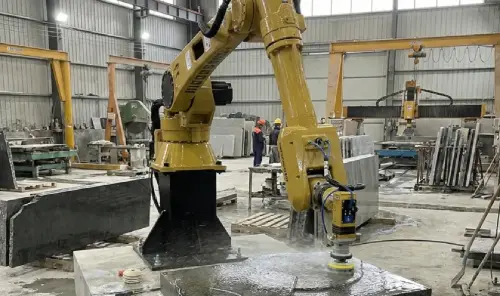
 English