Comparing CNC wire saws, band saws, and waterjets for foamed ceramics? Our guide covers decision drivers, TCO, and an If-Then selection tree to help you choose.
TL;DR: Decision Framework
Choose a CNC Wire Saw if: Your priority is cutting complex 3D shapes, preserving material integrity (no micro-cracks), and minimizing waste (low kerf) on high-value fragile materials.
Choose a Band Saw if: You need low-cost, simple, linear cuts on softer ceramics or non-abrasive foams where precision and surface finish are not critical.
Choose a Waterjet if: You cut a wide variety of materials (including metals), and water absorption into your porous ceramic is not a concern for your application.
IF you need complex 3D shapes or curved cuts, THEN a multi-axis CNC Diamond Wire Saw is your primary option.
IF finish quality and avoiding micro-cracks is critical for structural integrity, THEN the abrasive, low-stress wire saw is superior.
IF material waste (kerf loss) is a major cost driver for your expensive ceramics, THEN the ultra-thin diamond wire offers the best yield.
IF you need low-cost, simple linear cuts on soft, non-abrasive materials, THEN a band saw might suffice.
IF you need to cut a wide variety of materials (including metal) and water absorption is not a concern, THEN a waterjet could be considered.
IF high-volume, automated production is the goal, THEN a CNC-integrated wire saw is essential for efficiency and repeatability.
Wire Saw vs. Wire Saw: Ceramic-Focused vs. Stone Wire Saw Machine
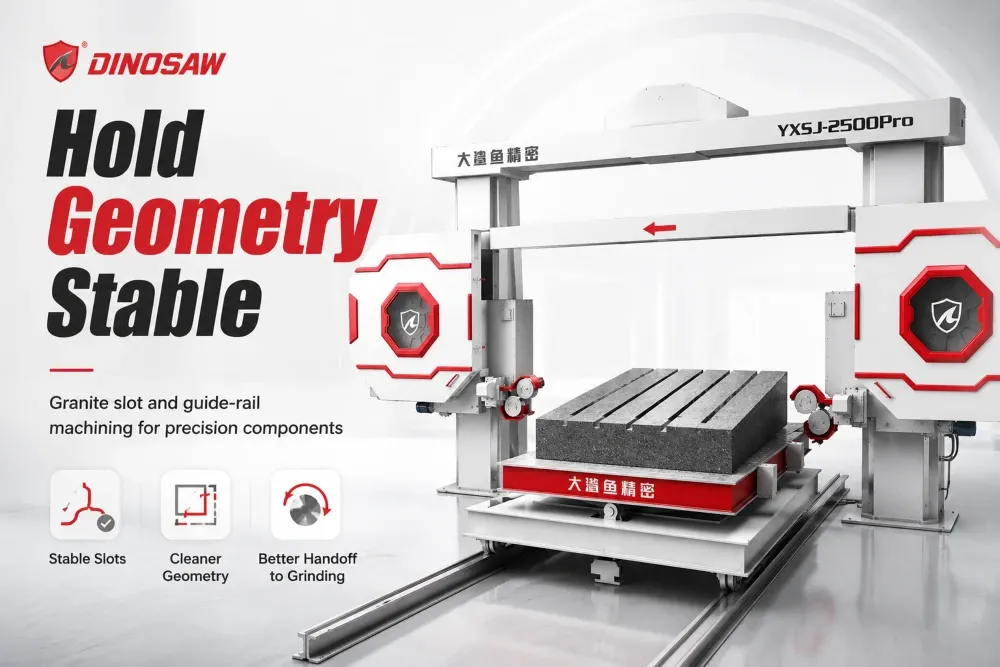
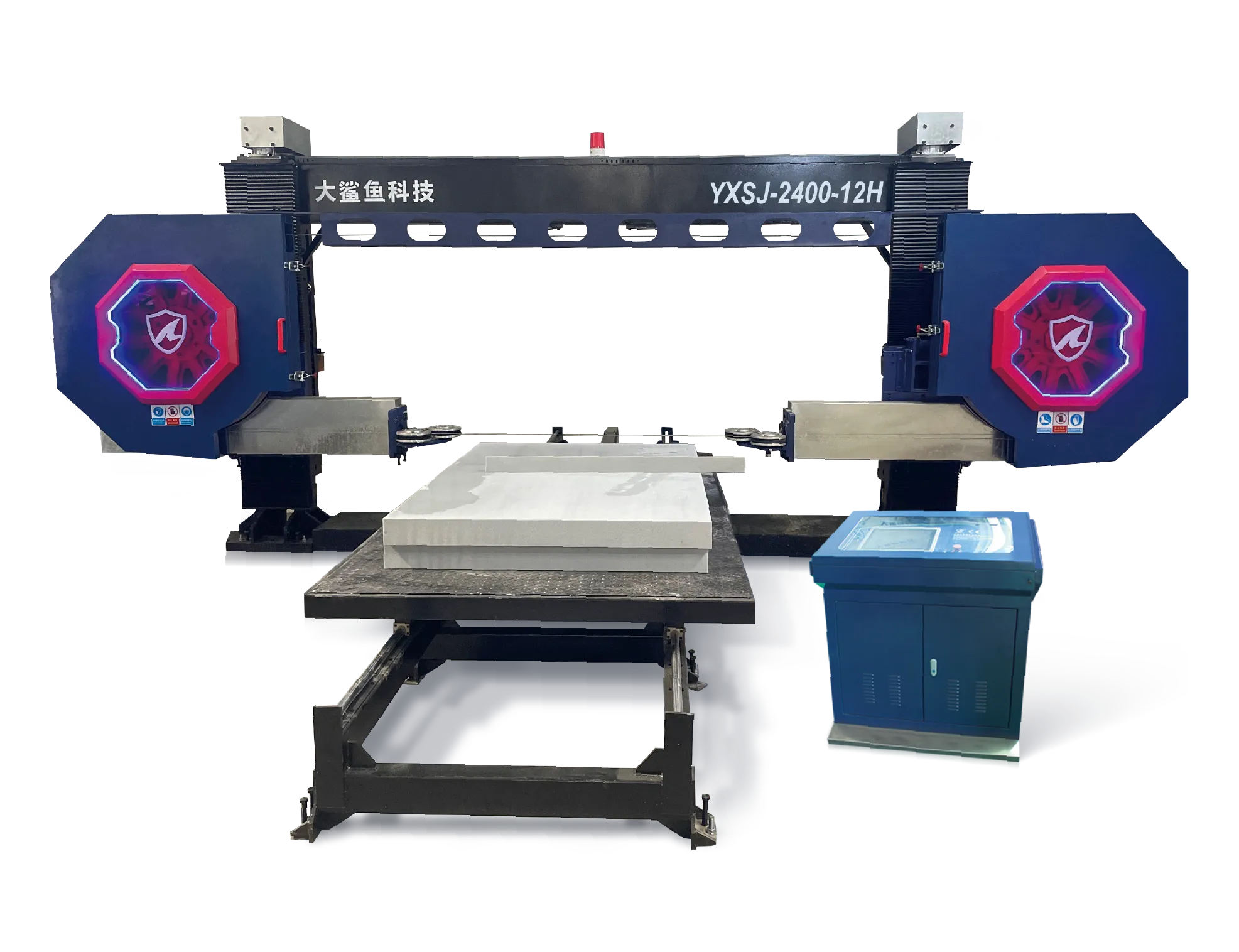
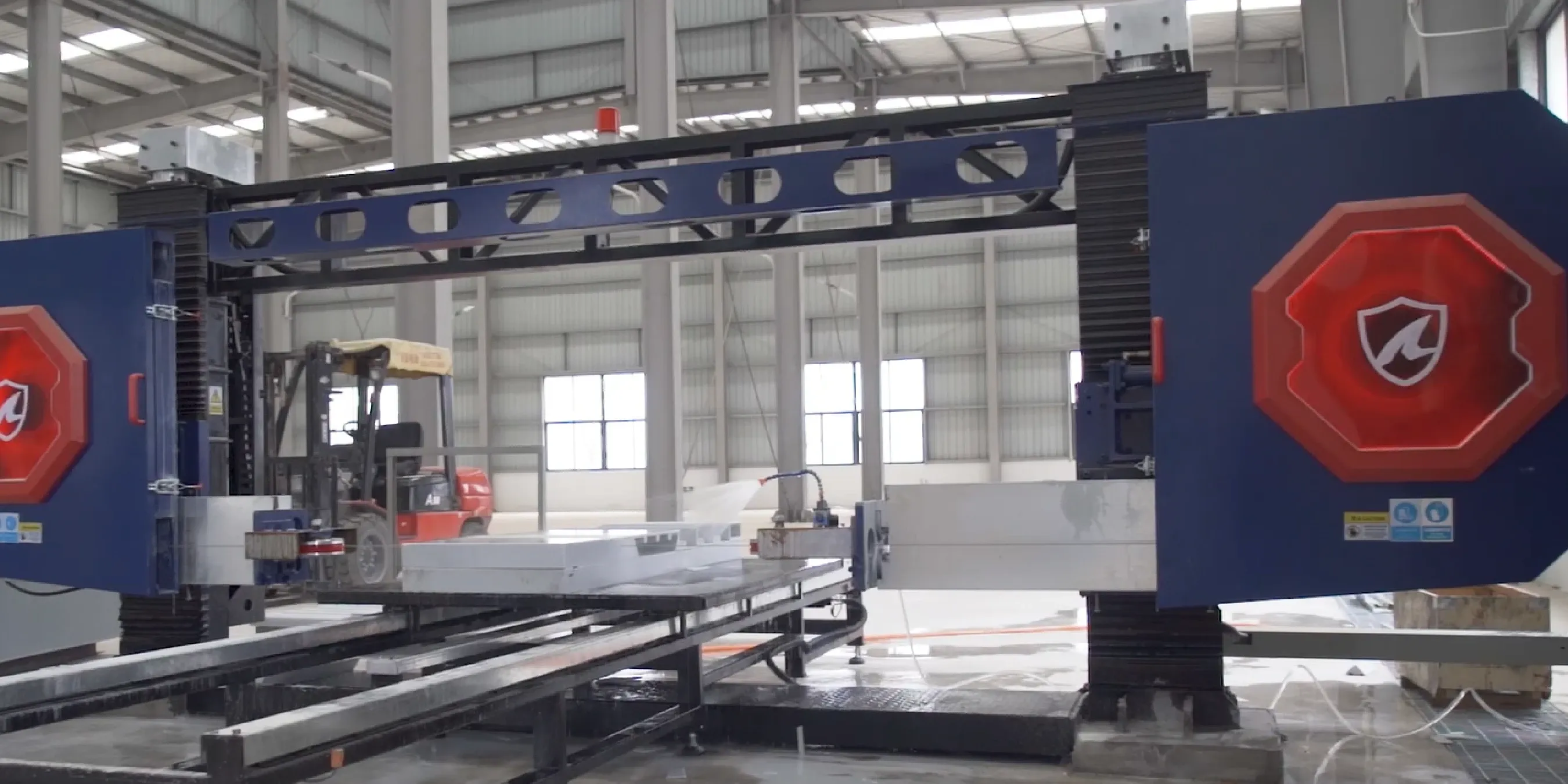
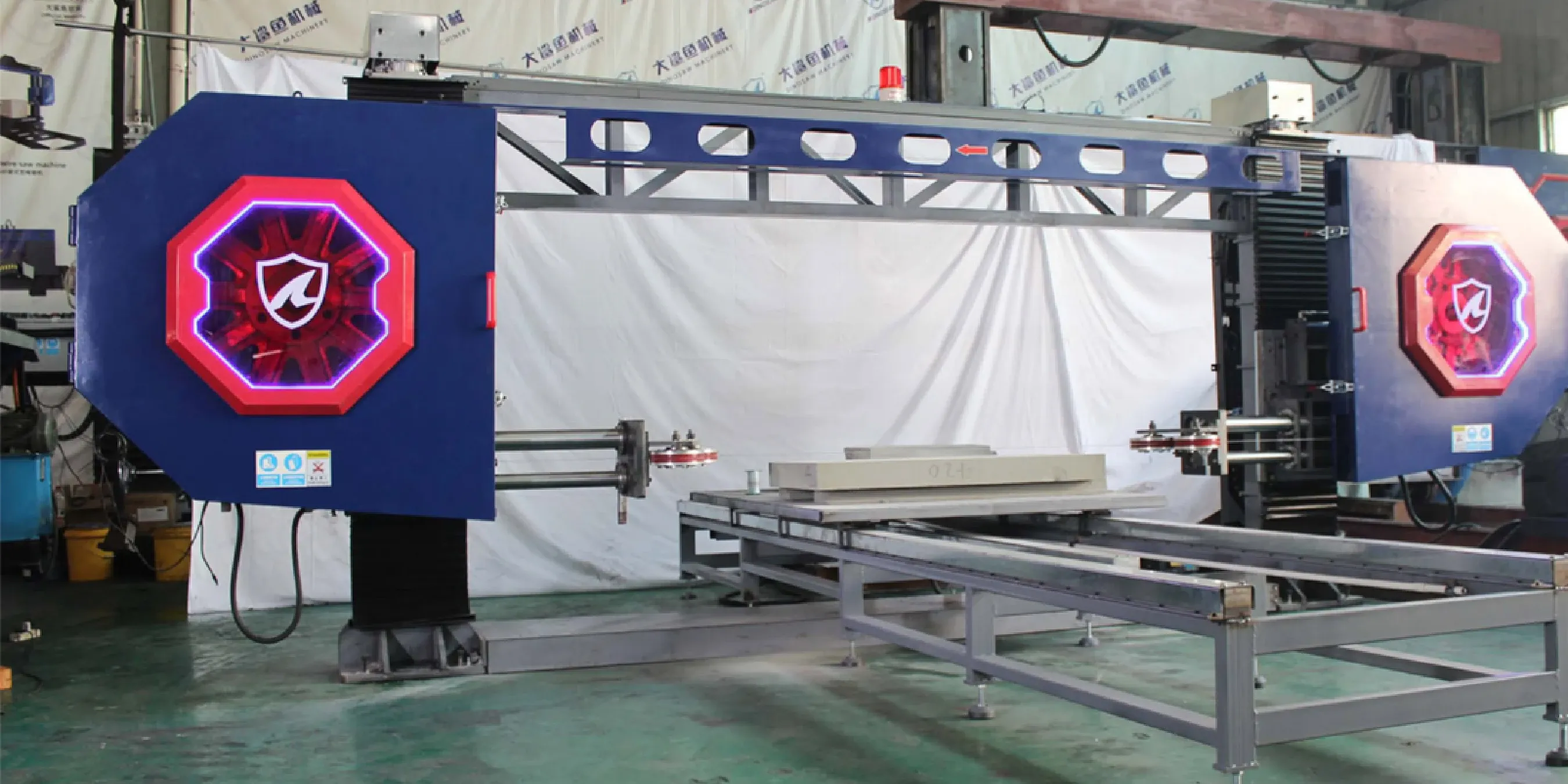
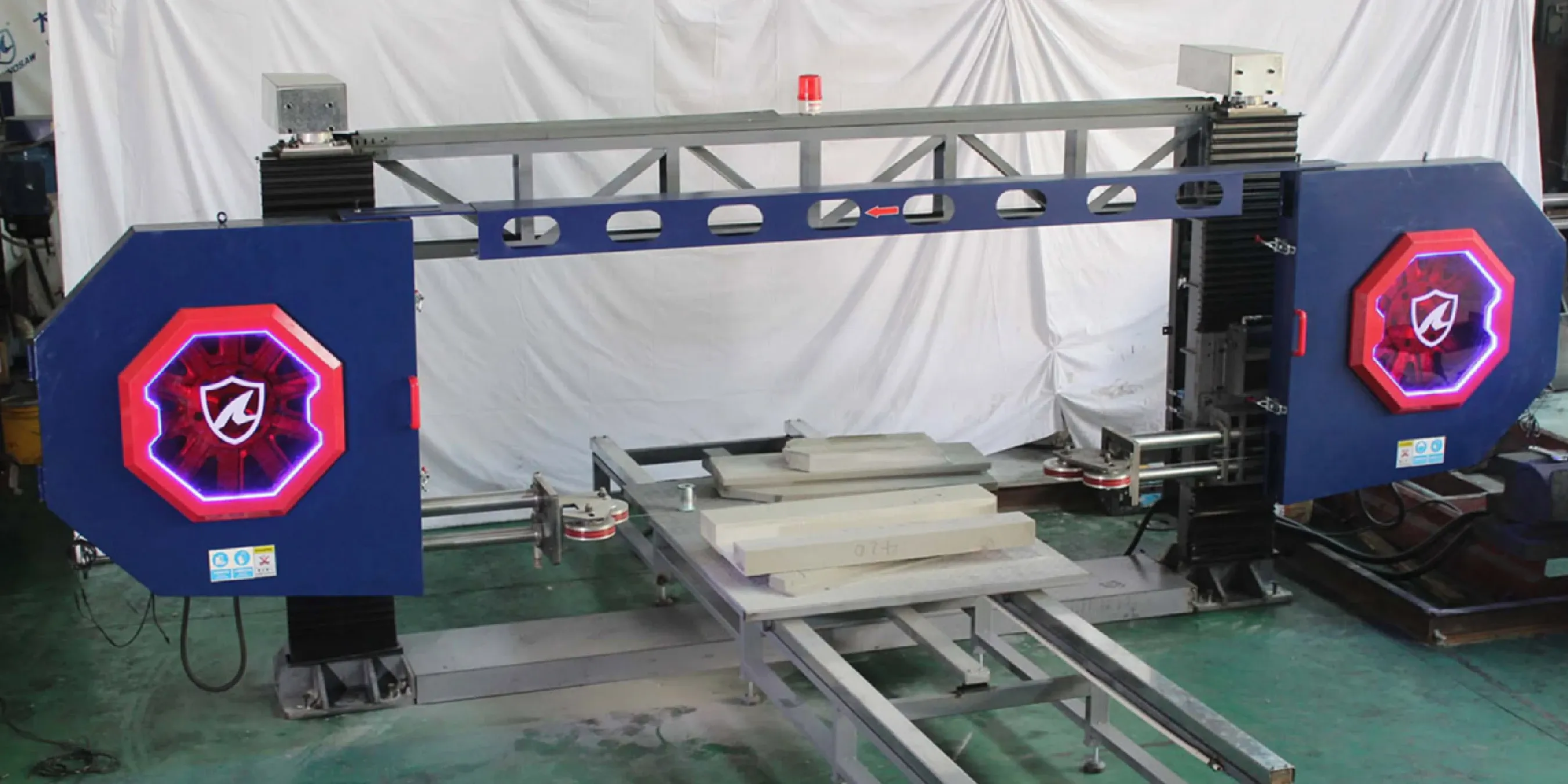
Not all wire saws are the same. A machine designed for cutting massive granite blocks in a quarry has different technical specifications than one engineered for intricate work on foamed ceramics.
Attribute
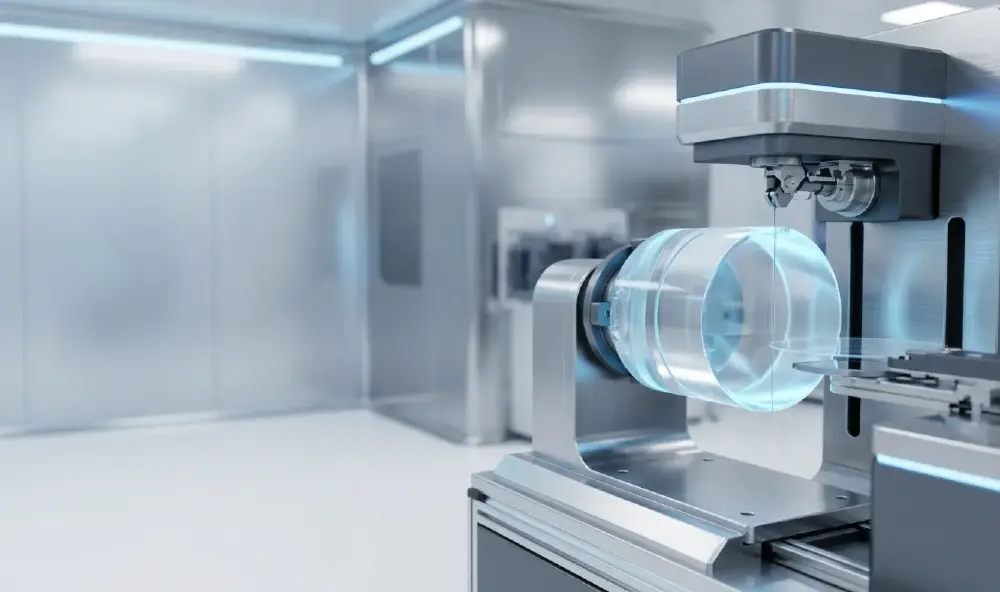
CNC Diamond Wire Saw (For Foamed Ceramics)
Traditional Stone Wire Saw Machine (For Blocks/Slabs)
Fine (e.g., typically 3–4 mm) with finer diamond grit for smooth finishes.
Thick (e.g., 6.3mm - 11mm) with coarse diamond beads/rings for aggressive cutting.
Kerf Characteristics
Very low (typically <3mm), maximizing material yield.
High (typically >8mm), focused on cutting speed over material savings.
Stress/Micro-crack Risk
Very low; process is optimized to prevent subsurface damage in fragile materials.
Moderate; designed for brute-force cutting, not preserving delicate structures.
Cooling/Dust Control
Typically uses controlled water cooling. Requires integrated systems for slurry management and HEPA dust extraction.
Primarily uses heavy water cooling to manage heat and slurry.
Automation & Axes
High automation with multi-axis (3 to 5+ axes) CNC for complex geometries.
Lower automation, often focused on simple linear cuts with fewer axes.
Wire Saw vs Waterjet vs Band Saw vs Blade Saw
Feature
CNC Diamond Wire Saw
Band Saw
Blade Saw
Waterjet
Precision
Excellent
Low
Moderate
Very Good
Kerf Loss
Very Low
Moderate
High
Low
Material Integrity
Excellent (no micro-cracks)
Poor (high risk of chipping)
Moderate (risk of micro-cracks)
Good, but high-pressure water stream creates significant water absorption and delamination risk.
Speed
Moderate
Fast (for soft materials)
Fast (for linear cuts)
Slow to Moderate
Material Versatility
Good (excels at hard, brittle materials)
Limited (soft, non-abrasive)
Limited (hard materials, simple cuts)
Excellent (cuts almost anything)
Operational Cost
Low to Moderate
Low
Moderate
High
Manual vs Automatic: Neutral Comparison for Current/Traditional Processes
Criterion
Manual Process (Band Saw / Blade Saw / Handheld)
Automatic Process (CNC Diamond Wire Saw)
Precision & Repeatability
Low; highly dependent on operator skill. Difficult to maintain consistency.
Excellent; Sub-millimeter precision with high batch-to-batch repeatability.
Material Waste (Kerf)
High; thicker blades lead to more material loss per cut.
Very Low; ultra-thin wire minimizes kerf, maximizing material yield.
Geometric Complexity
Limited to simple linear cuts.
High; capable of complex 2D and 3D contours, curves, and angles.
Setup Time
Short for simple cuts, but long for any complex jigging.
Longer for initial program loading, but very fast for repeat jobs.
Typical Throughput (line profiles)
Varies widely; lower effective throughput due to thicker kerf and more rework for fragile materials.
Approximately 500–800 meters per 8‑hour day under balanced settings (optimize by wire speed, feed rate, geometry). (Observed on Big Shark foamed ceramic wire saw with stable tension control).
Procurement Topics: TCO, Spares, Training for CNC Stone Cutting Machine
Total Cost of Ownership (TCO): Look beyond the initial purchase price. A comprehensive TCO analysis should include initial cost, consumables (e.g., diamond wire, blades, garnet), energy consumption, maintenance, and potential revenue from reduced material waste. A wire saw often has a lower TCO than a waterjet due to savings on high-pressure pumps and abrasives.
Spare Parts & Consumables Availability: How quickly can you get replacement wires, pulleys, or other critical parts? Downtime waiting for parts can be more costly than the parts themselves. Inquire about the supplier’s stock and lead times.
Maintenance Window & Serviceability: Ask about the required daily, weekly, and monthly maintenance tasks. A well-designed machine allows for quick wire changes and easy access to lubrication points, minimizing service downtime.
Operator Training & Learning Curve: What level of training is required? A machine with an intuitive user interface and robust CNC control system can reduce the learning curve and minimize operator error.
Warranty & Service Level Agreements (SLA): Understand the warranty coverage and what SLAs are available for technical support and on-site service. This is your insurance against unexpected, prolonged downtime.
Certifications: Ensure the machine complies with safety and electrical standards relevant to your region (e.g., CE for Europe, UL for North America). Compliance with standards from bodies like OSHA on silica dust is also a critical consideration for facility safety.
Scenario Recommendations: Best Stone CNC Machine Types for Foamed Ceramics
Prototyping Complex Parts
First Choice: CNC Diamond Wire Saw. Unmatched for creating complex geometries and fine details with excellent surface finish.
Second Choice: Waterjet. Good for complex shapes but may require post-processing due to taper or surface roughness.
Not Recommended: Band/Blade Saws. Unable to produce complex shapes and high risk of material fracture.
High-Volume Slab Slicing
First Choice: CNC Diamond Wire Saw or Blade Saw. The wire saw offers better material yield (less waste), while a blade saw might be faster for simple linear cuts.
Second Choice: Band Saw. Only if the material is soft and precision is not a priority.
Not Recommended: Waterjet. Generally too slow and costly for high-volume simple slicing.
Budget-Constrained Job Shop
First Choice: CNC Diamond Wire Saw. Often provides the best balance of capability, precision, and lower TCO compared to waterjets. Many best stone cutting machine brands offer entry-level models.
Frequently Asked Questions (FAQ)
What is the typical throughput for foamed ceramic line profiles?
Around 500–800 meters per 8‑hour shift under balanced parameters (Observed on Big Shark foamed ceramic wire saw with stable tension control).
Context: Throughput depends on wire speed, feed rate, profile complexity, and material;
Procedure: Start with conservative settings, validate with short trial runs, then ramp;
Next Step: Record parameters per material/profile to maintain consistent output.
Wire saw vs waterjet, which is better for foamed ceramics?
For foamed ceramics, a wire saw is almost always superior, primarily because it avoids water absorption.
Context: The primary drawback of waterjets for this material is that the porous structure absorbs water, which can compromise structural integrity and require lengthy, costly drying times. A wire saw's dry process eliminates this risk.
Procedure: A wire saw uses a low-stress abrasive action, which is purpose-built for fragile, brittle materials. A waterjet, while versatile, can cause delamination or surface erosion on certain hard ceramics.
Next Step: If your application cannot tolerate any moisture intrusion, the choice is clear: a wire saw is the technically correct solution.
How much does a CNC diamond wire saw cost?
The initial investment typically ranges from $30,000 to over $150,000, but a focus on Total Cost of Ownership (TCO) is more important.
Context: Price varies widely based on size, number of axes, and features. However, a wire saw’s lower consumable and energy costs often make it more economical long-term compared to a waterjet with a similar cutting envelope.
Procedure: To make an informed decision, a procurement guide should focus on TCO, which includes the initial price plus ongoing costs for consumables, energy, and maintenance.
Next Step: Contact our team for a custom quote and a TCO analysis based on your specific production needs.
Can I use the same machine for cutting granite and foamed ceramics?
Yes, a key advantage of a CNC wire saw is its versatility across different hard, brittle materials.
Context: The machine is one of the best stone cnc machine types for profiling granite, but it is also gentle enough for fragile ceramics. The core cutting principle remains the same.
Procedure: To switch between materials, you would simply change the cutting parameters (e.g., lower the feed rate for the more fragile ceramic) and potentially switch to a different diamond wire specification (e.g., a finer grit).
Next Step: Maintain a parameter sheet for each material you cut to make changeovers quick and repeatable.
What is the typical ROI for a CNC wire saw in a ceramic fabrication shop?
For shops working with high-value materials, ROI can be achieved in as little as 12-24 months.
Context: ROI is driven by direct cost savings (reduced material waste from minimized kerf loss), increased profit margin (ability to produce high-value complex parts), and labor savings from automation.
Procedure: To calculate your potential ROI, quantify your current annual spending on wasted material, the value of complex jobs you currently turn down, and the labor hours spent on manual cutting processes.
Next Step: Contact us for a consultation. We can help you build a business case and estimate the ROI for your specific operation.
What are the key differences between ATC and Multi-head CNC machines?
This question is more relevant for CNC routers, but a similar principle applies to wire saws.
Context: As explained in our ATC vs. Multi-Head comparison, ATC (Automatic Tool Changer) routers provide flexibility for complex jobs, while Multi-Head routers are for mass-producing identical items.
Procedure: For wire saws, the equivalent choice is between a single-wire machine, which offers maximum flexibility for unique, complex shapes, and a multi-wire machine, which is designed for mass-slicing large blocks into uniform slabs.
Next Step: Choose a single-wire saw for prototyping and custom fabrication. Choose a multi-wire saw if your business is focused on high-volume slab production.
How do I arrange a test cut of my material?
We encourage test cuts to validate performance before any commitment.
Context: A test cut provides definitive proof that the machine can meet your quality and precision standards on your specific material.
Procedure: Provide our sales engineering team with your material specifications and a design file (DXF or DWG) of the part. We will then coordinate the logistics to process your sample.
Next Step: Contact us today to begin the process. We will return the finished part and a detailed report for your evaluation.
Ready to make a data-driven decision? Request a quote or book a consultation to build your custom TCO analysis today!





 中文
中文 Italian
 Türkçe
 Português
 Español
 Deutsch
 العربية
 Tiếng Việt
 Français
 Русский
 한국어
한국어


 Nov 9, 20256 MIN READ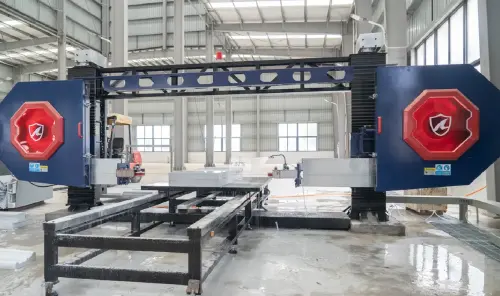
 Wire Saw vs Waterjet vs Band Saw vs Blade Saw
 Scenario Recommendations: Best Stone CNC Machine Types for Foamed Ceramics
 English