





 中文
中文 Italian
 Türkçe
 Português
 Español
 Deutsch
 العربية
 Tiếng Việt
 Français
 Русский
 한국어
한국어


Ms.Lizzy
Hi, this is Lizzy from Dinosaw ( Not a Robot ). Which Machine ( model ) do you want? Please WhatsApp us now


Open Hours:8:30am-20:30pm

WhatsApp: +86 198-5901-3937

 Aug 16, 20255 MIN READ
 Aug 16, 20255 MIN READ
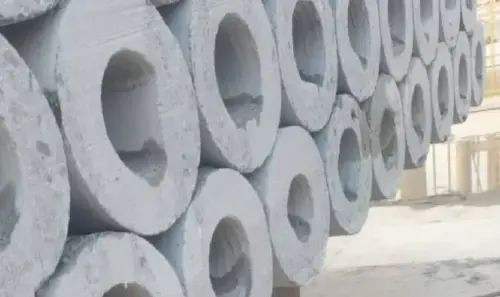
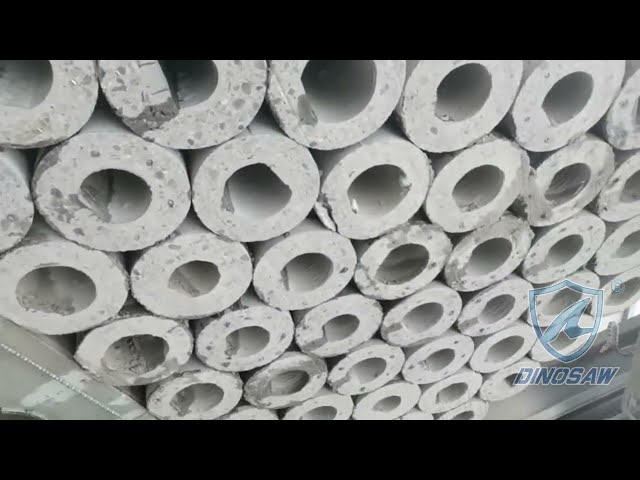
Cement pipe cutting case study using CNC wire saw, showing how plain cement pipes are cut cleanly with stable edges for building and infrastructure applications.
 ▶
▶Case Snapshot
Material
Plain cement pipe
Processing Method
CNC wire saw pipe cutting
Typical Application
Cement pipes for drainage, construction, and infrastructure use
Applicable Markets
Building materials, drainage systems, prefabricated concrete products
Processing Focus
Clean and stable cutting of hollow cement pipes without structural damage
Associated Product
DINOSAW Gantry wire saw machine
Plain cement pipes are widely used in drainage systems, utility channels, and basic infrastructure construction.
These pipes are typically produced in fixed diameters and lengths, then cut to installation-ready sections based on project requirements.
Unlike reinforced concrete pipes, plain cement pipes rely entirely on material integrity rather than internal reinforcement.
This makes the cutting process especially important, as excessive vibration or uneven force can lead to cracking, chipping, or edge collapse around the pipe opening.
Cutting hollow cement pipes presents several practical challenges in workshop conditions.
The material is rigid but brittle, especially at the pipe edges.
The hollow structure reduces overall stiffness during cutting.
Uneven cutting forces can cause localized cracking or spalling along the rim.
Consistency is required when multiple pipe sections must align accurately during installation.
From the workshop’s perspective, the hollow structure changes everything.
The pipe wall does not support itself the same way a solid block does.
If the cutting action is uneven, stress concentrates quickly around the edge, which is where damage usually starts.
Wire saw cutting applies force gradually along the cutting path instead of concentrating it at a single point.
This helps keep stress levels low around the pipe wall.
For plain cement pipes, this smoother cutting action makes a noticeable difference in edge condition.
Operators pay close attention to how the pipe is supported before the cut begins.
Keeping the pipe stable and evenly supported reduces the risk of vibration.
During cutting, they watch the edge closely to make sure material is being removed evenly around the circumference.
Quality is judged by the condition of the pipe opening after cutting.
Edges should be clean, round, and free from cracks or breakouts.
If the pipe can be installed or joined without edge repair, the cut is considered acceptable.
Cement pipes were positioned and supported to maintain stability throughout the cut.
The wire saw followed a continuous cutting path around the pipe circumference.
The process emphasized smooth progression and controlled movement rather than aggressive cutting.
After cutting, pipe sections were visually inspected to confirm edge integrity before being moved to storage or installation.
Cut pipe sections showed clean and uniform edges.
The hollow structure remained intact without visible cracking or collapse.
Multiple pipe sections cut under the same process aligned consistently during handling.
The cutting approach fit well into routine cement pipe production workflows.
If you are cutting plain cement pipes for drainage or infrastructure use,
if your products do not contain internal reinforcement,
if edge integrity is critical for installation and connection,
this case reflects a practical and repeatable processing scenario in cement pipe fabrication.
 English
Get A Easy Solution
Chat Online
Hi, this is Lizzy from Dinosaw ( Not a Robot ). Which Machine ( model ) do you want? Please WhatsApp us now
Hello 👋 How can we help?