



 中文
中文 Italian
 Türkçe
 Português
 Español
 Deutsch
 العربية
 Tiếng Việt
 Français
 Русский
 한국어
한국어


Ms.Lizzy
Hi, this is Lizzy from Dinosaw ( Not a Robot ). Which Machine ( model ) do you want? Please WhatsApp us now


Open Hours:8:30am-20:30pm

WhatsApp: +86 198-5901-3937

 Nov 10, 20255 MIN READ
 Nov 10, 20255 MIN READ
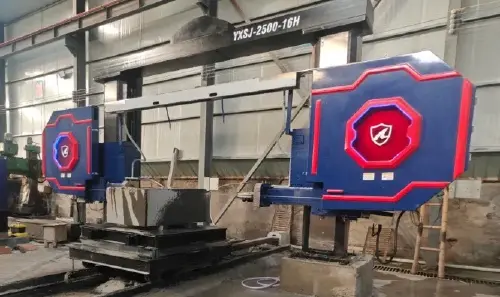
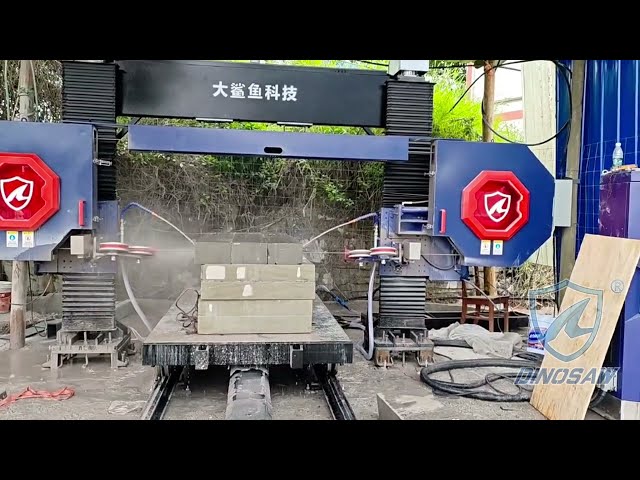
Limestone curved kerbstone cutting case study using CNC wire saw, showing how arc-shaped kerbs and tree pit edging are produced with consistent curvature and clean edges.
 ▶
▶Case Snapshot
Material
Limestone
Processing Method
CNC wire saw curved and arc cutting
Typical Application
Curved kerbstones and limestone tree pit edging for urban landscaping
Applicable Markets
Municipal infrastructure, landscape construction, urban public works
Processing Focus
Consistent arc cutting of limestone kerbstones with stable edges for on-site installation
Associated Product
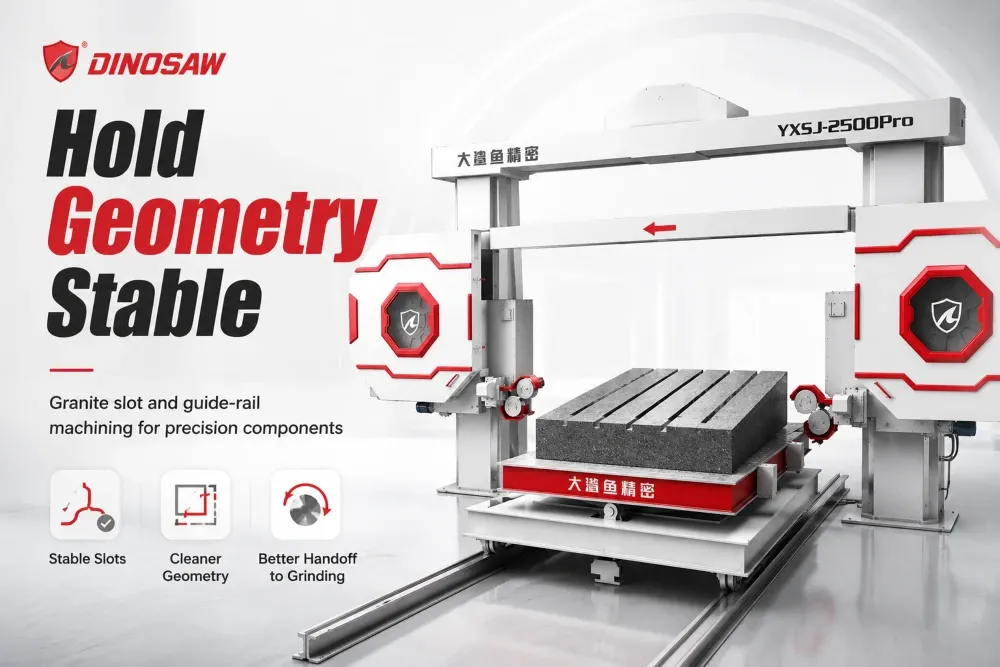
DINOSAW CNC wire saw machine for stone cutting
Limestone is commonly used for kerbstones and tree pit edging in urban roads, sidewalks, parks, and landscape projects.
Unlike straight kerbs, curved kerbstones are used around roundabouts, planting areas, and tree pits where the stone must follow a defined radius.
In these applications, the curvature of each piece directly affects how well the kerbs align on site.
If the arc is inconsistent, gaps appear between stones, increasing installation time and reducing the overall visual quality of the finished pavement or landscape area.
Cutting limestone into curved kerbstones introduces challenges beyond standard straight cutting.
The stone is relatively soft but sensitive to uneven cutting force.
Maintaining a smooth and consistent radius across multiple pieces is critical.
Arc cutting requires continuous direction changes, which can easily introduce flat spots or irregular curves.
Edge quality is especially important, as kerbstones are exposed elements in public spaces.
From the workshop’s perspective, straight kerbs are forgiving, curved ones are not.
With straight cuts, small deviations are less noticeable, but with curves, any inconsistency shows immediately once the stones are laid in a circle.
The challenge is keeping the radius consistent from the first piece to the last.
Wire saw cutting allows the stone to follow a smooth arc rather than forcing it through rigid steps.
The wire transitions naturally along the curve, which helps maintain a continuous radius.
For limestone, this smoother cutting action also helps preserve edge condition.
Operators focus heavily on setup and path control.
Once the radius is defined, the goal is to keep the cut stable all the way through the arc.
They pay close attention to how the stone reacts at the start and end of the curve, where irregularities are most likely to appear.
Quality is judged by how well multiple kerbstones fit together.
If several pieces can be placed side by side to form a smooth circle without visible gaps or steps, the cut is considered acceptable.
Clean edges that do not require site trimming are also an important benchmark.
Limestone blocks were positioned and supported to allow stable arc cutting.
Predefined curved paths guided the wire saw through each kerbstone profile.
The cutting process emphasized smooth, continuous motion to maintain a consistent radius.
After cutting, kerbstones were visually checked by fitting pieces together before being sent to site preparation or installation.
Finished kerbstones showed consistent curvature across multiple pieces.
Edges remained clean and suitable for direct installation.
Stones aligned well when arranged into circular or curved layouts.
The cutting process integrated smoothly into routine kerbstone production for landscape and municipal projects.
If you are producing limestone kerbstones for curved road edges or planting areas,
if your projects include tree pits, roundabouts, or landscape borders,
if consistent curvature and clean edges affect installation efficiency and final appearance,
this case reflects a practical processing scenario commonly seen in limestone kerbstone fabrication.
 English
Get A Easy Solution
Chat Online
Hi, this is Lizzy from Dinosaw ( Not a Robot ). Which Machine ( model ) do you want? Please WhatsApp us now
Hello 👋 How can we help?