



 中文
中文 Italian
 Türkçe
 Português
 Español
 Deutsch
 العربية
 Tiếng Việt
 Français
 Русский
 한국어
한국어


Ms.Lizzy
Hi, this is Lizzy from Dinosaw ( Not a Robot ). Which Machine ( model ) do you want? Please WhatsApp us now


Open Hours:8:30am-20:30pm

WhatsApp: +86 198-5901-3937

 Nov 2, 20255 MIN READ
 Nov 2, 20255 MIN READ
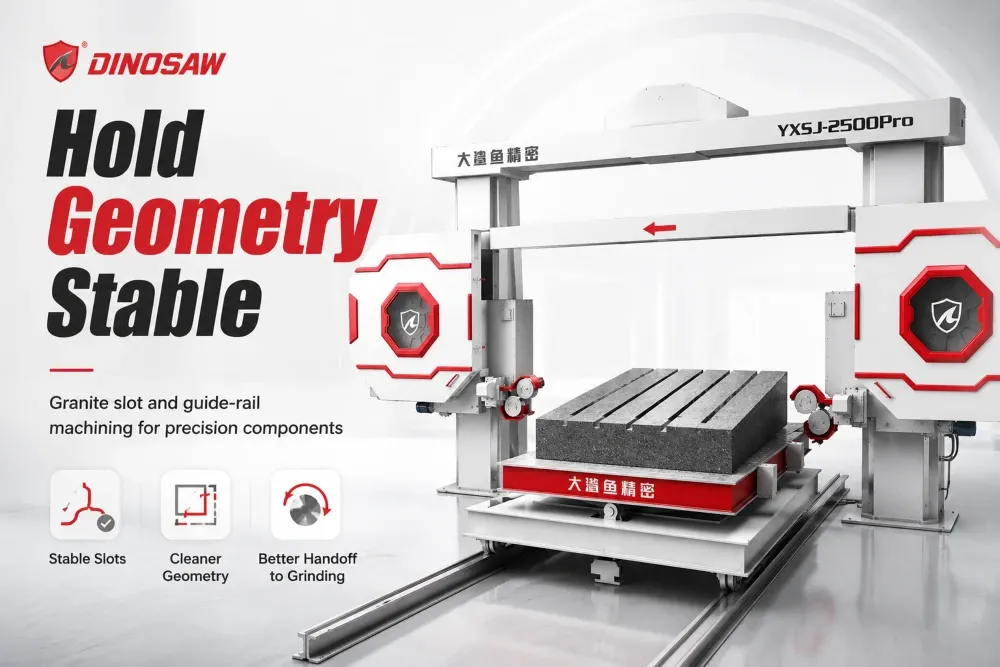
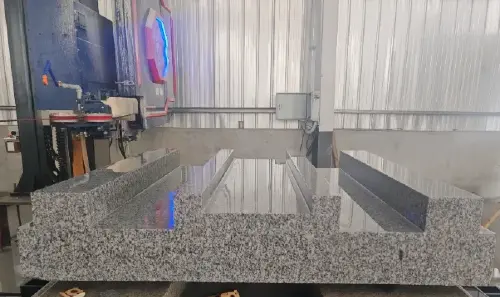
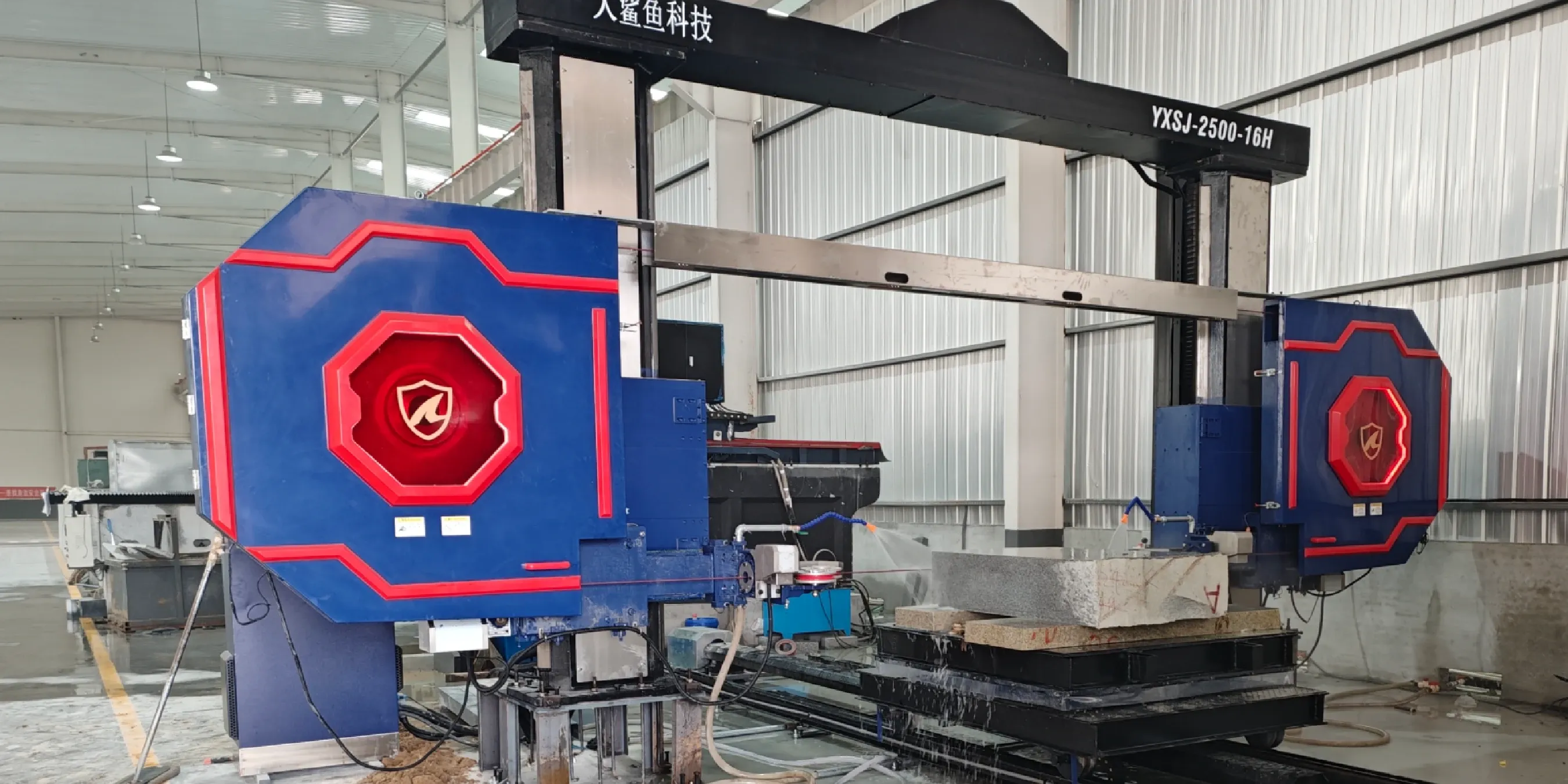
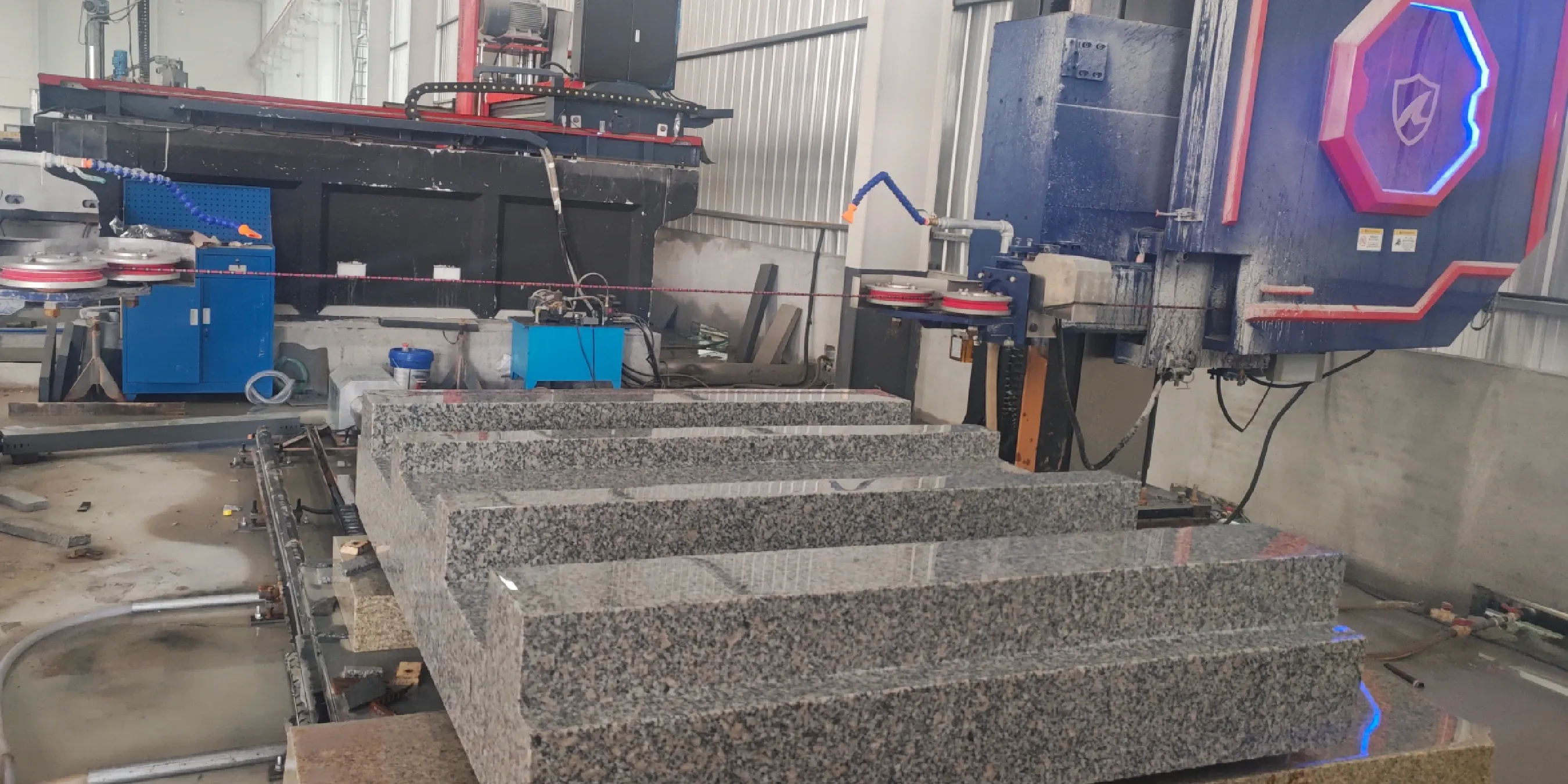
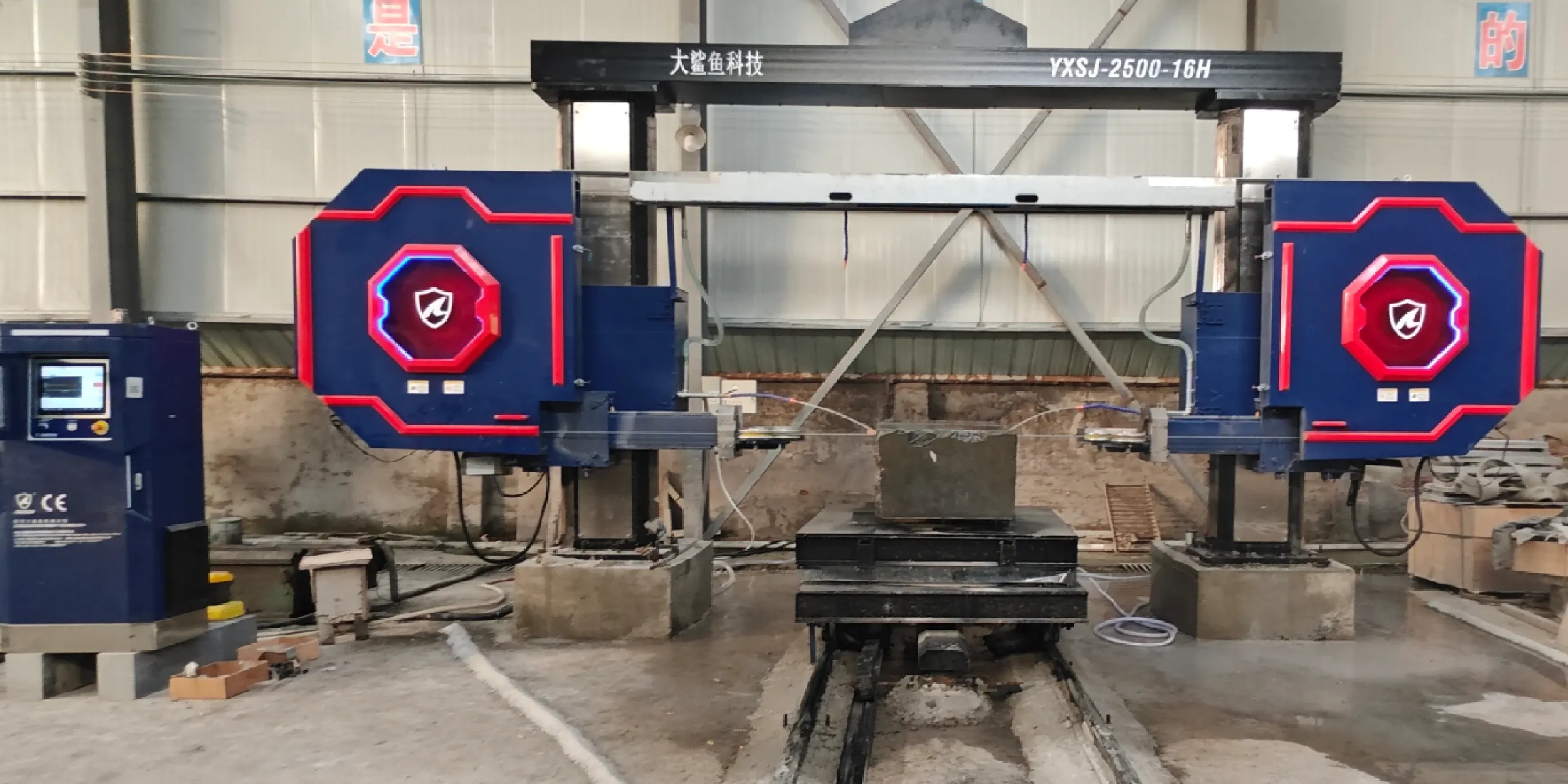
CNC wire saw cutting case for granite blocks used in precision instrument table bases, focusing on stable sectioning for machine foundations and metrology platforms.
Case Snapshot
Material
Granite
Processing Method
CNC wire saw cutting
Typical Application
Precision instrument tables, machine bases, measurement platforms
Applicable Markets
Metrology, semiconductor equipment, industrial machinery, laboratory systems
Processing Focus
Large granite block cutting with flatness control and internal relief sections
Associated Product
Dinosaw CNC Wire Saw Cutting Machine
Granite is widely used as a base material for precision instruments and heavy equipment, even though this application is unfamiliar to many outside the industry.
Its natural stability, vibration damping behavior, and long-term dimensional consistency make it suitable for machine foundations, inspection tables, and high-precision platforms.
In this case, large granite blocks were processed as semi-finished bases, which would later be ground, lapped, and assembled into precision instrument tables.
Cutting granite for precision equipment differs from decorative or architectural stone processing.
Workshops typically face several challenges:
Large block size requires controlled sectioning
Internal stress must be released gradually
Flat reference surfaces must be preserved
Excessive vibration can affect downstream accuracy
Unlike decorative stone, these granite blocks are judged not by appearance, but by how well they perform as structural and reference components.
Operators explain that granite offers natural vibration damping and thermal stability.
Once processed and stabilized, it maintains geometry well over time, which is critical for measurement accuracy and machine alignment.
The goal is not speed or visual finish.
The focus is on controlled separation, ensuring the block remains structurally stable for later surface finishing and calibration.
Attention is given to cut sequence and stability.
Releasing internal stress gradually helps prevent distortion that could affect later precision grinding.
Quality is judged by structural integrity and consistency.
If the granite section remains stable and suitable for precision surface processing, it meets requirements.
The granite block was positioned to maintain even support throughout the cut.
Cut paths were planned to divide the block into instrument base sections while minimizing stress concentration.
The CNC wire saw executed the cuts with continuous, uniform force, allowing the granite to separate cleanly without inducing sudden movement.
After cutting, the blocks were ready for precision grinding and surface calibration.
The cutting process remained stable throughout large-format sectioning.
Granite surfaces showed clean separation lines without structural damage.
Block geometry remained consistent for downstream lapping and finishing.
The processed granite sections were suitable for precision instrument assembly.
This case is relevant if you are handling:
Granite used as machine bases or instrument tables
Precision equipment foundations
Applications sensitive to vibration and long-term stability
Large granite blocks requiring controlled sectioning
If your production involves granite for functional, high-precision use rather than decoration, this case reflects a real and practical cutting approach.
 English
Get A Easy Solution
Chat Online
Hi, this is Lizzy from Dinosaw ( Not a Robot ). Which Machine ( model ) do you want? Please WhatsApp us now
Hello 👋 How can we help?